
Did you know a roof lantern can introduce up to three times more natural light into a room than a standard vertical window of the same size? For developers and installers across the Southeast, the high-performance roof lanterns kent projects require are no longer just about aesthetics. They are critical structural components that must meet rigorous 2026 efficiency standards. You likely understand the frustration of balancing client demands for slim sightlines with the technical reality of heat loss and complex Building Regulations.
This trade guide provides the clarity you need to specify, source, and install glazing solutions that perform. We’ll examine the shift toward minimalist aluminium frames and explain why a U-value of 2.20 W/(m²K) is now the essential benchmark for compliance. You’ll gain a clear understanding of the latest BS EN 1991-1-1:2025 structural standards and upcoming fire safety updates. By the end of this article, you’ll know exactly how to secure a reliable local supply that ensures your Kent residential or commercial project remains thermally efficient, aesthetically pleasing, and fully compliant.
Key Takeaways
- Learn how to specify high-performance roof lanterns kent contractors rely on for maximum thermal efficiency and aesthetic impact.
- Understand the critical role of thermal breaks and architectural components like eaves beams in preventing condensation and ensuring structural integrity.
- Compare double and triple glazing options to determine the best balance of structural load and insulation for the Southeast climate.
- Master the latest Building Regulations regarding upstand heights and structural openings to ensure every installation is fully compliant.
- Streamline your supply chain by sourcing complete glazing packages that include lanterns, windows, and doors from Trade Tech Windows & Doors.
What are Roof Lanterns and Why are They Essential for Kent Extensions?
A roof lantern is a pitched architectural glazing unit specifically designed for installation on flat roof extensions. Unlike standard windows, these units sit proud of the roofline, creating a striking focal point that adds internal height and volume. To understand the technical origins and structural evolution of these units, you might ask: What is a Roof Lantern? Historically, they were used to illuminate grand staircases and orangeries; today, they are the primary light solution for high-end residential extensions. Their main function is to maximise natural light whilst minimising the harsh solar glare often associated with vertical glazing.
In high-demand areas like Sevenoaks and Tunbridge Wells, property value is intrinsically linked to architectural flair and internal light quality. Installing high-quality roof lanterns kent developers choose can significantly elevate a project’s marketability. They provide a “wow factor” in modern kitchen-diners, transforming a standard extension into a premium living space. For contractors, specifying these units means delivering a project that feels more spacious and luxurious without increasing the physical footprint. It’s a practical, high-impact solution for modern living that can be further enhanced by incorporating high-quality aluminium structures from Pergola2Go into the overall garden design.
To better understand the structural precision and aesthetic appeal of these systems, watch this helpful video:
Roof Lanterns vs. Flat Rooflights: Key Differences
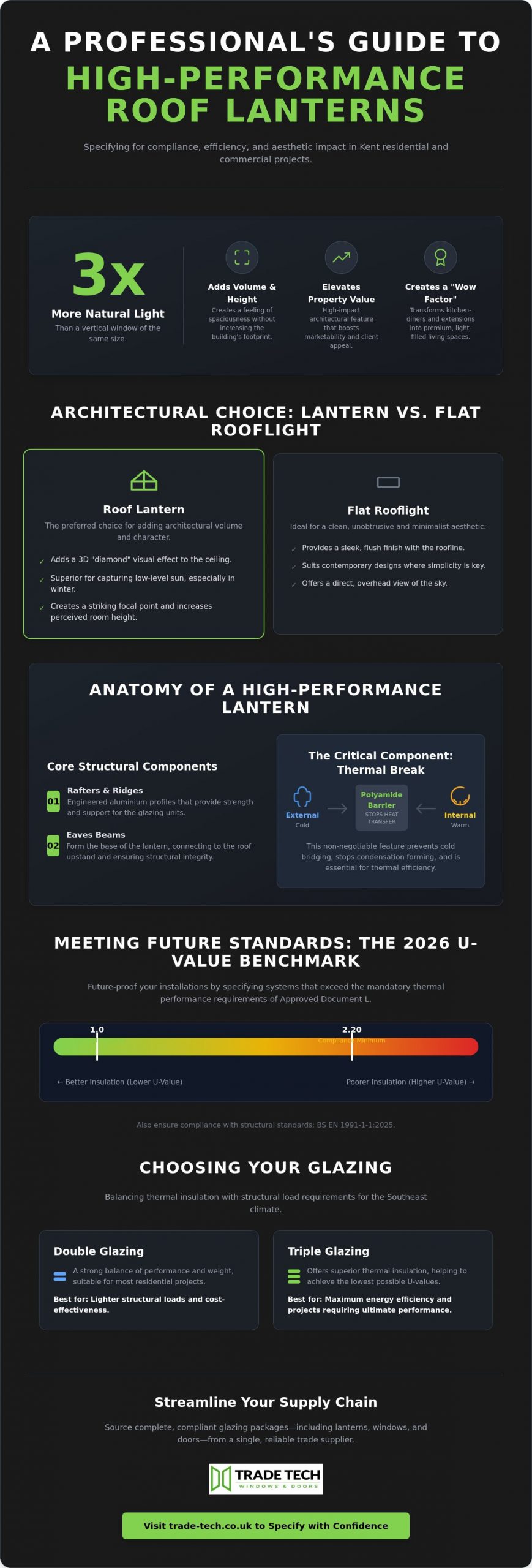
The choice between a lantern and a flat rooflight often comes down to structural aesthetics. A roof lantern offers a 3D “diamond” effect that adds volume to a room. Conversely, a flat rooflight provides a flush, minimalist finish. From a performance perspective, the pitch of a lantern is superior for capturing low-level winter sun. This ensures the space remains bright even during shorter days. While modern properties often suit sleek, thin-profile aluminium lanterns, traditional Kentish orangeries may require more substantial rafters to maintain a classic look.
The Role of Roof Lanterns in Modern Double Glazed Systems
A successful architectural design relies on a unified glazing strategy. Roof lanterns shouldn’t be viewed in isolation; they must complement other elements like bi-folding doors and sliding patio doors. Matching frame profiles and colours across all double glazed windows and doors creates a cohesive, professional finish. This approach allows installers to create a “glass box” feel that clients desire, flooding the property with light while maintaining structural integrity. It is essential to ensure that the roof lanterns kent projects feature integrate seamlessly with the rest of the building’s thermal envelope.
Technical Specifications: Materials, Thermal Efficiency, and Glazing
High-performance roof lanterns aren’t just about glass and frames; they’re precision-engineered systems. The anatomy consists of three core structural elements: rafters, ridges, and eaves beams. These components work together to support the weight of the glazing while maintaining structural integrity against wind and snow loads. In modern aluminium systems, the inclusion of polyamide thermal breaks is non-negotiable. These breaks act as a barrier between the internal and external frame surfaces, effectively preventing cold bridging and subsequent condensation.
Compliance with UK Building Regulations is a primary concern for any trade professional. As of 2026, Approved Document L mandates a limiting U-value of 2.20 W/(m²K) for rooflights. Specifying roof lanterns kent installers can trust often means looking for units that exceed these minimums. Premium aluminium systems frequently achieve values between 1.0 and 1.4 W/(m²K). This level of efficiency is crucial for maintaining a comfortable temperature in large kitchen extensions throughout the year.
Aluminium vs. uPVC: Choosing the Right Frame
Aluminium remains the preferred choice for contemporary Kent developments. Its inherent strength allows for significantly slimmer sightlines compared to uPVC, maximising the glass area. While uPVC remains a cost-effective, low-maintenance option for traditional residential projects, aluminium offers superior longevity and a wider range of finishes. Anthracite Grey has become the dominant colour choice amongst Southeast homeowners, often selected to match existing bi-fold doors. You can explore our full range of material options by viewing our trade pricing schedules.
High-Performance Glass Options
Selecting the right glass is as important as the frame itself. For south-facing extensions, solar control glass is essential to prevent the “greenhouse effect” during summer months. In urban centres or properties near the M20, acoustic glazing provides a necessary barrier against traffic noise. Many contractors also specify self-cleaning coatings. These use UV rays to break down organic dirt, which is then washed away by rain, reducing maintenance requirements for hard-to-reach glazing. This ensures the roof lanterns kent homeowners invest in remain clear and functional with minimal effort.
Comparing Performance: How to Evaluate Your Glazing Options
Choosing the right specification for roof lanterns kent installations requires a balance between thermal efficiency, weight, and cost. While double glazing remains the industry standard, triple glazing is increasingly specified for projects requiring enhanced acoustic insulation or ultra-low heat loss. However, trade professionals must consider the structural implications. Triple glazed units are significantly heavier, necessitating strict adherence to BS EN 1991-1-1:2025 standards for wind and snow loading. You must ensure the supporting flat roof structure and the lantern’s own rafters are rated for this additional mass.
Weather-sealing longevity is another critical metric. High-performance units utilise EPDM gaskets and advanced silicone sealants to ensure a watertight finish for decades. For the installer, “ease of install” is often the deciding factor when selecting a supplier. Systems that feature pre-drilled holes, click-fit glass retainers, and minimal use of messy sealants reduce on-site labour time. This efficiency allows your team to complete the dry-fit quickly, ensuring the building is watertight sooner. A streamlined installation process protects your profit margins and keeps the project on schedule.
Thermal Performance Comparison
When evaluating performance data, distinguish between centre-pane U-values and the overall unit U-value. The Glass and Glazing Federation provides clear guidelines on how these metrics are calculated. A centre-pane value only measures the glass, whereas the overall value includes the frame’s thermal performance. To achieve the best results, specify units with argon gas filling and warm-edge spacer bars. These spacers are made from insulating plastic composites rather than aluminium; this significantly reduces perimeter condensation and heat loss at the glass edge. If your project also involves upgrading the vertical glazing on the same property, our guide on specifying replacement windows kent contractors rely on for Part L compliance provides the technical detail you need to ensure every element of the building envelope meets current standards.
Aesthetic and Functional Customisation
Functional additions can solve common environmental challenges in Kent extensions. Manual or electric opening vents are essential for natural ventilation, particularly in large kitchen-diners where heat and steam build up quickly. For a truly integrated feel, some high-end systems offer internal kerbs designed to house LED lighting strips. This allows the roof lanterns kent homeowners choose to act as a light source both day and night. Matching the internal frame finish to the interior decor, such as a clean white or a bold black, ensures the unit feels like a permanent architectural feature rather than an afterthought. If you are also installing aluminium doors on the same project, ensure the lantern’s finish is identical for a seamless look.
Installation and Building Regulations for Kent Contractors
Precision starts with the upstand, or kerb. This structural frame must sit at least 150mm above the finished roof surface to ensure effective drainage and weatherproofing. A slight pitch in the upstand itself helps prevent water pooling at the base of the glazing. When flashing the unit, use high-grade lead or modern GRP alternatives to create a seamless, watertight seal. Drainage management isn’t just a recommendation; it’s a necessity to prevent long-term moisture ingress and timber rot in the flat roof structure. Every successful installation of roof lanterns kent contractors undertake hinges on this initial preparation.
Safety remains paramount for overhead glazing. UK Building Regulations require all roof lanterns to feature toughened safety glass as a minimum. For projects in high-traffic commercial areas or premium residential extensions, laminated inner panes provide an extra layer of security. If the glass breaks, the interlayer holds the fragments in place, preventing injury to those below. This is a critical specification detail that helps your project pass final building control inspections without delay. It ensures the unit is safe, durable, and fully compliant.
Site Preparation and Structural Requirements
Calculating the correct aperture is the most common site error. You must specify the internal “hole-in-the-roof” size rather than the external lantern dimensions. Measure twice to avoid costly delays. Ensure the existing joists or new glulam beams are rated for the dead load of the unit. A large triple-glazed lantern can weigh several hundred kilograms; this requires reinforced doubling of joists around the structural opening. Using a pre-fabricated GRP upstand can save hours on-site, providing a level, square foundation that guarantees a fast, accurate, compliant fit.
Navigating Planning Permission in Kent
Most installations fall under Permitted Development. This applies provided the glazing does not project more than 150mm from the roof plane or exceed the height of the existing ridge. However, Kent presents unique challenges. In conservation areas like Tunbridge Wells or the historic centre of Canterbury, stricter rules often apply. Always check with the local building control officer if you’re working on a listed property or within a designated heritage zone. They will require detailed technical drawings to ensure the architectural style remains sympathetic to the local area. This is essential for the high-quality roof lanterns kent homeowners expect in protected postcodes. If your client is also considering a full glazed extension, our guide to conservatories kent projects demand for year-round thermal performance covers the planning and glazing considerations in detail.
To ensure your next project meets these rigorous standards and passes inspection first time, partner with our dedicated technical team for expert support and reliable supply.
Sourcing Quality Roof Lanterns: Why Trade Tech Windows & Doors is the Professional Choice
Trade Tech Windows & Doors operates as a dedicated partner for the Southeast glazing industry. We understand that your reputation depends on the quality of the components you install. Sourcing the high-performance roof lanterns kent installers require involves finding a supplier that prioritises precision and logistical efficiency. We don’t just deliver products; we provide a stable foundation for your project success. Our role is to act as a knowledgeable peer, providing the technical tools and reliable supply chain necessary for contractors to thrive.
One of the most significant advantages for our clients is the ability to source a complete architectural glazing package. Coordinating multiple suppliers often leads to site delays and mismatched finishes. By ordering your roof lanterns, aluminium windows, and bi-folding doors from a single source, you ensure perfect colour matching and synchronised delivery schedules. This streamlined approach reduces administrative overhead and keeps your site running smoothly. It is the most efficient way to manage complex residential extensions. For projects that also involve upgrading existing fenestration, our detailed resource on sourcing compliant replacement windows kent projects demand will help you coordinate the full scope of works from a single trade partner.
Profitability in the construction sector relies on competitive trade pricing and reliable lead times. We offer clear, transparent pricing structures that allow for accurate project costing from the outset. Our commitment to rapid delivery across the region means you spend less time managing supply chains and more time completing installations. We respect your schedule. We know that a late delivery isn’t just an inconvenience; it’s a direct cost to your business. Our operations are designed to eliminate those risks.
The Trade Tech Windows & Doors Advantage for Developers
Developers across Kent and East Sussex choose Trade Tech Windows & Doors for our high-performance aluminium windows and roof lanterns. We provide more than just hardware. Our team offers comprehensive technical support for complex architectural specifications. Whether you are dealing with unique structural loads or specific thermal requirements, we provide the data and expertise needed for a compliant installation. Our delivery network is optimised for the Southeast, ensuring your roof lanterns kent orders arrive exactly when they are needed on site.
Partnering for Project Success
We specialise in supporting new build contractors with bulk supply and detailed technical data packs. This ensures every unit meets the latest regulations and fits the structural opening perfectly. If your project involves refurbishment rather than new construction, our range of sealed units provides the ideal solution for replacement glazing. We are here to facilitate your professional success through quality products and dependable service. Contact Trade Tech Windows & Doors today for a bespoke quote on your next Kent project.
Elevate Your Next Glazing Project
Mastering the technical requirements of modern roof glazing ensures your projects remain compliant, efficient, and visually striking. By prioritising the architectural precision and material quality discussed in this guide, you protect your professional reputation and deliver superior value to your clients. Integrating the high-performance roof lanterns kent developers trust into a wider glazing strategy allows for a seamless finish that maximises internal volume without compromising on the building’s thermal envelope. For developers who also need to meet the 2026 U-value mandate of 0.8 W/m²K for windows, our detailed resource on trade aluminium windows for Kent and Sussex developments provides the technical specification guidance needed to ensure every element of your project is fully compliant.
Take the next step in streamlining your procurement process. Request a Professional Trade Quote for Roof Lanterns and discover how our expertise can support your project success. We look forward to helping you deliver excellence on your next site.
Frequently Asked Questions
Do I need planning permission for a roof lantern in Kent?
Planning permission is generally not required for roof lanterns in Kent as they often fall under Permitted Development. This applies if the unit does not project more than 150mm from the roof plane. However, you must check local restrictions if the property is listed or located within a conservation area like those in Canterbury or Tunbridge Wells. Always consult the local building control officer before starting work to ensure full compliance with regional heritage guidelines.
How much does a roof lantern typically cost for a 3m x 2m extension?
The total investment for a roof lantern depends on several variables including frame material, glazing specification, and the complexity of the structural opening. Aluminium units typically sit at a higher price point than uPVC alternatives due to their superior strength and slimmer profiles. To get an accurate figure for your specific 3m x 2m project, we recommend requesting a bespoke trade quote based on your unique technical requirements.
Are roof lanterns energy efficient enough for year-round use?
Modern roof lanterns are highly energy efficient and suitable for year-round use when specified correctly. To meet 2026 UK Building Regulations, units must achieve a U-value of at least 2.20 W/(m²K). Premium aluminium systems often perform significantly better than this minimum. High-performance thermal breaks and argon-filled double glazing ensure the room remains warm in winter and prevents excessive heat loss through the roof.
Can I install a roof lantern on an existing flat roof?
You can install a roof lantern on an existing flat roof as long as the structure is capable of supporting the additional dead load. A structural engineer or experienced contractor should assess the joists to determine if reinforcement is necessary. The installation will require a new upstand to be constructed and weathered into the existing roof membrane. This ensures the roof lanterns kent installers fit remain watertight and structurally sound.
What is the best material for a roof lantern frame: aluminium or uPVC?
Aluminium is widely considered the superior material for roof lantern frames due to its high strength-to-weight ratio. This allows for much slimmer sightlines and larger glass spans compared to uPVC. While uPVC is a practical and cost-effective choice for many residential projects, aluminium offers better longevity and a more modern aesthetic. It is also available in a wider range of durable powder-coated finishes, such as the popular Anthracite Grey.
How do I clean a roof lantern if it is high up?
Specifying self-cleaning glass is the most effective way to maintain a roof lantern that is difficult to reach. This specialised coating uses UV light to break down organic dirt, which then washes away during rainfall. For stubborn debris, a telescopic water-fed pole or a professional window cleaning service is recommended. You should avoid using abrasive chemicals or metal scrapers, as these can permanently damage the glass coatings and frame finish.
Do roof lanterns make a room too hot in the summer?
Roof lanterns will not make a room too hot if you specify solar control glass. This technology reflects a high percentage of solar radiation while still allowing natural light to flood the space. For even better climate control, consider adding electric or manual opening vents to encourage air circulation. These features prevent the greenhouse effect and ensure the extension remains a comfortable living environment even during peak summer months.
What is the standard lead time for a bespoke roof lantern in Kent?
Lead times for bespoke roof lanterns kent orders typically vary depending on the complexity of the design and the current manufacturing capacity. Standard sizes and popular colours like white or grey are often available more quickly than unique configurations. We recommend discussing your project timeline with our trade team as early as possible. This allows us to provide an accurate delivery estimate and help you avoid any avoidable site delays.