
Did you know that 2026 regulations now mandate a maximum U-value of just 0.8 W/m²K for windows in new build properties? For developers across Kent and Sussex, specifying high-performance trade aluminium windows has become a structural necessity rather than a luxury upgrade. You’re likely feeling the pressure of tightening Part L thermal regulations whilst battling site delays and the looming threat of callbacks from flimsy, inferior profiles.
We understand that your commercial reputation rests on the durability and efficiency of the materials you choose for your site. This article provides a comprehensive technical and commercial deep-dive into specifying high-end glazing for modern trade projects. We’ll show you how to navigate the 2026 thermal efficiency standards and establish a reliable local supply partnership in Kent. We’ll preview the essential criteria for selecting windows that are fast to install and built to last; covering everything from architectural slim sightlines to robust security benchmarks that satisfy Part Q requirements. This is your guide to future-proofing your developments with precision-engineered solutions.
Key Takeaways
- Understand how to meet the 2026 Future Homes Standard and Part L thermal regulations using advanced aluminium profiles.
- Discover why the structural strength of aluminium allows for the slim sightlines and large glass areas demanded by modern architectural designs.
- Evaluate the commercial benefits of specifying trade aluminium windows, balancing initial investment against increased property valuation and durability.
- Learn how to manage project timelines effectively by leveraging local supply chains in Kent and East Sussex to reduce site delays.
- Identify the advantages of a dedicated trade partnership for sourcing everything from standard casements to commercial shopfronts.
Why Trade Aluminium Windows are the Standard for 2026 Developments
Specifying high-performance trade aluminium windows is no longer a choice reserved for luxury bespoke builds. In 2026, it’s the baseline for any developer aiming to meet the rigorous demands of the Future Homes Standard. These aren’t standard retail units. We define trade aluminium as high-strength, precision-engineered glazing designed specifically for the rigours of professional site installation. The inherent structural integrity of the material allows for a fundamental shift in modern window construction, moving away from bulky, flexible frames toward rigid, slender profiles that don’t warp or degrade over time.
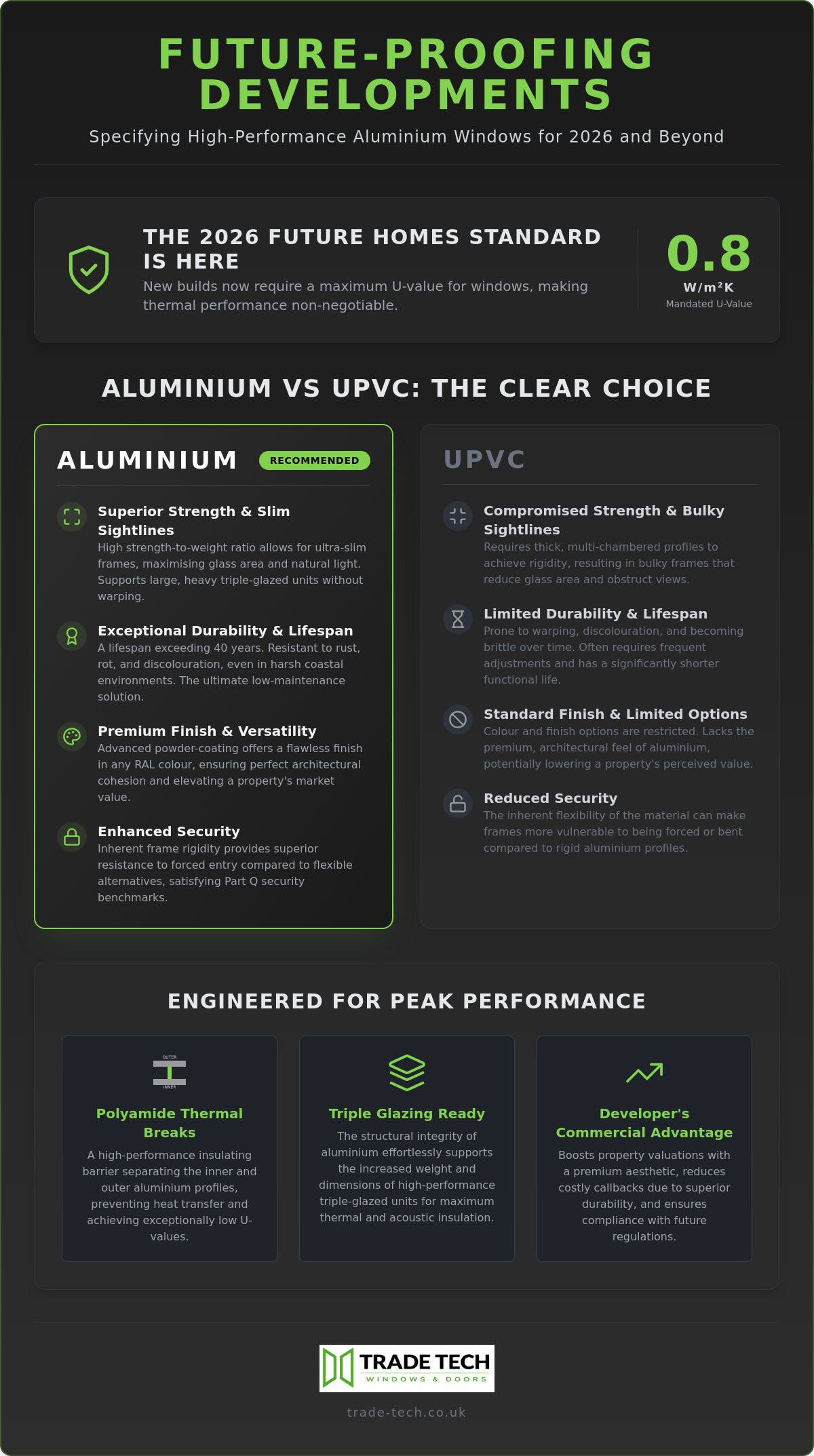
Kerb appeal is a measurable asset for developers. Aluminium frames provide a premium finish that instantly elevates a property’s market valuation compared to standard plastic alternatives. We understand that sourcing reliable trade aluminium windows is critical for maintaining your project’s momentum. Beyond aesthetics, the longevity of aluminium is a major commercial driver. With a lifespan often exceeding 40 years, it’s the ultimate low-maintenance choice for 2026. It won’t discolour, rot, or require the frequent adjustments common with heavier uPVC casements. This durability is particularly vital for projects in exposed areas of Kent and East Sussex, where coastal winds and salt spray can punish inferior materials.
To better understand the latest innovations in this sector, watch this helpful video from a recent industry exhibition:
The Evolution of Aluminium in the UK Trade Market
Aluminium’s journey from industrial shopfronts to the heart of South East residential developments has been swift. Advanced powder-coating technology now allows developers to specify almost any RAL colour, ensuring perfect alignment with architectural branding or local planning requirements. This versatility means you can match window frames to bifold doors and entrance systems with absolute precision. Aluminium has effectively overtaken premium uPVC in 2026 because it offers superior structural rigidity and thermal potential without the bulky aesthetic limitations of plastic.
Meeting Modern Architectural Demands
Modern blueprints frequently call for expansive “glass-box” extensions and floor-to-ceiling glazing. Aluminium handles these spans with ease. It integrates seamlessly with high-performance roof lanterns and flat roof systems, creating a cohesive, high-end look across the entire building envelope. Key benefits for modern site design include:
- Slimmer sightlines that maximise natural light and mimic industrial heritage styles.
- Structural stability that supports larger, heavier triple-glazed units without sagging.
- Enhanced security through rigid frame profiles that resist forced entry better than flexible alternatives.
Technical Specifications: Strength, Slenderness, and Thermal Performance
Aluminium’s strength-to-weight ratio is its primary advantage. Unlike uPVC, which requires thick multi-chambered profiles to maintain rigidity, aluminium provides immense structural stability with minimal material. This allows for the ultra-slim sightlines that developers increasingly demand. By using high-grade alloys, trade aluminium windows can support larger panes of glass without the risk of frame deflection or mechanical failure. This structural integrity ensures the long-term value and sustainability of the build, as the frames won’t warp or sag over decades of use.
Thermal performance was once the weak point of metal windows. Modern systems solve this using polyamide thermal breaks. These are high-performance plastic inserts that separate the inner and outer aluminium profiles, effectively breaking the conductive path of heat. This technology, combined with argon-filled sealed units, ensures that aluminium meets or exceeds the energy requirements of the most demanding projects. If you’re planning a complex installation, you can view our full technical range to see how these profiles integrate across different opening styles.
For developments near high-traffic areas like the M20 or A27 in Kent, acoustic insulation is a priority. Specifying the right glass thickness and cavity width within the aluminium frame can significantly reduce decibel transfer. Security is equally critical. Every window we supply is engineered to meet PAS 24 standards and Document Q requirements. This provides developers with the necessary certification for new build sign-offs whilst giving end-users peace of mind.
Understanding U-Values and Part L Compliance
The 2026 Future Homes Standard sets a clear benchmark: a maximum U-value of 0.8 W/m²K for new dwellings. Achieving this requires a precise balance between high-performance glazing and frame insulation. Modern aluminium systems excel here by allowing for deeper glazing pockets that accommodate triple-glazed units. We focus on maximising the glass-to-frame ratio. This doesn’t just look better; it often improves the overall energy rating because high-spec glass usually performs better than the frame itself.
Durability and Material Integrity
Coastal projects in East Sussex face unique challenges from salt-laden air. Aluminium’s natural oxide layer provides inherent corrosion resistance, making it essential for seafront developments. Our powder-coating process adds an extra layer of protection. This isn’t just a surface tint; it’s a thermally bonded finish that ensures colour fastness for over 25 years. This focus on material longevity in harsh environments is also central to the work of Nutec Home Builders (Pty) Ltd, who specialise in fibre-cement and timber-frame homes designed for maximum durability. The high weight-to-strength ratio also means trade aluminium windows are easier to handle on-site, reducing the risk of installation damage and improving overall site efficiency.
Aluminium vs uPVC: Choosing the Right Profile for Your Trade Project
Choosing between frame materials is a critical commercial decision. Whilst uPVC has dominated the mass market for decades, the shift toward trade aluminium windows is driven by a demand for higher specifications and better architectural integration. Developers must balance the higher initial purchase price of aluminium against the significant uplift in property valuation and reduced maintenance liability. It’s a choice between short-term savings and long-term asset performance. In many high-end Kent developments, the premium for aluminium is easily recouped through faster sales and higher asking prices.
Installation efficiency varies significantly between the two. Aluminium frames are inherently lighter than steel and more rigid than plastic. This rigidity makes them easier to handle in larger configurations without the “flex” that can lead to glass breakage or alignment issues on-site. You’ll find that whilst uPVC is faster for standard-sized replacements, aluminium simplifies the installation of complex, architectural glazing. It requires fewer on-site adjustments and provides a more stable foundation for heavy triple-glazed units.
Aesthetic flexibility often dictates the final specification. For standard residential projects, uPVC casement windows offer a cost-effective, high-performance solution that mimics traditional timber. However, for modern developments requiring slim sightlines and maximum glass area, aluminium is the undisputed leader. It provides a crisp, metallic finish that uPVC simply cannot replicate. The ability to specify slim frames in any RAL colour gives you total creative control over the building’s exterior character.
When to Specify Aluminium
Large-scale bifolding and sliding door configurations require the structural strength of metal to operate smoothly over time. For projects demanding expansive glazed openings, our guide to aluminium sliding doors Kent professionals specify for performance and Part L compliance provides the technical detail needed to make the right choice. Commercial shopfronts and high-use entrance systems also benefit from aluminium’s resilience against heavy footfall. If your project involves high-end residential renovations requiring a “steel-look” or industrial aesthetic, aluminium is the only viable option. It supports massive glass spans whilst maintaining the slim profiles modern buyers demand. Specify aluminium to ensure a consistent finish when integrating windows with other architectural features like trade roof lanterns Kent developers rely on for Part L compliance or expansive sliding doors.
When uPVC Remains a Viable Trade Option
Budget-conscious volume housing remains a stronghold for uPVC, especially where standard sizes apply and margins are tight. Traditional projects often require sliding sash windows to maintain heritage aesthetics in conservation areas. uPVC is also ideal for temporary structures or basic utility glazing where a high-end architectural finish isn’t the priority. It remains a dependable, energy-efficient choice for low-density residential builds where performance must be balanced against strict cost controls.
Sourcing and Specifying Aluminium Windows in Kent and East Sussex
Successful procurement in the South East relies on precision and timing. Sourcing trade aluminium windows from a regional partner reduces the logistical risks associated with long-distance haulage. Transport damage is a common site bottleneck; local delivery in Kent or East Sussex ensures frames arrive in pristine condition. It also significantly lowers the carbon footprint of your development. This is an increasingly important metric for modern building sign-offs and environmental compliance. Local supply chains allow for more agile responses if site conditions change suddenly, providing a level of responsiveness that national suppliers often lack.
Minimising Site Delays
Site schedules are unforgiving. A “first-time-fix” approach is essential to avoid costly return visits. You can use direct trade windows to streamline your procurement process and ensure specifications are locked in early. We recommend referring to our professional sourcing guide for direct trade windows in Kent and Sussex to manage contractor lead times effectively. Planning glazing orders alongside structural milestones prevents the common trap of waiting for frames whilst the rest of the build stands still. Accuracy at the point of order is the only way to maintain momentum on a busy site.
Local Expertise and Technical Support
Regional architectural styles in the South East often require a specific touch. Whether it’s matching industrial aesthetics in Tunbridge Wells or coastal-grade finishes in Hastings, a local supplier understands these nuances. We provide on-site technical assistance for complex new build projects to ensure every aperture is surveyed correctly. Having access to a local showroom also allows for rapid client sign-offs on finishes and hardware. This removes another layer of project friction and builds trust with the end-user before the first frame is even installed.
Surveying for success requires a meticulous eye for detail. Measurement pitfalls often derail aluminium installations because the frames cannot be adjusted on-site like uPVC. Common errors include failing to account for final floor levels, internal plasterboard thicknesses, or external render depths. These oversights lead to expensive delays and wasted materials. Navigating building regulations is equally complex. You must ensure your specification includes the correct trickle vent configurations for Part F and achieves the required U-values for Part L. Working with a specialist who understands the 2026 standards ensures your project passes building control inspections without a hitch. For developers coordinating full building envelope specifications, our professional guide to sourcing trade roof lanterns in Kent offers complementary technical detail on achieving Part L compliance across your entire glazing package.
Contact us today for technical support or a trade quote for your next project.
Partnering with TradeTech for Reliable Glazing Supply
TradeTech operates as your dedicated partner in the South East construction market. We provide precision-engineered trade aluminium windows alongside a comprehensive suite of architectural glazing solutions. Our approach is resolutely professional. We offer no-nonsense support for developers who value precision and time. Site delays are costly. Inaccurate specifications lead to expensive callbacks. We mitigate these risks through rigorous quality control and deep technical expertise. Our role is to facilitate your success by providing the tools and advice necessary for high-performance builds.
Navigating the 2026 Part L and Part F changes shouldn’t be your burden alone. We provide the technical backup needed to ensure every unit meets the required thermal and ventilation benchmarks. Our team reviews your schedules in detail. We highlight potential compliance issues before they reach the site. This proactive support is why developers across Kent and East Sussex choose us as their long-term supply partner. Our quote-to-delivery process is designed for speed. We move quickly from your initial enquiry to a concrete, technical proposal that respects your budget and timeline.
Comprehensive Product Integration
Successful developments require a unified architectural aesthetic. We ensure your aluminium windows integrate perfectly with our high-performance aluminium entrance doors. This creates a cohesive building envelope that appeals to discerning buyers. For those seeking a premium finish, we supply integral blinds. These are housed permanently within the glass units. They provide a maintenance-free shading solution that end-users love. Whether you are working on a low-density residential site or a high-traffic commercial shopfront, we provide bespoke configurations to suit your specific requirements.
Your Next Project Starts Here
Getting a project off the ground requires fast, accurate trade aluminium windows pricing. Our modular service tiers allow you to choose the level of support you need. Whether you require a quote for a single bespoke build or a volume multi-unit development, our process remains streamlined. You provide the window schedule. We provide the technical breakdown. Our Kent-based team is available for direct consultation to resolve complex architectural challenges on-site. We are the foundation for your next project. Visit our contact page to discuss your 2026 project requirements and secure your supply chain.
Future-Proof Your South East Developments
Specifying the right glazing is a strategic decision that defines the commercial viability of your build. By opting for trade aluminium windows, you ensure your projects meet 2026 thermal regulations whilst delivering the slim, architectural aesthetics modern buyers demand. We’ve explored how structural integrity, thermal break technology, and local supply chains combine to eliminate site bottlenecks and reduce long-term maintenance liabilities. These profiles provide the stability required for expansive glass spans and high-traffic commercial applications without compromising on energy performance; you can also learn more about high-quality renovation and painting services to ensure the rest of your build matches this premium standard.
TradeTech stands as a specialist Kent and Sussex supplier with deep commercial and residential expertise. We are ready to help you navigate tightening Part L requirements with precision-engineered products and dependable technical support. Your reputation depends on the quality of your materials; our 2026 regulation compliant systems provide the peace of mind you need for building control sign-offs. Don’t leave your glazing supply to chance. Precision and reliability are just a conversation away.
Get a Professional Trade Quote for Your Next Project and secure a reliable partner for your upcoming developments. We look forward to helping you deliver excellence on your next site.
Frequently Asked Questions
What are the current lead times for trade aluminium windows in 2026?
Lead times for trade aluminium windows in 2026 typically range from three to six weeks depending on the profile and colour choice. Whilst uPVC is occasionally faster for standard white units, our local Kent and Sussex supply chain prioritises site-ready delivery to avoid bottlenecks. We recommend scheduling your order at the start of the structural phase. This ensures glazing arrives exactly when the apertures are ready for installation.
How do aluminium windows compare to uPVC for energy efficiency?
Modern aluminium systems match or exceed uPVC efficiency by using advanced polyamide thermal breaks to prevent heat transfer. These inserts effectively separate the inner and outer frames, allowing the windows to achieve the low U-values required for 2026 standards. When combined with high-performance sealed units, aluminium provides a thermally stable solution. It doesn’t suffer from the expansion and contraction issues sometimes found in plastic frames.
Are aluminium windows suitable for coastal properties in East Sussex?
Aluminium is the superior choice for coastal developments in East Sussex due to its inherent corrosion resistance. The material forms a natural oxide layer that protects it from salt-laden air and harsh weather conditions. For seafront projects, we specify marine-grade powder coatings that ensure the finish remains fast and durable. uPVC can become brittle or discoloured under intense UV and salt exposure, making aluminium the safer investment.
Do your aluminium windows meet the 2026 Part L building regulations?
Our aluminium window range is fully compliant with the 2026 Part L building regulations for both new builds and replacement projects. We supply systems capable of achieving U-values as low as 0.8 W/m²K for new dwellings, meeting the Future Homes Standard baseline. Our technical team provides the necessary documentation and thermal calculations. This ensures your project passes building control inspections in Kent or Sussex without any technical delays.
Can I get custom RAL colours for my trade aluminium project?
You can specify any RAL colour for your project, allowing for total architectural flexibility. Our powder-coating process provides a durable, thermally bonded finish that is available in matte, satin, or gloss textures. This versatility is ideal for matching trade aluminium windows with existing corporate branding on commercial shopfronts. It also helps in creating a specific aesthetic for high-end residential renovations that require a premium, metallic look.
What is the maximum glass span for a standard aluminium window frame?
Aluminium’s structural strength allows for significantly larger glass spans than uPVC, often reaching up to three metres in height or width for specific configurations. This rigidity supports heavy triple-glazed units without the need for bulky, reinforced frames. It’s the ideal material for “glass-box” extensions and contemporary designs. These profiles prioritise natural light and slim sightlines, allowing developers to create more desirable, modern living spaces.
Do you provide technical drawings for new build glazing specifications?
We provide comprehensive technical drawings and CAD files to assist with your new build glazing specifications. Our Kent-based team understands the complexities of modern site requirements and can help integrate windows with roof lanterns or complex entrance systems. This support ensures that measurements are accurate from the start. It reduces the risk of site errors and ensures a first-time fix for your installation team.
What security certifications do your aluminium windows carry?
Every window we supply carries PAS 24 certification and fully complies with Document Q requirements for new dwellings. These systems feature multi-point locking mechanisms and high-security hardware designed to resist forced entry. We prioritise the safety of the end-user whilst ensuring that developers have the certified evidence required. This is essential for modern construction insurance and obtaining the final building sign-offs for your project.