
A delayed glazing delivery doesn’t just stall a site; it erodes your profit margin and damages your professional reputation. You know that nationwide manufacturers often fail on communication. This leaves you to manage client expectations without accurate data. Sourcing direct trade windows requires more than a simple price list. It demands a technical partnership that prioritises precision, speed, and local accountability.
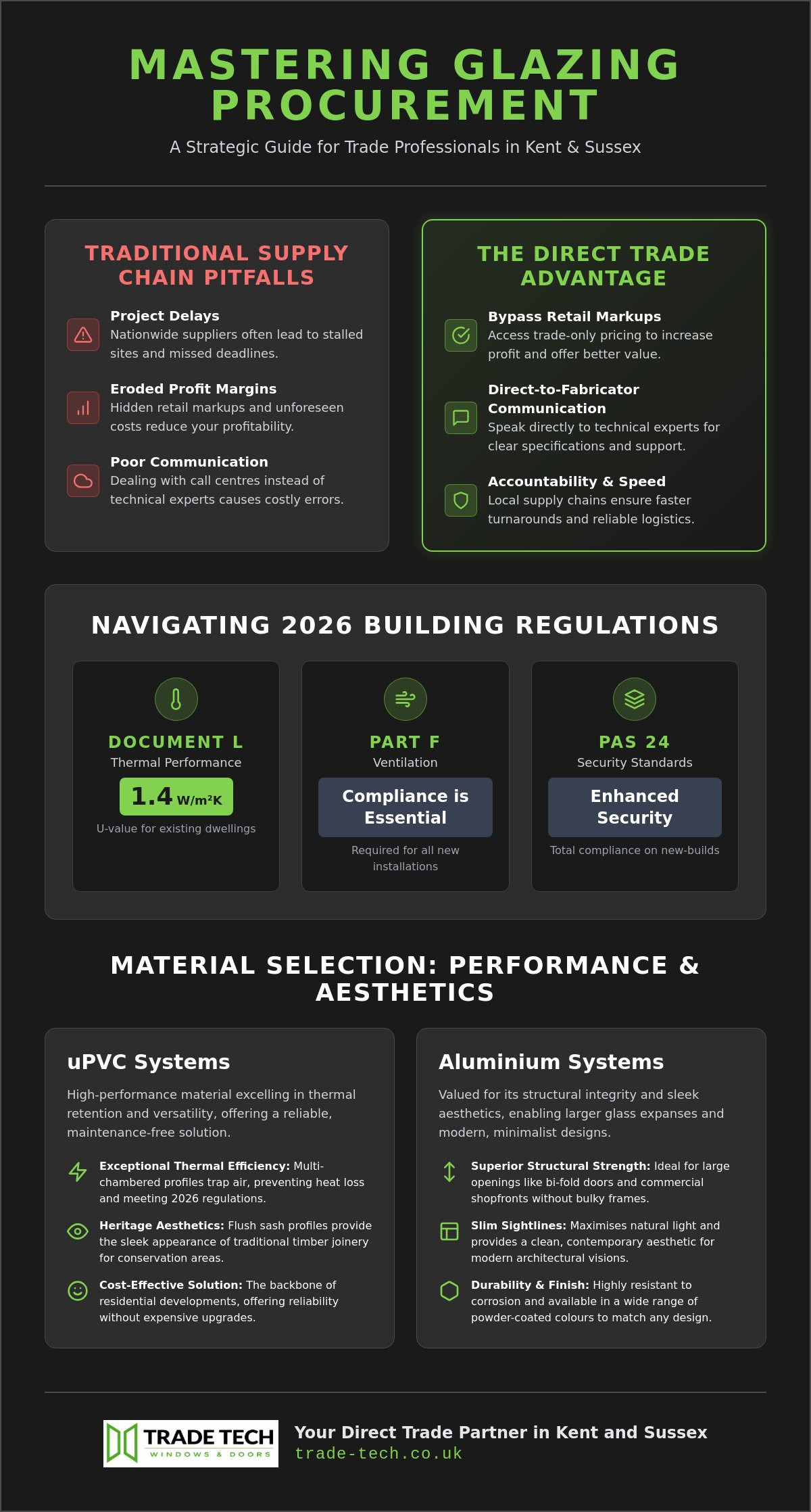
This guide provides the logistical framework needed to master glazing procurement for your projects across Kent and Sussex. You’ll learn how to navigate the 2026 building regulations with confidence. We examine the 1.4 W/m²K U-value requirements for existing dwellings and the necessity of Part F compliant ventilation. We also cover lead time management for aluminium bi-folds and the specific advantages of trade-only pricing. This article gives you the tools to ensure faster project turnarounds and consistent product quality. Read on to optimise your supply chain and protect your bottom line.
Key Takeaways
- Learn how the direct trade windows model eliminates retail margins and streamlines communication between your site and the fabricator.
- Identify the optimal balance between structural performance and thermal efficiency when selecting between aluminium and high-performance uPVC.
- Understand why local supply chains in Kent and Sussex offer superior resilience and how to use OTIF metrics to protect your project timelines.
- Master the latest 2026 technical specifications for Document L and PAS 24 security standards to ensure total compliance on new-build developments.
- Discover how a specialist trade partnership with Trade Tech Windows & Doors provides the technical support needed for everything from roof lanterns to commercial shopfronts.
The Strategic Advantage of Sourcing Direct Trade Windows
Sourcing direct trade windows is a strategic move that fundamentally shifts how a contractor manages their supply chain. This B2B model bypasses the retail middleman entirely. It connects the site manager or developer directly with the fabricator. By removing the retail markup, you don’t just save money; you gain direct access to the manufacturing process. This relationship ensures that the technical specifications you request are the ones that arrive on-site. It’s about transparency and accountability from the factory floor to the final installation.
Standard retail suppliers often lack the technical depth required for professional installations. They are geared towards homeowners. In contrast, a trade-only partner understands the pressures of a commercial site. This includes the need for precise technical data and reliable delivery schedules. When you work with a specialist, the communication loop is closed. This prevents the common errors found in nationwide “one-size-fits-all” supply chains. You aren’t dealing with a call centre; you’re dealing with the people who understand the window materials and components being used in production.
Reducing Project Overheads
Profitability in construction relies on tight cost control. Accessing trade pricing gives you a significant advantage during the tendering phase. You can offer clients better value whilst maintaining your own healthy margins. Removing the retail middleman also streamlines the dispute resolution process. If a unit is damaged or a specification needs a mid-project adjustment, you speak to the factory. This directness saves hours of administrative back-and-forth and keeps the project moving. It’s an efficient way to protect your bottom line without sacrificing product quality.
Direct Communication and Technical Support
Installation errors often stem from a lack of technical clarity. A direct trade relationship provides a dedicated line to the technical team. This is vital when dealing with complex glazing or high-performance frames. Professional partners provide bespoke CAD drawings and technical data sheets. These documents are essential for modern developers who must prove compliance to building inspectors. They offer the “paper trail” required for modern site management.
In Sussex, heritage projects often demand a higher level of customisation. Whether you’re matching a specific profile for a Victorian renovation or specifying slimline aluminium for a modern extension, direct feedback loops are invaluable. You can discuss tolerances and aesthetic finishes with the experts who actually build the frames. This level of technical partnership ensures that the final product meets both the architectural vision and the structural requirements of the site. Direct trade windows provide the flexibility that standard retail units simply cannot match.
Material Selection: Optimising for Performance and Aesthetics
Selecting the correct frame material requires a balance of structural integrity and thermal performance. For contractors sourcing direct trade windows, the choice between uPVC and aluminium often dictates the project’s overall energy rating and architectural impact. You must consider the local climate. Inland Sussex projects differ significantly from those on the exposed Kent coast. Salt spray and high wind loads demand specific hardware and finish specifications. Understanding these nuances ensures that the glazing you install today remains functional and aesthetically pleasing for decades.
uPVC Systems: Versatility and Thermal Efficiency
Modern uPVC is no longer just a budget option. It’s a high-performance material that excels in thermal retention. Standard casement windows are the backbone of residential developments. They offer a reliable, maintenance-free solution that meets the 2026 Building Regulations for energy efficiency without the need for expensive upgrades. These systems are inherently insulating, using multi-chambered profiles to trap air and prevent heat loss.
We’ve seen a sharp rise in the use of flush sash profiles. These provide a cost-effective alternative to timber in conservation areas. They offer the sleek, level appearance of traditional joinery whilst providing the insulation benefits of modern extrusions. If you’re working on a heritage renovation, exploring these high-spec uPVC options can help protect your margins whilst satisfying planning requirements. They’re virtually indistinguishable from painted wood once installed but require zero painting or sanding.
Aluminium Systems: Slim Sightlines and Structural Strength
Aluminium is the preferred choice for contemporary designs requiring expansive glass areas. Its inherent structural strength allows for much slimmer sightlines than uPVC. This makes aluminium windows ideal for projects that prioritise natural light and minimalist aesthetics. To combat the material’s natural conductivity, modern profiles incorporate advanced thermal breaks. These polyamide strips prevent cold bridging and ensure the units achieve the required U-values for new-build compliance.
For large-scale openings, aluminium’s rigidity is unmatched. It supports heavier triple-glazed units and oversized sliding systems without the risk of frame warping. You can find more detailed technical data on these systems by viewing our professional patio sliders range.
Durability is non-negotiable on professional sites. Aluminium offers the advantage of RAL powder coating. This process provides a resilient finish that resists fading and scratching. For coastal environments, marine-grade coatings are essential to prevent corrosion from salt air. In contrast, uPVC foils have improved significantly. They now offer realistic woodgrain textures that are bonded to the profile. This ensures they don’t peel or blister under intense UV exposure. Choosing the right finish is as critical as the material itself to ensure the long-term success of the installation.
Evaluating Supplier Reliability: Lead Times and Logistics
Reliability in the glazing industry is measured by the “on-time, in-full” (OTIF) metric. For contractors in Kent and Sussex, a high OTIF score is the difference between a profitable handover and a liquidated damages claim. When sourcing direct trade windows, you must look beyond the initial quote. Assess the supplier’s actual manufacturing capacity against their current order book. A fabricator that over-commits will inevitably fail on lead times, causing a domino effect across your sub-contractors. It’s better to have a realistic six-week lead time that is met than a four-week promise that slips.
Local supply chains offer a resilience that nationwide manufacturers cannot match. If a unit arrives with a specification error or transit damage, a regional partner can often provide a remake within days. A nationwide supplier might require another full delivery cycle, which can take weeks. This speed of response is critical for maintaining site momentum. Local delivery teams also understand the specific logistical challenges of the South East. They know how to handle the narrow lanes of the High Weald or the restricted access of historic coastal towns.
The Risks of Nationwide Sourcing
Transporting fragile glazing over long distances introduces unnecessary risk. Every mile a unit travels increases the chance of seal failure or frame damage. Nationwide delivery models often rely on third-party couriers who don’t always specialise in handling architectural glass. This leads to a higher rate of transit-related defects. Managing returns with a distant manufacturer is notoriously difficult, often involving complex portal systems and lengthy wait times. By choosing a regional partner, you reduce the environmental footprint of your project and ensure your direct trade windows arrive on a specialised fleet designed for glass protection.
Quality Control and Warranty Assurance
A robust quality management system is the foundation of a reliable trade partnership. You should verify that your supplier conducts rigorous checks at every stage of production. This is especially important for sealed units, which must maintain long-term gas retention to meet energy standards. Ensuring compliance with the UK Building Regulations Approved Documents is a shared responsibility. A supplier that provides clear, documented warranties protects your reputation with the end-user. It ensures that if a component fails, the support is there to fix it without eating into your margins. Look for guarantees that cover both the structural integrity of the frames and the performance of the glazing units. This level of assurance is what separates a professional partner from a faceless volume manufacturer.
Technical Specification: Building Regulations and Compliance 2026
Compliance isn’t optional. It’s a legal and professional baseline. Sourcing direct trade windows ensures your specifications align with the 2026 standards before the units leave the factory. This proactive approach prevents costly site delays caused by building inspectors rejecting non-compliant glazing. You need a partner who understands the nuances of the latest Approved Documents. Whether you’re certifying a project through FENSA or CERTASS, the technical data must be accurate and available. Every unit must meet the specific requirements for safety, security, and ventilation to ensure a smooth handover.
Ventilation under Part F remains a critical focus for 2026. Modern, airtight frames significantly reduce natural airflow. This makes the inclusion of trickle vents essential in most habitable rooms. You must ensure that the equivalent area of ventilation meets the room’s specific requirements. Failure to address this leads to condensation issues and damp, which can trigger warranty claims. A technical trade supplier will calculate these requirements during the quoting stage, ensuring your order is compliant from the outset.
Thermal Performance and U-Values
Thermal targets are more stringent than ever. For replacement windows in existing dwellings, the maximum U-value is 1.4 W/m²K. However, for new-build projects, the recommendation is 1.2 W/m²K or lower to comply with Part L. Achieving these figures requires advanced glass specifications. You’ll need Low-E coatings to reflect heat back into the building and argon gas fill within the sealed units. These components work together to minimise heat loss and improve the building’s overall energy strategy. For larger developments, you can find more detail in our guide for new-build contractors and developers.
Security and Accessibility Standards
Security is a primary concern for homeowners and developers alike. PAS 24 is the mandatory standard for new-build developments, focusing on resistance against opportunistic attacks. This involves reinforced frames and robust multi-point locking systems, which are standard in high-quality composite doors. Accessibility is equally important. Document M requires specific threshold heights and clear opening widths to ensure the building is usable for everyone.
Fire safety and egress must also be considered for upper-floor installations. Replacement windows must meet specific criteria: a minimum clear openable area of 0.33 m² and a minimum width or height of 450mm. The sill height shouldn’t exceed 1100mm from the floor level. Using a specialist supplier ensures these technical details are built into the frame design, protecting both the end-user and your professional reputation.
Request a technical specification consultation
Trade Tech Windows & Doors: Your Direct Trade Partner in Kent and Sussex
Trade Tech Windows & Doors operates as a specialist facilitator for the regional construction industry. We provide a bridge between advanced manufacturing and on-site execution. For new-build contractors and developers, this is a technical partnership. Sourcing direct trade windows from a local fabricator eliminates the delays and miscommunications typical of nationwide suppliers. Our service area covers the entirety of Kent and East Sussex. This proximity allows for responsive site support and a logistics model that respects your project timelines.
Our facility handles everything from standard uPVC casements to complex aluminium shopfronts. This breadth ensures you can source an entire glazing package from a single, reliable point of contact. For commercial projects requiring high-impact internal displays, specialists like Coker Exhibition Systems Ltd (CokerExpo) provide the lightboxes and tension fabric systems that often accompany a professional shopfront installation. Consistency is vital for maintaining aesthetic uniformity across a development. Whether you’re working on a modern apartment block in Brighton or a bespoke residential project in Maidstone, our team provides the technical oversight required for professional success.
Architectural Glazing Solutions
High-performance projects often require specialised components that standard suppliers struggle to manage. We offer high-margin add-ons like integral blinds, which are increasingly specified for bi-fold and sliding door installations. These factory-fitted units provide a clean finish and reduce the need for secondary sub-contractors on-site.
For heritage or high-end residential work, we provide bespoke solutions for traditional conservatories and extensions. Our range of roof lanterns and flat rooflights allows you to maximise natural light whilst maintaining strict thermal performance. Consult with our technical team during the design phase. This ensures architectural roof-light specifications are both buildable and compliant with current wind-loading requirements.
Streamlining Your Next Project
Efficiency is our core value. We’ve designed our onboarding process to be brisk for new trade accounts in the Southeast. Submit your current project requirements via our contact page to receive a rapid, itemised quote. We don’t just provide prices. We provide a logistical roadmap for your glazing procurement.
The Trade Tech Windows & Doors commitment is built on three pillars: technical excellence, manufacturing speed, and local accountability. By sourcing direct trade windows from our Kent-based facility, you protect your margins and your reputation. Experience a supply chain that works as hard as you do. Let us manage the technical complexities of glazing so you can focus on the build.
Future-Proof Your Supply Chain with Local Expertise
Glazing procurement shouldn’t be a source of site friction. Transitioning to direct trade windows provides the technical clarity and margin protection required for modern professional builds. You now have the framework to navigate the 2026 Building Regulations, from stringent U-value targets to mandatory PAS 24 security. By prioritising a local supply chain, you eliminate the logistical uncertainties of nationwide manufacturing and ensure your materials arrive on-site, in-full, and on-time.
Trade Tech Windows & Doors stands as your dedicated partner in the Southeast. We combine specialist uPVC and aluminium fabrication with the technical support new-build developers demand. Our local delivery network across Kent and Sussex is designed to keep your projects moving at pace.
Request a professional trade quote for your Kent or Sussex project
We’re ready to help you streamline your next installation. Let’s ensure your next project is your most profitable yet.
Frequently Asked Questions
What is the difference between direct trade windows and retail supply?
Direct trade windows bypass the retail middleman to connect contractors directly with the manufacturer. This model eliminates showroom overheads and retail markups, allowing for more competitive project tendering. It also ensures a direct line to the technical team for precise specifications. Unlike retail supply, the focus is on high-volume efficiency and technical partnership rather than consumer-facing marketing.
How do current 2026 building regulations affect window specification?
The 2026 regulations prioritise energy efficiency and ventilation. Replacement windows in existing homes must achieve a maximum U-value of 1.4 W/m²K. For new builds, the standard is often 1.2 W/m²K or lower under Part L. Part F requires adequate ventilation, usually through trickle vents; whilst Part M dictates threshold heights for accessibility. These standards are mandatory for building control approval on all professional developments.
What are the typical lead times for trade aluminium bi-folds in Kent?
Lead times for aluminium bi-folding doors typically range from 3 to 8 weeks in the Kent region. The exact timing depends on the complexity of the order and the specific RAL finishes required. Sourcing through a local direct trade windows partner often reduces transit times compared to nationwide suppliers. This regional proximity allows for more accurate delivery scheduling and faster resolution if site requirements change mid-project. For a full technical breakdown of the specification and installation process, see our guide to bi fold doors kent contractors rely on for compliant, high-performance installations.
Can I source bespoke RAL colours for direct trade aluminium windows?
Yes, aluminium profiles can be finished in any bespoke RAL colour through the powder coating process. This provides a durable, weather-resistant finish that is ideal for both modern residential and commercial shopfronts. For projects on the Kent or Sussex coast, we recommend marine-grade coatings. This extra protection prevents corrosion from salt spray and ensures the frames maintain their aesthetic finish in harsh environments.
Are your uPVC windows compliant with Document L thermal standards?
Our uPVC systems are fully compliant with Document L thermal standards. They utilise multi-chambered extrusions and high-performance sealed units with argon gas fill and Low-E coatings. This combination easily meets or exceeds the 1.4 W/m²K requirement for replacement glazing. These units provide a cost-effective way for contractors to ensure project compliance without compromising on structural durability or long-term thermal retention.
Do you provide delivery to sites across East Sussex and Kent?
We provide a dedicated delivery service to construction sites across the entire Southeast, including Kent and East Sussex. Our fleet is specially equipped to transport fragile glazing units and oversized aluminium frames safely. Local drivers understand the logistical challenges of regional sites, such as restricted access in historic towns or narrow rural lanes. This ensures your materials arrive safely and are unloaded efficiently to maintain site momentum.
How do integral blinds work within double glazed sealed units?
Integral blinds are permanently housed between the two panes of glass in a hermetically sealed unit. They are operated via external magnets or electronic controls, meaning the internal mechanism remains protected from dust and damage. This makes them a maintenance-free solution for bi-folding doors and large glazed areas. They offer a sleek, contemporary finish that is increasingly popular in high-end Sussex residential developments.
What security certifications do your trade composite doors carry?
Our trade composite doors are engineered to meet PAS 24 security standards. This is the mandatory requirement for new-build developments under Approved Document Q. Each door features a multi-point locking system and reinforced core to resist opportunistic attacks. These certifications provide peace of mind for the end-user and ensure the contractor meets all regulatory obligations for property safety and structural integrity.