
In 2026, a window that looks perfect on the delivery pallet but fails a Building Control inspection isn’t a bargain. It’s an expensive liability. Sourcing quality trade windows across Kent and Sussex now demands a shift from simple aesthetic checks to rigorous technical verification. You’re likely already feeling the pressure of the 1.4 W/m²K U-value limits for replacements and the even stricter 0.8 W/m²K Future Homes Standard for new developments. Meeting Approved Document L while managing tight site schedules is a balancing act that many suppliers simply can’t handle.
We understand that inconsistent product batches and poor supplier communication do more than just annoy you. They stall your projects, damage your reputation, and eat your margins. This guide promises to help you identify genuine glazing quality and streamline your local supply chain for maximum efficiency. We’ll preview the critical 2026 Building Regulations, detail the shift towards high-performance aluminium, and explain how to secure a partnership that eliminates on-site installation friction. Discover how to protect your project timelines with glazing that’s stable, compliant, and efficient.
Key Takeaways
- Navigate the 2026 Building Regulations with absolute clarity on Document L and Document F requirements for both new builds and replacement projects.
- Identify the technical benchmarks of quality trade windows to ensure structural integrity and professional-grade performance across every batch.
- Protect your project margins by prioritising lead time accuracy and specialist supply chain reliability to avoid costly on-site delays.
- Match the right material to the specific project needs, from high-performance uPVC for volume residential builds to aluminium for architectural glazing and shopfronts.
- Gain a logistical edge by sourcing from a Kent-based specialist to reduce installation friction and lower your project’s total carbon footprint.
Defining Quality in the Trade Glazing Market
Quality in the professional glazing sector isn’t just about a clean finish or a smooth weld. For a contractor in Kent or East Sussex, it’s about structural integrity and the absolute certainty that every unit meets the 1.4 W/m²K U-value requirement for replacements. Retail-grade products often prioritise cosmetic features that appeal to homeowners. Professional-grade fenestration, however, focuses on the performance gap between theoretical energy ratings and real-world results. Quality trade windows are engineered for rapid installation. Precise manufacturing tolerances mean frames drop into apertures without excessive shimming, directly reducing labour costs and site friction.
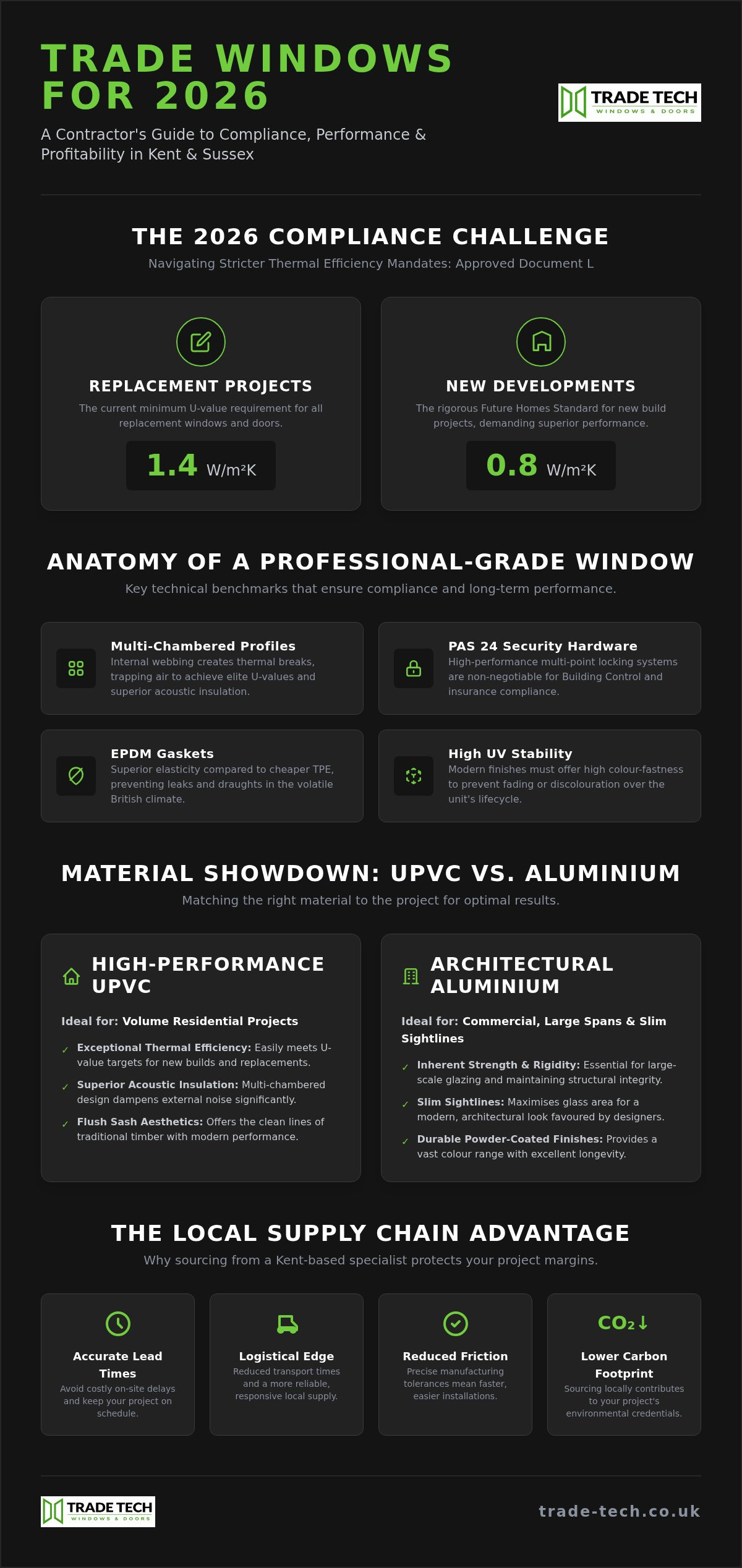
High-performance hardware is a non-negotiable specification for 2026 projects. Multi-point locking systems must meet PAS 24 security standards to satisfy both building control and insurance requirements. This isn’t just a safety feature; it’s a marker of the unit’s long-term stability. When you source through a specialist trade supplier, you’re buying components designed to withstand the high-frequency use typical of commercial and high-density residential environments. Cheap hardware fails early, leading to costly call-backs that erode your project margins.
The Anatomy of a High-Spec Trade Window
Look inside the profile to find the real value. High-spec units feature multi-chambered internal webbing. These chambers trap air to create a thermal break, which is essential for achieving the 0.8 W/m²K standard required for new builds under the Future Homes Standard. This insulated glazing technology ensures the unit remains energy-efficient throughout its lifecycle. We also look for EPDM gaskets over cheaper TPE alternatives. EPDM retains its elasticity in the volatile British climate, preventing the leaks and draughts that plague budget installations. Trade quality is a combination of ISO-certified manufacturing and precision, site-ready delivery.
Why Material Choice Dictates Long-Term Project Success
Material selection impacts more than just the initial price point. Premium uPVC offers exceptional thermal performance for residential volume projects. Architectural-grade aluminium provides the rigidity needed for larger spans, slim sightlines, and commercial shopfronts. Consider these technical factors:
- Profile Thickness: Thicker walls prevent the frame warping often seen in budget profiles during extreme summer temperatures.
- UV Stability: Modern finishes must demonstrate high colour-fastness to prevent fading or “pinking” over time.
- Rigidity: Aluminium’s inherent strength is vital for maintaining the structural integrity of large-scale glazing installations.
Choosing the right material ensures the glazing remains a functional asset rather than a maintenance burden. In the 2026 market, developers expect colour-fastness and mechanical reliability that lasts decades, not just the duration of a standard warranty period.
Technical Specifications: Material Excellence in uPVC and Aluminium
Specifying the right materials for 2026 developments requires more than a glance at a brochure. It’s about understanding how frame architecture influences thermal efficiency and site productivity. For volume residential projects, the choice often centres on high-performance uPVC. For architectural builds or commercial shopfronts, aluminium is the standard. Both materials have evolved to meet the stringent requirements of Building Regulations Part L. When you source Trade uPVC and Aluminium Windows, you aren’t just buying frames. You’re investing in technical compliance. Quality trade windows must deliver on three fronts: thermal retention, acoustic dampening, and structural rigidity.
uPVC Casement and Flush Sash Standards
Modern uPVC is no longer a basic commodity. Today’s professional-grade profiles utilise multi-chambered internal structures. These chambers do more than just insulate; they break up sound waves to provide superior acoustic insulation. This is a critical selling point for developments near transport hubs in Kent. We’re also seeing a significant shift towards flush sash aesthetics. These units provide the clean, flat external lines of traditional timber but with the maintenance-free benefits of uPVC. They’re particularly effective for heritage-sensitive areas where modern performance is required without compromising local character. For detailed technical specs, refer to our guide on uPVC Casement Windows for Kent Trade Projects. These units are engineered for stability. They won’t warp. They won’t discolour. They simply perform.
Aluminium Performance for Modern Developments
Aluminium has become the primary choice for architects seeking slim sightlines and expansive glazing. The secret to its efficiency lies in the polyamide thermal break. This plastic barrier sits between the inner and outer frame, stopping heat from escaping through the metal. It’s how modern units achieve sub-1.2 U-values, comfortably exceeding current standards. For projects along the Sussex coast, durability is just as important as thermal performance. We specify Qualicoat-standard powder coating to ensure frames resist salt-spray corrosion and UV degradation. This level of protection is essential for maintaining the professional finish your clients expect. Our High-Performance Aluminium Windows guide provides the full breakdown for developer specifications. These systems support larger glass weights, allowing for the floor-to-ceiling designs that define modern luxury builds. View our direct trade pricing to see how these specs fit your project budget.
Logistical Reliability: Lead Times and Supply Chain Integrity
Lead times are more than just dates on a calendar. For a developer, they represent the difference between a project that finishes on schedule and one that incurs significant penalty costs. In the 2026 market, logistical precision is just as important as the U-values of the frames. Sourcing quality trade windows requires a supplier that can guarantee delivery windows and maintain supply chain integrity. Relying on non-specialist suppliers for complex architectural glazing is a gamble. These entities often lack the dedicated transport and handling equipment needed to deliver oversized units or delicate aluminium profiles without incident.
Minimising Site Delays through Direct Supply
TradeTech organises every delivery to minimise site downtime. By maintaining a direct supply chain from our manufacturing facilities to your Kent site, we eliminate the delays common with third-party distribution centres. This model ensures that the information you receive about lead times is accurate and verified. In busy development zones, accurate delivery windows prevent the ‘bottleneck effect’ that occurs when multiple trades are forced to wait for glazing to be secured. Direct trade supply reduces the risk of transit damage by eliminating unnecessary handling and offloading between multiple distribution hubs.
Packaging and Protection for Professional Handling
Protecting your margins means protecting the product until it’s in the aperture. Every unit leaving our trade centre undergoes a final quality control check to ensure it meets our internal benchmarks. We use standardised protection protocols, including reinforced corner guards and heavy-duty shrink-wrapping, specifically for transit across East Sussex. For multi-unit developments, we provide labelled, site-ready batches organised by plot or floor level. This level of organisation allows your installers to work methodically without wasting time sorting through mismatched units. Whilst meeting Building Regulations for windows ensures the project is legal, our logistical framework ensures it’s profitable.
Reliability is the foundation of a successful trade partnership. Our Trade Pricing and Quotations are designed to provide transparency from the first enquiry to the final delivery. We understand the pressures of modern site management. We provide the logistical support you need to maintain momentum. Don’t let poor supplier communication stall your progress. Choose a partner that respects your timeline as much as your technical specifications.
Compliance and Building Regulations for 2026 Projects
Technical precision is the baseline for quality trade windows in 2026. Navigating the regulatory landscape requires more than a passing knowledge of aesthetics. As of August 2026, the maximum U-value for replacement windows in existing dwellings is 1.4 W/m²K. However, for new build properties, the Future Homes Standard has pushed this requirement down to 0.8 W/m²K. This performance gap is where generic suppliers often fail. We ensure every unit is specified to meet these exact standards, helping you avoid costly site inspections or failed Building Control sign-offs. It’s about protecting your project’s legality from the start.
Approved Document F is equally critical for modern developments. Because today’s frames are more airtight than ever, the risk of condensation and poor air quality has increased. Compliance now requires the mandatory use of trickle ventilators to ensure adequate background ventilation. We integrate these seamlessly into our trade specifications to ensure you pass inspections without remedial work. Our support for New Build Contractors and Developers includes providing full technical documentation for every unit we supply to the Kent and Sussex regions.
Thermal Efficiency and Carbon Reduction
Meeting a 0.8 U-value isn’t possible with standard double glazing. It requires high-performance argon-filled sealed units and advanced Low-E glass coatings. These coatings reflect heat back into the building whilst allowing for natural solar gain. For 2026 targets, triple glazing has become the practical standard for new developments. All our glass components meet current BSI standards for thermal retention and longevity. This ensures the finished building performs as well in reality as it does on the architect’s thermal model.
Security and Safety Standards for the Trade
Security remains a primary concern for local authorities and insurers alike. PAS 24 certification is the industry benchmark for enhanced security. It’s not just about the locks; it’s about the entire window assembly’s resistance to forced entry. Document N also dictates where you must use toughened or laminated glass for safety. We specify these for critical locations, such as low-level glazing or doors, to ensure full compliance. Fire egress is another non-negotiable factor. Casement windows in multi-storey residential blocks must provide a clear opening for escape. Working with a FENSA or CERTASS registered installer scheme provides the necessary certification to prove your project is fully compliant and safe.
Request a technical compliance consultation for your next project
Sourcing Quality Trade Windows in Kent and East Sussex
Sourcing quality trade windows from a local Kent-based specialist provides a distinct logistical advantage. It’s about more than just proximity. A local partner understands the specific pressures of the Southeast construction market. We provide comprehensive technical support and site surveys across Maidstone, Ashford, and Brighton. This hands-on approach ensures that measurements are accurate and specifications are correct before manufacturing begins. By choosing a regional supplier, you also significantly reduce the carbon footprint of your project. Fewer transport miles mean lower emissions, helping you meet the sustainability criteria increasingly demanded by modern developers and local authorities. Our commitment to providing quality trade windows is backed by years of regional experience.
Local Expertise for Regional Planning Requirements
Kent and East Sussex are home to numerous conservation areas with strict aesthetic guidelines. Sourcing sliding sash windows that replicate heritage timber whilst providing 2026 thermal performance is vital for these projects. Local knowledge helps us guide you through these regional planning requirements. Whether you’re specifying roof lanterns for a high-end extension in Tunbridge Wells or commercial glazing in Ashford, we provide the architectural solutions that satisfy both planners and clients. We understand the local vernacular. We ensure your glazing choices enhance the building’s character without compromising on modern efficiency.
Partnering with TradeTech for Future Projects
A dedicated trade account offers more than just competitive pricing. It provides a stable foundation for your business growth. You gain access to a full range of aluminium and uPVC doors designed to match our window specifications perfectly. This ensures visual consistency across the entire development. Our team acts as a seasoned professional guide, providing the technical advice necessary for you to succeed. We protect your time by streamlining the ordering process and ensuring site-ready delivery. We’re here to help you navigate the complexities of the 2026 market with confidence.
Contact TradeTech for a professional quote
Secure Your 2026 Glazing Supply Chain
The 2026 glazing market demands a shift from aesthetic-led sourcing to technical and logistical precision. Identifying quality trade windows now requires a focus on Document L compliance and site-ready delivery frameworks. By prioritising high-performance uPVC and architectural-grade aluminium, you ensure your developments meet the Future Homes Standard whilst protecting your project margins from unnecessary call-backs. Technical excellence is no longer optional; it’s the baseline for professional success.
Partnering with a Kent-based specialist provides the logistical stability necessary for modern site management. You benefit from direct supply chains that eliminate transit damage and accurate lead times that prevent construction bottlenecks. TradeTech serves as a dedicated specialist supplier to Kent and Sussex developers, providing units that are fully compliant with 2026 Building Regulations. Our dedicated B2B logistical support is designed to respect your site timeline and your specific technical requirements.
Request a Professional Trade Quote from TradeTech
Build your next project on a foundation of technical excellence and dependable service. We’re ready to support your success with bespoke architectural solutions and local expertise that you can trust. Let’s streamline your supply chain today.
Frequently Asked Questions
What defines a ‘quality’ trade window for a new build project?
Technical compliance with the Future Homes Standard is the primary marker of quality trade windows for new build projects. This specifically requires achieving a U-value of 0.8 W/m²K. Quality also includes structural rigidity and precision manufacturing to ensure frames fit apertures exactly. High-spec internal webbing and EPDM gaskets are essential for long-term thermal performance, ensuring the unit remains energy-efficient and stable throughout its lifecycle.
How do 2026 Building Regulations affect trade window specifications?
The 2026 regulations mandate stricter energy efficiency and ventilation standards for every installation. Replacement windows must meet a maximum U-value of 1.4 W/m²K, whilst new builds require 0.8 W/m²K. Approved Document F also makes trickle ventilators compulsory for background ventilation in airtight modern frames. These changes mean you must specify higher-performance sealed units and advanced profile designs to pass site inspections and avoid project delays.
What are the current lead times for aluminium trade windows in Kent?
Lead times for aluminium windows vary based on the specific system and finish required for your project. Whilst uPVC often has shorter turnarounds, architectural aluminium typically takes longer due to the specialised powder-coating process. We provide accurate, verified delivery windows at the point of quotation to help you avoid site bottlenecks. Contact us directly to get the most current lead times for your specific project requirements in Kent or Sussex.
Can you supply bespoke architectural glazing like roof lanterns for trade projects?
Yes, we supply a range of bespoke architectural solutions including high-performance roof lanterns and integral blinds. These are designed to integrate seamlessly with our uPVC and aluminium window systems for a consistent aesthetic across the development. We provide the technical drawings and site-survey support necessary for complex installations. This ensures your architectural features are both visually striking and fully compliant with current building standards.
Is PAS 24 security certification standard on all trade uPVC windows?
PAS 24 is a specific security benchmark that we apply to our trade uPVC specifications upon request. Whilst it isn’t always standard on basic units, it’s a critical requirement for most modern residential developments and insurance policies. We specify multi-point locking systems and reinforced frames to ensure units meet this enhanced security standard. You should always verify your project’s specific security requirements during the initial specification and quoting phase.
What is the difference between direct trade supply and retail window sourcing?
Direct trade supply focuses on logistical precision, technical compliance, and bulk pricing for professionals. Unlike retail sourcing, which prioritises homeowner aesthetics, our service is designed to reduce site friction and labour costs. We provide quality trade windows in site-ready batches, often labelled by plot or floor level. This methodical approach ensures contractors receive the technical documentation and delivery reliability needed for commercial-scale projects.
How do you ensure Document L compliance for large-scale developments?
We ensure Document L compliance by using argon-filled sealed units and advanced Low-E glass coatings in every frame. For large-scale developments, we provide a full technical breakdown of U-values and thermal performance data for your building models. This documentation is essential for satisfying Building Control and meeting carbon reduction targets. Our specialist knowledge of the 2026 standards ensures that your glazing specifications are legal and future-proofed.
Do you provide site-only delivery or full installation services for contractors?
We operate as a specialist supplier and installer, offering both site-only delivery and comprehensive installation services. For contractors in Kent and East Sussex, this flexibility allows you to choose the level of support your project requires. Our installation teams are fully trained in the latest 2026 compliance standards, ensuring that high-performance aluminium and uPVC units are fitted correctly to maintain their thermal and structural integrity.