
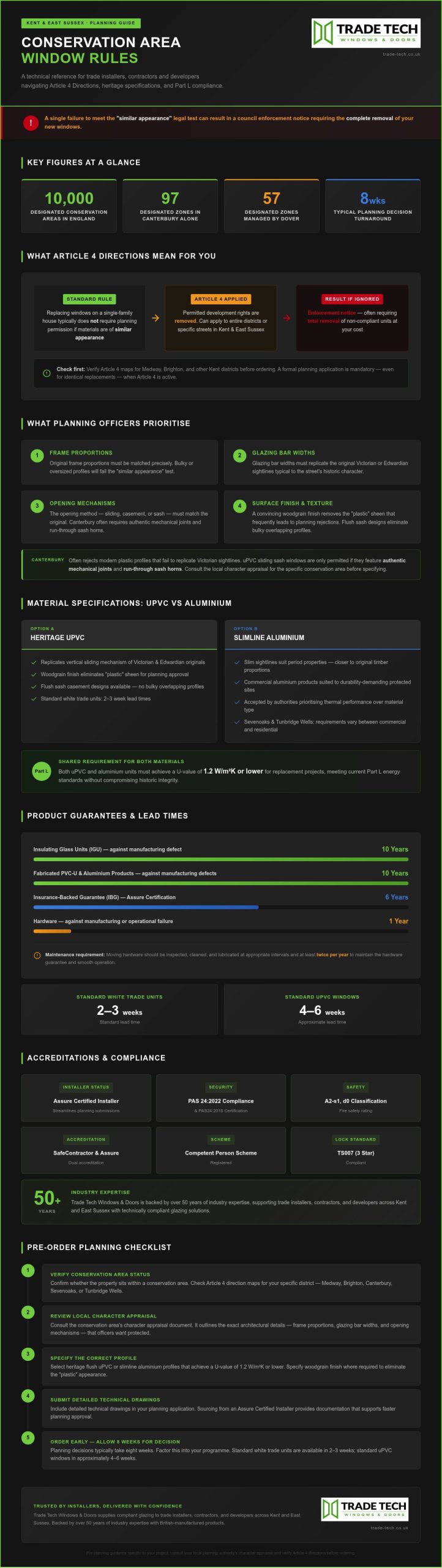
A single failure to meet the “similar appearance” legal test can result in a council enforcement notice requiring the complete removal of your new windows. You already understand that balancing historic character with modern thermal performance is the most complex part of any Kent refurbishment project. It’s a high-stakes environment where a minor specification error leads to costly delays and rejected planning applications.
This guide helps you master the technical Conservation Area Window Rules and local planning constraints to ensure every project remains compliant and efficient. You’ll learn how to navigate Article 4 directions across Kent and East Sussex whilst meeting Part L requirements with a U-value of 1.2 W/m²K or lower. We provide the specific details you need on heritage flush profiles, woodgrain finish options, and high-performance double-glazed units. By following these established standards, you can secure fast planning approval and deliver the high-spec results your clients expect.
Key Takeaways
- Identify how Article 4 Directions remove permitted development rights, making formal planning applications mandatory for window replacements.
- Master the technical Conservation Area Window Rules to ensure new installations pass the “similar appearance” legal test and avoid enforcement action.
- Select heritage-style uPVC or slimline aluminium units that reach U-values of 1.2 W/m²K without compromising traditional aesthetics.
- Streamline your planning submissions by using detailed technical drawings and sourcing from an Assure Certified Installer.
- Reduce project delays with reliable lead times, including fourteen-day turnarounds for standard white trade units to keep your site on schedule.
Understanding Conservation Area Designations and Article 4 Directions
Conservation areas protect the architectural or historic interest of specific locations. In England, there are approximately 10,000 designated areas, with Kent holding a significant concentration. Canterbury alone manages 97 designated zones, whilst Dover oversees 57. Your local planning authority (LPA) has a statutory duty to preserve or enhance these environments. This legal obligation forms the basis of all Conservation Area Window Rules. For new build contractors and developers, Trade Tech Windows & Doors provides the technical expertise needed to navigate these protected zones.
Local authorities use Article 4 directions to restrict changes that would otherwise be allowed under permitted development. Typically, replacing windows on a single-family house doesn’t require permission if the materials are of similar appearance. An Article 4 direction removes this right. It makes a formal planning application mandatory for any glazing change on elevations fronting highways or public spaces. Planning officers generally expect “like-for-like” replacements as the default for approval. They prioritise matching the original frame proportions, glazing bar widths, and opening mechanisms to maintain the street’s historic character.
The Impact of Article 4 Directions on Glazing
Article 4 directions can apply to entire districts or specific streets. When these restrictions are in place, you cannot rely on standard permitted development. You must submit a full planning application even for identical replacements. This process usually takes eight weeks for a decision. Failing to secure permission before installation risks an enforcement notice. These notices often require the total removal of non-compliant units. We recommend checking the specific Article 4 maps for Medway, Brighton, and other Kent districts before you order trade uPVC and aluminium windows from Trade Tech Windows & Doors.
Local Authority Variations in Kent and East Sussex
Planning priorities vary significantly between councils. Canterbury City Council, for instance, often rejects modern plastic profiles that fail to replicate Victorian sightlines. They frequently permit uPVC sliding sash windows only if they feature authentic mechanical joints and run-through sash horns. Other authorities in Sevenoaks or Tunbridge Wells might have different requirements for commercial glazing compared to residential properties. Always consult the local character appraisal for the specific conservation area. These documents outline the exact architectural details planning officers want to protect. Matching these details in your specification ensures a faster turnaround and reduces the risk of costly application rejections.
Material Specifications: uPVC vs Aluminium in Protected Zones
Selecting the right material is a technical decision that determines both project approval and long-term performance. Whilst timber was once the only acceptable choice, modern engineering has introduced alternatives that satisfy strict Conservation Area Window Rules. You must balance the aesthetic demands of the local planning officer with the thermal requirements of Part L. The systems supplied by Trade Tech Windows & Doors are configured to achieve a U-value of 1.2 W/m²K or lower, ensuring your project exceeds current energy standards without compromising the building’s historic integrity.
Modern uPVC sliding sash windows provide a high-performance alternative to traditional wood. These units replicate the vertical opening mechanism and proportions of Victorian and Edwardian originals. Referencing Historic England guidance on traditional windows reveals that the focus has shifted toward the quality of the replication rather than the material alone. To ensure these units remain operational for decades, moving hardware should be inspected, cleaned, and lubricated at least twice per year. This simple maintenance routine protects the hardware guarantee and maintains the unit’s smooth operation.
High-Performance uPVC for Heritage Projects
A convincing woodgrain finish is essential for mimicking the texture of painted timber. This surface treatment removes the “plastic” sheen that often leads to planning rejections. For casement projects, specifying flush sash designs is a standard requirement. These frames sit level within the window opening, eliminating the bulky overlapping profiles found in standard modern glazing. This configuration allows you to reach a U-value of 1.2 W/m²K whilst maintaining the flat, traditional appearance that planning officers in Kent and East Sussex demand. If you need a reliable supply for an upcoming project, you can source trade uPVC and aluminium windows from Trade Tech Windows & Doors with lead times as short as fourteen days for standard white units.
Aluminium Solutions for Modern Conservation
For urban conservation areas or industrial heritage sites, aluminium windows offer the strength required for exceptionally slim sightlines. These systems use die-cast aluminium components to achieve high accuracy and tight tolerances, which is vital for matching the delicate frames of early 20th-century steel windows. When managing large-scale refurbishments, commercial aluminium products provide the necessary durability for high-traffic environments. These units also meet critical safety standards, including the A2-s1, d0 fire safety classification. This rating is particularly important for multi-storey residential projects where Approved Document B compliance is mandatory alongside heritage considerations.
Achieving ‘Like-for-Like’ Appearance for Planning Approval
Replicating the original design’s DNA is the most effective way to secure planning approval. Local officers in Kent look for exact matches in frame proportions and opening mechanisms. Success with Conservation Area Window Rules depends on this technical precision. For many heritage properties, French casements are the preferred choice. They provide a traditional appearance whilst meeting Approved Document B requirements for fire escape. These units feature two opening sashes without a central mullion, maintaining unobstructed views and authentic sightlines that standard casements cannot replicate.
When you specify sash units, details such as externally applied astragal glazing bars and run-through decorative horns are non-negotiable. These elements prevent the flat, modern look that frequently triggers application rejections. In busy Kent town centres like Canterbury or Tunbridge Wells, Planning Portal doors and windows guidance highlights that thermal performance must not compromise character. Effective acoustic insulation is vital in these high-traffic areas. High-performance glazing reduces airborne sound from traffic and pedestrians, making historic buildings viable for modern residential use without altering their external facade.
Critical Aesthetic Details
Measurement accuracy is the foundation of a compliant installation. You must use Brick to brick measuring techniques to determine the true opening size for every aperture. This ensures the frame fits perfectly without wide sealant gaps that planning officers find unacceptable. Modern durable finishes now allow you to match original paint colours exactly, avoiding the need for frequent maintenance. We recommend specifying putty-line aesthetics for all heritage projects. This angled frame detail mimics traditional timber glazing beads, providing a convincing heritage profile even when using modern double-glazed units.
Glazing Performance Standards
Compliance involves more than just visual matching. You need units that offer long-term reliability. We supply sealed units backed by a 10-year guarantee against manufacturing defects or premature failure. In noisier urban zones, triple glazing offers superior soundproofing whilst maintaining the slim profiles required by conservation officers. Security remains a priority for every developer and contractor. Our heritage designs ensure PAS 24:2022 security compliance. Integrating features like the Lock Lock security handle and attack locks provides modern protection without altering the building’s historic character. This balance ensures your project meets both heritage standards and modern insurance requirements.
Navigating the Planning Application Process for Glazing
Planning applications for windows in protected zones are rigorous. You must move beyond simple descriptions to provide technical proof of compliance. Local planning authorities in Kent, such as Canterbury or Sevenoaks, require a high level of detail before they validate a submission. Following the Conservation Area Window Rules strictly during the preparation phase prevents the eight-week statutory determination period from becoming a cycle of revisions. Professional documentation is the only way to avoid project stagnation.
Technical Documentation Requirements
Your application must include 1:20 scale drawings of frame sections. These drawings should show the exact profile of the sash, the frame, and the glazing bars. Cross-section details are vital for proving that new double-glazed units won’t look bulkier than the original single-paned timber. You also need to provide specifications for all hardware, such as the Lock Lock security handle or die-cast aluminium components. Justify your material choice by referencing Part L compliance and fire safety standards, specifically the A2-s1, d0 classification where relevant for multi-storey buildings.
Avoiding Common Application Pitfalls
Conservation officers have a low tolerance for “close enough” specifications. If a profile doesn’t match the historic character appraisal, the application will fail. Unauthorised installations in Kent often lead to enforcement notices, which mandate the removal of non-compliant glazing. To mitigate this risk, consult with an Assure Certified Installer during the design phase. They provide the regulatory support and technical data needed to satisfy the LPA. Utilising a professional survey, supply, and installation service ensures that measurements are accurate brick to brick, leaving no room for error during the fitment process.
Managing project timelines is essential for maintaining site efficiency. Once you secure approval, lead times become the priority. Our standard lead times for white trade units typically range from two to three weeks. For standard uPVC windows, the approximate lead time is four to six weeks as of June 15, 2026. If your project is on a tight schedule, our fast-track production can deliver high-spec units in up to just fourteen days. We recommend synchronising your project start date with these verified manufacturing cycles to avoid site delays.
Speak to our technical team about your planning requirements
Sourcing Compliant Glazing with Trade Tech Windows & Doors
Trade Tech Windows & Doors serves as a dedicated partner for the construction and installation industry across the South East. We understand that technical precision is the only way to satisfy Conservation Area Window Rules. Our role is to provide the technical bridge between complex planning constraints and physical site requirements. As an Assure Certified Installer, we ensure every unit meets the necessary thermal and security standards required for professional sign-off. For new build contractors and developers, this expertise reduces the risk of project stagnation and rejected installations.
Why Trade Tech Windows & Doors for Conservation Projects?
We provide stability for your projects through over 50 years of industry expertise. All our glazing products have British-manufactured provenance, ensuring high standards of quality control at every stage. We supply sealed units with a 10-year guarantee against manufacturing defects or premature failure. This long-term protection is vital for maintaining the reputation of your business. Security is never an afterthought. We integrate the Lock Lock security handle and attack locks into our heritage designs. These components provide the level of protection mandated by modern insurance requirements whilst maintaining a profile that planning officers in Kent and Sussex approve.
Fast-Track Your Trade Project
Site efficiency depends on reliable logistics. We offer a free delivery service across Kent and East Sussex to keep your operations moving. Our team provides accurate trade pricing for complex architectural glazing, ensuring your quotes remain competitive and precise. We respect the urgency of the trade environment. Information is delivered in functional, digestible chunks so you can make specification decisions quickly.
Lead times are managed with transparency to help you plan your project start dates accurately. Our standard lead times for white trade units typically range from two to three weeks. For standard uPVC windows, the approximate lead time is four to six weeks as of June 15, 2026. If your schedule is particularly tight, our fast-track production can achieve a turnaround of up to just fourteen days. This responsive service ensures you can meet client expectations and avoid the costly delays associated with non-compliant specifications. We provide the tools and technical advice necessary for professional success in protected zones.
Contact Trade Tech Windows & Doors for a technical consultation
Secure Your Project Success in Kent’s Protected Zones
Successful glazing replacement in heritage areas requires a balance of historical sensitivity and modern technical standards. You’ve seen that mastering the Conservation Area Window Rules is about more than just aesthetics; it’s about providing the technical documentation and high-performance specifications that local planning officers demand. By choosing heritage-flush uPVC or slimline aluminium systems, you can achieve the necessary U-values whilst preserving the character of Kent’s historic streetscapes.
Partnering with an Assure Certified Installer ensures your project meets all regulatory requirements from the start. Our British-manufactured units provide PAS 24:2022 security compliance and are backed by a 10-year sealed unit guarantee for long-term peace of mind. With lead times as short as fourteen days for standard trade units, you can maintain project momentum without compromising on quality or compliance.
Request a Trade Quote for Compliant Glazing
We are ready to support your next refurbishment or new build project with expert technical advice and reliable trade supply.
Frequently Asked Questions
Do I always need planning permission for windows in a conservation area?
You don’t always need planning permission for window replacements if the property is a single-family dwelling and the new units are of similar appearance to the originals. However, if an Article 4 Direction is in place, these permitted development rights are removed. Flats, maisonettes, and commercial buildings never have these rights and always require a formal application. We recommend checking your local authority’s specific Conservation Area Window Rules before starting any installation.
Can I use uPVC windows if the original frames were timber?
You can use uPVC windows as timber replacements if they authentically replicate traditional sightlines, glazing bars, and proportions. Many councils in Kent now approve heritage-style uPVC, such as flush sash or sliding sash designs, provided they feature woodgrain finishes and mechanical joints. The key is ensuring the material choice doesn’t unacceptably alter the building’s character. We supply high-performance uPVC systems designed to meet these strict heritage standards whilst providing modern thermal efficiency.
What is an Article 4 Direction and how does it affect my project?
An Article 4 Direction is a legal mechanism used by local planning authorities to remove specific permitted development rights in a designated area. For glazing projects in Kent and East Sussex, this usually means you must apply for full planning permission even for minor window changes that would normally be allowed. This ensures the council can scrutinise every detail to protect the historic environment. Always verify if your street is affected before ordering your trade units.
How do I prove a new window is “like-for-like”?
Proving a “like-for-like” replacement involves submitting detailed 1:20 scale technical drawings and cross-sections to the planning officer. You must demonstrate that the frame dimensions, glazing bar widths, and opening mechanisms match the original windows exactly. High-resolution photographs of the existing apertures also help justify your specification. Accuracy is vital, so we recommend using Brick to brick measurements to ensure the new frames sit perfectly within the historic masonry for a compliant fit.
Are there specific fire safety rules for windows in heritage buildings?
Yes, windows in heritage buildings must satisfy Approved Document B fire safety requirements alongside conservation constraints. This often involves specifying French casements, which offer a wide clear opening for emergency egress without a central mullion. For multi-storey residential projects, you may also need units with an A2-s1, d0 fire safety classification. Our systems are engineered to meet these mandatory safety standards without compromising the delicate sightlines required for planning approval in Kent and East Sussex.
What are the current lead times for trade windows in Kent?
Our lead times are designed to keep your site on schedule. Standard lead times for white trade units range from two to three weeks, whilst the approximate lead time for standard uPVC windows is four to six weeks as of June 15, 2026. If your project requires a faster turnaround, our fast-track production can achieve delivery in up to just fourteen days. We also offer a free delivery service across Kent and East Sussex for all trade orders.
Does double glazing comply with conservation area rules?
Double glazing frequently complies with Conservation Area Window Rules if the overall profile remains slim and traditional. Planning officers often approve a double-glazed unit if it uses high-performance spacers and satisfies Part L thermal thresholds. Our replacement systems target a U-value of 1.2 W/m²K or lower. In noisier urban centres, you might consider triple glazing for enhanced acoustic insulation, provided the frame bulk doesn’t exceed the proportions of the original single-paned timber.
What happens if I replace windows without planning consent?
Replacing windows without the necessary planning consent risks an enforcement notice from your local council. This legal order can require you to remove the non-compliant units and restore the building to its original state at your own expense. This leads to costly delays and potential legal complications for developers and contractors. Securing approval from the start is the only way to protect your investment and ensure the project meets all regulatory insurance requirements.