
Choosing the best bifold doors for your kitchen extension is a critical structural decision that dictates your home’s thermal integrity for decades. While the visual appeal of a glass wall is undeniable, your priority must remain on slim sightlines and high-performance engineering. You likely want a seamless transition to the garden but worry about winter heat loss and the security of a rear-facing extension. We understand these professional concerns and the need for precision in every specification.
This guide provides the technical clarity you need to select the ideal system by comparing materials, thermal efficiency, and configurations. We’ll show you how to achieve compliance with Part L building regulations, which currently require a maximum U-value of 1.4 W/m²K for doors in existing dwellings. We also examine PAS 24:2022 security standards to ensure your installation remains robust and secure. You’ll discover how to balance durability with design to ensure a long-lasting, low-maintenance solution that delivers a high return on investment for your project.
Key Takeaways
- Understand why aluminium is the gold standard for durability and slim profiles in modern extensions.
- Identify the best bifold doors for kitchen extension installations by evaluating thermal breaks and compliance with current U-value standards.
- Maximise daily functionality by specifying a traffic door leaf for quick, convenient garden access.
- Protect your kitchen environment from condensation and glare with integrated glazing and ventilation strategies.
- Ensure a precise fit and professional finish by partnering with a dedicated trade supplier in the South East.
Selecting the Right Material for Kitchen Extension Bifolds
Material selection is the primary factor determining the longevity, aesthetics, and structural performance of your installation. When specifying the best bifold doors for kitchen extension projects, you must prioritise materials that support large glass spans without compromising on frame rigidity. The choice between aluminium and uPVC isn’t just about initial cost; it’s about the lifecycle value and the architectural impact on the property.
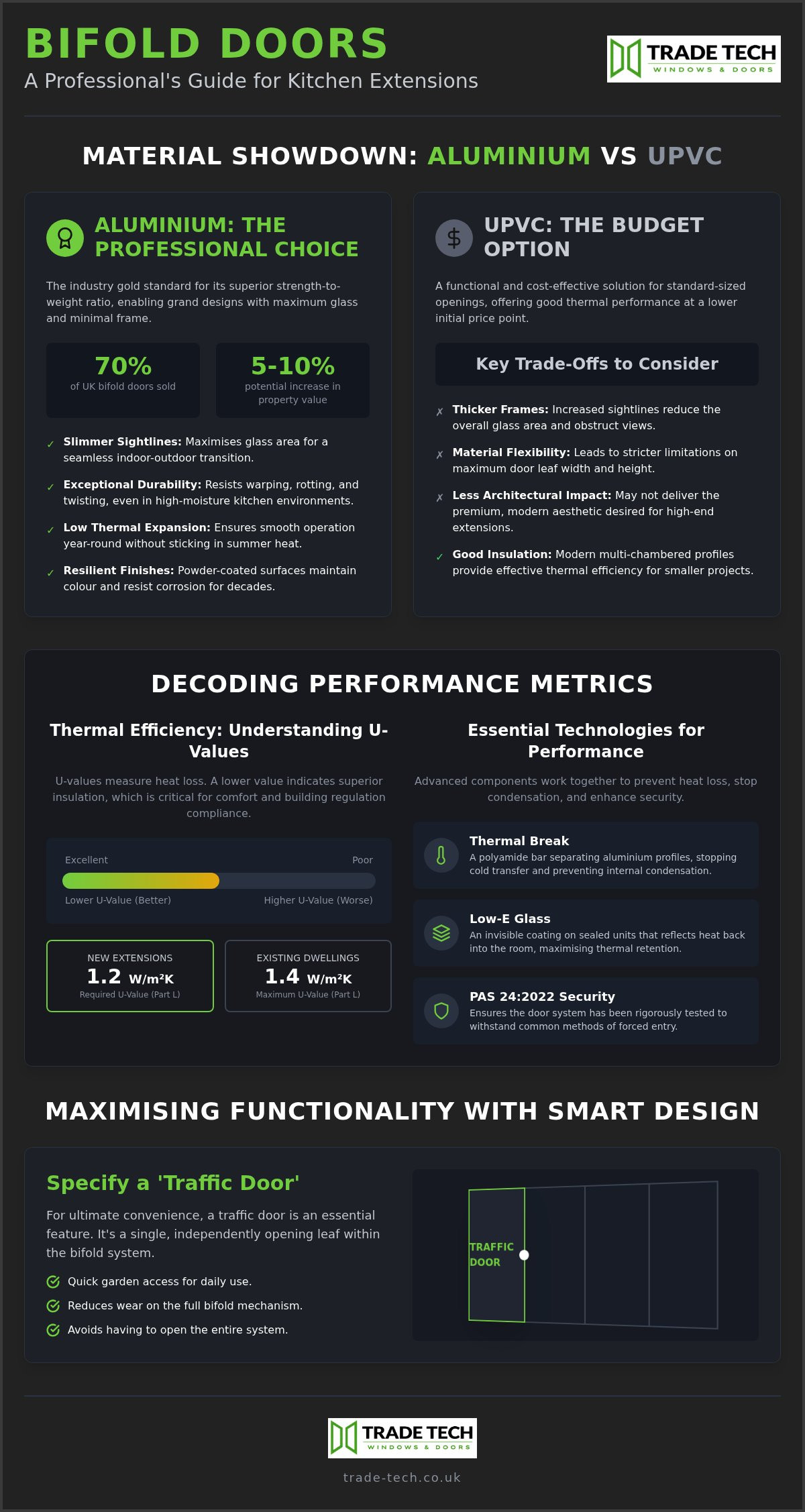
Aluminium has become the industry benchmark for high-end residential extensions. It offers a superior strength-to-weight ratio, allowing for significantly slimmer sightlines than any other material. This creates the seamless transition between the kitchen and garden that homeowners covet. Statistics show that approximately 70% of folding doors sold in the UK are now manufactured from aluminium, reflecting a clear market preference for durability and modern aesthetics. Choosing the right material also impacts property value; a high-specification aluminium installation can increase a home’s market price by an estimated 5% to 10%.
For developers and homeowners in the South East, sourcing aluminium bi-folding doors ensures the project meets the rigorous demands of modern building design. Aluminium’s stability is unmatched. It doesn’t warp, rot, or twist, even when exposed to the varying temperatures of a busy kitchen environment.
Aluminium: The Professional Choice
Aluminium is the gold standard for a reason. Its structural integrity supports wider apertures and taller door leaves without the need for bulky reinforcing. This results in more glass and less frame. For projects in Kent and East Sussex, we recommend powder-coated finishes. These coatings are exceptionally resilient, resisting the corrosive effects of coastal air and maintaining their colour for decades with minimal maintenance. Aluminium also features a low thermal expansion rate, meaning the doors won’t stick or jam during peak summer months.
uPVC Considerations for Smaller Budgets
uPVC remains a functional, cost-effective solution for standard-sized kitchen openings. Modern multi-chambered uPVC profiles provide excellent thermal insulation at a lower price point. However, there are technical trade-offs. uPVC frames are naturally thicker, which increases sightlines and reduces the overall glass area. There are also stricter limitations on maximum leaf width and height due to the material’s flexibility. While suitable for smaller, budget-conscious projects, uPVC may not deliver the same architectural “wow factor” or long-term durability as its aluminium counterparts.
Key Performance Metrics: Thermal Efficiency and Security
Kitchens are high-humidity environments that present unique challenges for large-scale glazing. When searching for the best bifold doors for kitchen extension projects, you must look beyond the visual appeal and focus on technical data. Large glass walls can lead to significant heat loss or solar gain if the specification isn’t precise. Thermal performance and robust security aren’t just optional upgrades; they’re fundamental requirements for a comfortable and safe home.
U-values measure the rate of heat transfer through the entire door system, including the frame and the glass. Lower values indicate superior insulation. Current building regulations, specifically Approved Document L, mandate a maximum U-value of 1.4 W/m²K for replacement doors in existing dwellings. For new-build extensions, this target is even more stringent at 1.2 W/m²K. Achieving these figures requires a combination of high-specification frames and advanced glazing technology.
Maximising Thermal Integrity
Modern doors rely on sophisticated sealed units to maintain a stable internal temperature regardless of the weather. Low-E (low-emissivity) glass coatings are essential; they reflect heat back into the kitchen whilst allowing natural light to flood the space. A thermal break is a reinforced polyamide bar positioned between the internal and external aluminium profiles to reduce conductive heat transfer. This technology is vital for preventing the cold outer frame from cooling the inner frame, which significantly reduces the risk of condensation forming on the metal surfaces during winter months.
While double glazing is the standard for many projects, triple glazing offers an additional layer of insulation and acoustic performance. It’s particularly effective for north-facing extensions or exposed properties across Kent and Sussex. If you’re managing a complex project, you can find further technical details on our high-performance door systems to ensure your specification meets every requirement.
Advanced Security Features
Security is a non-negotiable priority for rear-facing kitchen extensions. You should insist on systems that meet the PAS 24:2022 standard. This certification ensures the entire door set has been tested against common forced entry methods. Multi-point locking systems are essential; they secure the door leaf into the frame at several points with a single turn of the handle, providing far greater resistance than a standard lock.
Internal beading is another critical security feature. It ensures the glass units cannot be removed from the outside. For maximum protection, specify laminated glass for at least one pane. Unlike standard toughened glass which shatters into small pieces on impact, laminated glass stays in place, providing a formidable barrier against intruders. High-security cylinders with anti-snap and anti-pick features complete the security package, ensuring your new extension remains a secure foundation for the home.
For homeowners looking to integrate these physical measures with digital oversight, specialist firms like Rocatech offer insights into how smart home automation can elevate property protection to a total security solution.
Configuration and Design: Tailoring Doors to Your Layout
Selecting the best bifold doors for kitchen extension projects requires a balance of aesthetics and daily logistics. The number of door leaves is usually dictated by the aperture width. A 3-panel configuration is the most common choice for openings between 2.1m and 3.5m. It offers a clean look with fewer vertical frames obstructing the view. A critical design choice is the traffic door. This is a single leaf that operates independently like a standard back door. It allows you to step into the garden or take out the recycling without folding back the entire system. Without this, the doors can become a barrier to simple daily tasks.
Optimising the Opening Direction
Kitchen floor space is often at a premium due to islands and cabinetry. We almost always recommend outward-opening aluminium bi-folding doors for extensions. This configuration ensures that when the doors are stacked, they sit on the patio rather than intruding into your living space. You must also consider the swing of the lead door. Ensure it doesn’t clash with outdoor furniture or planters. Planning the stack location early prevents logistical headaches during the installation phase. It works.
Thresholds and Floor Levels
Achieving a seamless transition between the kitchen and the patio is a top priority for most homeowners. A flush threshold creates a stunning visual, but it requires precise engineering. You must distinguish between weathered and non-weathered tracks. Non-weathered tracks offer the lowest profile but are usually only suitable for internal use. For most UK extensions, a weathered low threshold is the safer choice. It provides a minimal step whilst preventing water ingress during heavy rain. Proper planning ensures a professional result.
Drainage is the most overlooked factor in flush-floor designs. You need a dedicated drainage channel or a slot drain installed externally to manage run-off. This ensures your kitchen remains dry even in exposed South East locations. Beyond weatherproofing, your design must comply with Approved Document Q for security. This regulation ensures that even low-threshold systems maintain the structural integrity required to resist unauthorised access. These details matter for long-term satisfaction.
Practical Considerations for Kitchen Environments
Kitchens are high-traffic, high-humidity zones. They face constant challenges from steam, heat, and airborne grease. Selecting the best bifold doors for kitchen extension projects requires a focus on how the installation will perform in these specific conditions. You need to manage light, ensure privacy, and maintain effective ventilation without compromising the architectural aesthetic. These practicalities dictate the daily usability of the space.
The Value of Integral Blinds
Traditional fabric blinds or curtains are impractical in a kitchen. They absorb cooking smells and attract grease, making them difficult to clean. We recommend specifying integral blinds for bifold systems. These blinds are permanently sealed between the glass panes of the unit. They remain completely protected from dust and kitchen contaminants, requiring zero maintenance. You can choose between manual or motorised control to manage privacy across large spans. They also provide vital UV protection, preventing your kitchen cabinetry and flooring from fading in direct sunlight.
Ventilation is critical in an extension. Whilst bifold doors allow for massive airflow when fully open, you need a strategy for the colder months. Specifying trickle vents in the frame head ensures a steady supply of fresh air. This helps clear steam from cooking and prevents condensation from forming on the internal glass surfaces. It is a simple addition that protects the structural integrity of your kitchen decor. It keeps the air fresh without needing to fully open the leaves.
Complementary Glazing Solutions
Bifold doors are often just one part of a wider glazing strategy. To maximise natural light in deep-plan extensions, consider pairing your doors with roof lanterns. These architectural features draw light from above, illuminating central kitchen islands that the wall-mounted bifolds might not reach. For a consistent look, ensure all frames share the same powder-coated finish. You can find matching sets in our range of high-performance aluminium windows, which helps create a unified architectural language across the entire extension.
Maintenance is straightforward but essential. Keep the bottom track free from crumbs and debris. A quick vacuum of the track once a month ensures the stainless steel rollers operate smoothly. High-quality bifold systems are designed for longevity, but a small amount of care prevents the mechanism from sticking or wearing prematurely. It keeps the transition to your garden effortless for years to come.
Sourcing High-Quality Bifold Doors in Kent and Sussex
The success of any structural project depends on the reliability of the supply chain. Finding the best bifold doors for kitchen extension installations requires more than just a high-quality product; it requires a partner who understands the logistical pressures of the South East construction industry. Sourcing locally from a specialist supplier ensures that technical support is available when you need it most. This proximity reduces the risk of transit damage and simplifies the coordination of site deliveries, keeping your project on schedule.
Trade Tech Windows & Doors operates as a dedicated facilitator for professional success across Kent and East Sussex. We provide the stable foundation needed for complex residential glazing projects. By focusing on high-performance aluminium systems, we ensure that every installation meets the architectural requirements of modern extensions whilst providing the durability necessary for high-traffic kitchen environments.
Why Local Expertise Matters
Local knowledge is invaluable when navigating regional building nuances and weather conditions. Properties in coastal Sussex or exposed parts of Kent require glazing specifications that can withstand higher wind loads and salt spray. Our team is intimately familiar with these requirements. We offer specialised new build and developer support to help streamline the specification process from the initial design phase. Choosing a regional specialist also means access to more accurate lead times, allowing for better resource planning and more efficient site management.
- Direct access to technical experts who understand South East building styles.
- Responsive local supply chains that minimise project delays.
- Architectural glazing solutions tailored to regional environmental demands.
Requesting a Trade Quote
To provide an accurate bifold door specification, we require clear technical details. You should have your rough opening dimensions, preferred opening configuration, and RAL colour requirements ready. Consider the “traffic door” and threshold options discussed earlier in this guide to ensure the final product meets the user’s daily needs. We provide a transparent trade pricing structure designed to offer maximum value to both contractors and homeowners. This approach ensures you receive a high-specification product without the inflated margins often found in retail-only showrooms.
Efficiency is our priority. We move quickly from your initial enquiry to providing a concrete, itemised solution. This responsiveness allows you to finalise your project budget and timelines with confidence. Whether you are managing a single kitchen extension or a multi-unit development, we provide the tools and technical advice necessary for a successful outcome. It is a partnership built on precision and reliability.
Contact Trade Tech Windows & Doors today for a bespoke bifold door quotation
Specifying Excellence for Your Kitchen Extension
Selecting the best bifold doors for kitchen extension projects requires a precise balance of technical performance and daily practicality. You’ve seen why high-grade aluminium is the superior choice for achieving structural integrity and slim sightlines. Prioritising PAS 24 high-security specifications and Part L thermal compliance ensures your installation remains safe, efficient, and fully compliant with current building regulations.
Don’t overlook the functional details that define the end-user experience. Features like independent traffic doors for quick garden access and integral blinds for maintenance-free privacy are essential in busy kitchen environments. As specialist aluminium suppliers in Kent and East Sussex, we provide the expertise and high-performance systems needed to deliver a professional finish that lasts for decades.
Get a professional quote for your kitchen bifold doors
We’re ready to provide the technical support and reliable supply chain your project demands. Let’s build a kitchen space that truly connects with the outdoors.
Frequently Asked Questions
Do bifold doors make a kitchen cold in winter?
Modern bifold doors won’t make your kitchen cold if they feature high-performance thermal breaks and low-E glazing. Current building regulations require a maximum U-value of 1.4 W/m²K for replacement doors in existing dwellings. This ensures heat stays inside whilst the cold is kept out. High-quality aluminium frames with polyamide thermal breaks are specifically designed to prevent heat transfer, ensuring a comfortable kitchen environment even in peak winter.
Are bifold doors or sliding doors better for a kitchen extension?
The choice depends on whether you prioritise a clear opening or uninterrupted views. Bifold doors allow you to open up to 90% of the aperture, creating a true indoor-outdoor flow. Sliding doors usually provide larger glass panels and slimmer sightlines but don’t open as fully. For many, the best bifold doors for kitchen extension projects are those that offer a traffic door for quick garden access without moving the entire set.
Do I need planning permission to install bifold doors in my kitchen?
Planning permission is generally not required for installing bifold doors in an existing kitchen as this often falls under Permitted Development. However, you must check with your local authority if your property is a listed building or situated within a conservation area. You should also ensure the installation complies with Building Regulations regarding thermal efficiency and structural safety. Always verify these details with your architect or local planning office before commencing work.
How much do bifold doors for a kitchen extension typically cost?
Costs vary significantly based on the material, the number of panels, and your chosen glazing options. Aluminium systems are generally a larger investment than uPVC but offer greater durability and slimmer profiles. Custom features like dual-colour frames or integrated blinds will also impact the final figure. We recommend requesting a bespoke quote to get an accurate cost based on your specific aperture dimensions and technical requirements.
What is the maximum width for an aluminium bifold door leaf?
Most aluminium bifold systems allow for a maximum leaf width of approximately 1.2 metres. This allows for fewer panels and more glass across a standard opening. The structural strength of aluminium supports these larger leaves better than uPVC or timber alternatives. However, the leaf height and the total weight of the glazing units will also influence the maximum width possible for your specific configuration and project requirements.
Can bifold doors be fitted with fly screens or blinds?
Yes, you can fit bifold doors with several screening and shading options. Integral blinds are a popular choice for kitchens as they are sealed within the glass units, protecting them from cooking grease and steam. Motorised or manual pleated fly screens can also be installed on the internal frame to allow for fresh air whilst keeping insects out. These additions improve the daily functionality of the best bifold doors for kitchen extension designs.
How secure are modern aluminium bifold doors?
Modern bifold doors are exceptionally secure when specified with the correct hardware. You should look for systems that meet PAS 24:2022 standards, which involves testing the entire door set against forced entry. High-security features include multi-point locking systems, anti-snap cylinders, and internal beading. Toughened or laminated safety glass provides an additional layer of protection, making these doors a robust choice for rear-facing kitchen extensions.
How do I maintain the tracks of my bifold doors in a kitchen?
Maintaining your bifold door tracks is a simple but vital task in a kitchen environment. You should vacuum the bottom track monthly to remove crumbs, dust, and debris that can clog the rollers. Use a damp cloth to wipe the stainless steel or aluminium tracks to prevent grease build-up. Avoid using harsh chemical cleaners or abrasive materials that could damage the finish or the smooth operation of the rolling mechanism. It keeps the doors moving effortlessly.