
A single measurement error of just 10mm in a critical location is often all it takes for building control to reject an entire installation. You understand the pressure of balancing tight project timelines against the technical precision required by Part K. It’s a high-stakes trade environment. Specifying the wrong glass class doesn’t just compromise safety; it drains your profit margins through avoidable rework and site delays. Mastering the specific requirements for Approved Document K Safety Glass is essential for every contractor and developer operating across Kent and East Sussex.
This guide ensures your projects remain compliant by clarifying exactly where toughened or laminated options are mandatory under current UK building regulations. We will break down the 800mm and 1500mm threshold rules, explain the nuances of BS EN 12600 impact classifications, and help you source reliable, trade-ready, compliant sealed units. Gain the confidence to specify the right materials every time for a seamless project sign-off and a safer end result for your clients.
Key Takeaways
- Identify the specific height thresholds for doors and low-level windows to avoid building control rejection on site.
- Master the technical distinctions between toughened and laminated options to specify Approved Document K Safety Glass with total confidence.
- Clarify the rules for glazing within 300mm of a door to ensure every side panel meets the necessary safety standards.
- Discover why permanent glass markings and manifestations are non-negotiable for professional sign-off on commercial and residential sites.
- Optimise your project workflow with reliable access to compliant glazing that meets all current UK building regulations.
Understanding Approved Document K and Critical Glazing Locations
Approved Document K serves as the definitive regulatory framework for protection from falling, collision, and impact in the United Kingdom. Unlike brickwork or timber, glass presents a unique risk profile due to its potential failure modes. The primary objective of these regulations is clear: prevent serious injury caused by accidental human impact with glazing. Specifying Approved Document K Safety Glass is the only way to guarantee your project passes its final inspection without friction. Whether you are working on a residential extension in Maidstone or a commercial shopfront in Canterbury, adhering to these standards is a mandatory requirement for both new builds and most replacement projects.
The Scope of Protection from Impact
Glass is treated with specific scrutiny because of how it behaves under stress. When standard annealed glass breaks, it forms dangerous, jagged shards that can cause life-altering injuries. The evolution of British standards has moved from the older BS 6206 toward the current BS EN 12600 pendulum impact test. This rigorous testing ensures that any Safety Glass Options installed in high-risk zones behave predictably. They must either break safely into small, blunt fragments or remain intact to prevent penetration.
In modern construction, safety requirements don’t exist in isolation. You must balance Document K with Document L for thermal efficiency and Document Q for security. For developers in the Southeast, this means sourcing sealed units that satisfy all three requirements simultaneously. You cannot prioritise insulation at the expense of impact safety; the regulations demand a holistic approach to glass specification.
Installer Responsibility and Compliance
For glazing contractors across Kent and East Sussex, the duty of care is absolute. Installing non-compliant glass isn’t just a technical oversight; it’s a significant commercial and legal risk. Local building control authorities are increasingly stringent regarding safety markings. They expect to see the kite mark or relevant EN standard clearly visible on every pane within a designated zone. Failure to provide this proof leads to project delays, costly replacements, and a damaged reputation with your clients.
Critical locations are defined as areas where people are most likely to collide with glazing. Using Approved Document K Safety Glass in these zones ensures that your installations meet the necessary impact resistance thresholds. By understanding these boundaries early in the design phase, you avoid the logistical nightmare of replacing glass after the frames are already fitted. It’s about precision, safety, and professional accountability on every site.
Identifying Critical Locations for Safety Glass in Residential Projects
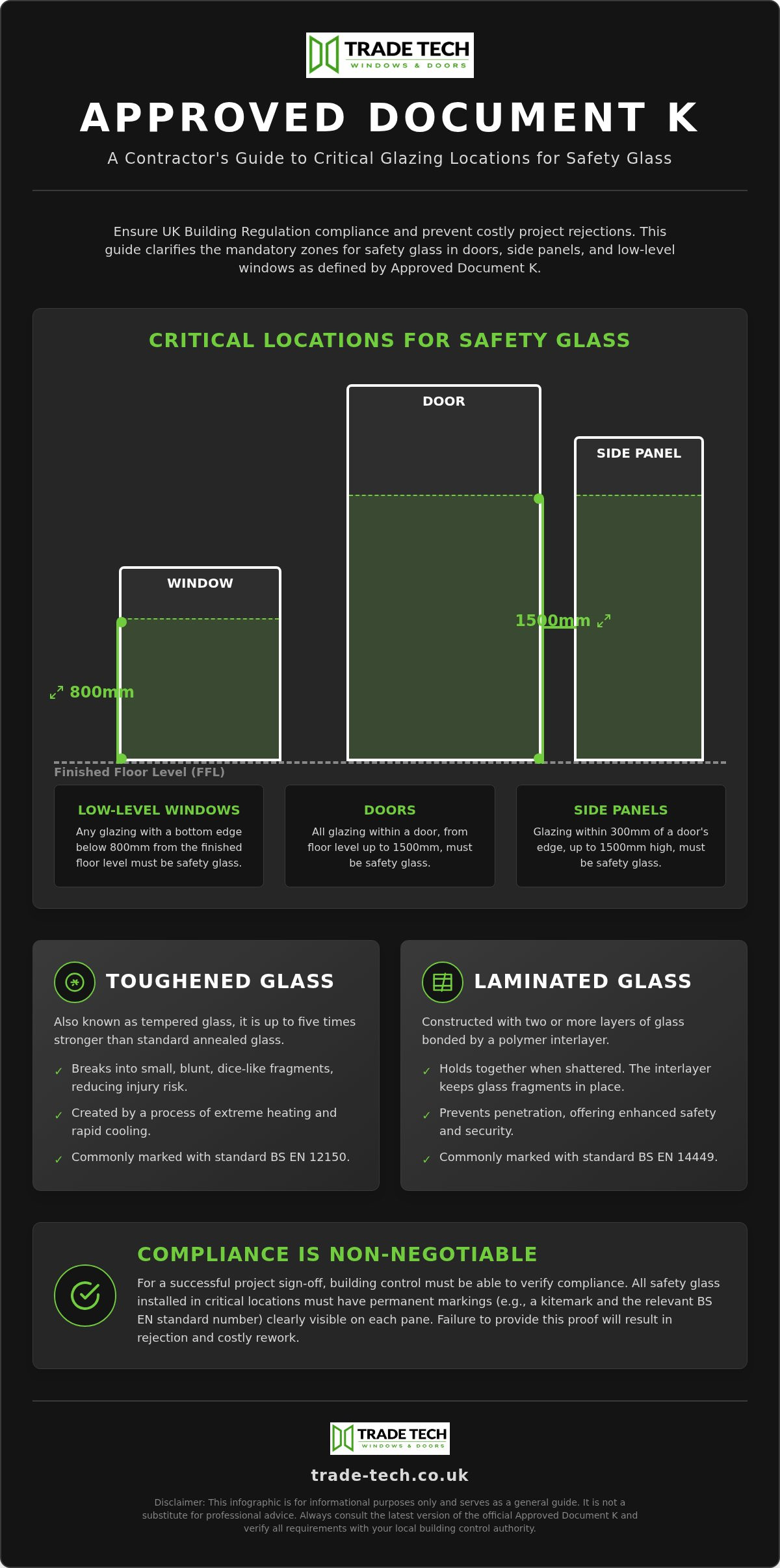
Precision during the site survey is the foundation of a compliant installation. Under Approved Document K, specific zones are designated as high-risk due to the likelihood of human impact. In these areas, the use of Approved Document K Safety Glass is non-negotiable. You must account for these zones early to avoid ordering incorrect sealed units that will inevitably be rejected by building control. The regulations focus on three primary measurements:
- Doors: All glazing between the finished floor level and the 1500mm mark.
- Side Panels: Any glazing within 300mm of a door edge, up to 1500mm from the floor.
- Windows: Any glazing below 800mm from the finished floor level.
Measuring Critical Zones Accurately
Always measure from the finished floor level (FFL), not the structural subfloor. If your project involves floor level changes such as internal steps, ramps, or landings, the measurement must reflect the highest floor surface within the impact zone. The 300mm rule for side panels is a frequent point of failure in building inspections. If any part of a window or side panel falls within this 300mm margin from a door opening, the entire pane must be safety glass. This rule applies regardless of whether the window is fixed or opening. For developers in Kent, getting these measurements right on the first visit saves days of site delays.
Glazing in Doors and Protective Barriers
Full-height glass doors, such as bi-folding doors or patio sliders, require safety glass throughout the entire unit. This applies to both internal and external door sets. If you’re installing glass balustrades or protective barriers on a mezzanine or staircase, the requirements are even more stringent. These elements must withstand specific line loads and concentrated loads to prevent falls from height. It’s a critical safety feature that demands high-performance materials and professional specification.
Exceptions and Small Panes
There are limited exceptions for small panes. Glazing with a maximum width of 250mm may use 6mm thick annealed glass, provided it’s protected by a robust frame. Traditional timber frames with thick glazing bars sometimes meet this criteria. However, for modern aluminium windows and uPVC systems, safety glass remains the standard for professional reliability. Don’t rely on exceptions when the safety of the end-user is at stake; consistent use of toughened or laminated glass across all critical zones is the safest route to compliance.
Comparing Safety Glass Options: Toughened vs Laminated
Specifying the correct material for Approved Document K Safety Glass requires a clear understanding of how different glass types perform under stress. While both toughened and laminated glass meet the regulatory safety criteria, they serve distinct logistical and structural purposes. Toughened glass, often referred to as tempered glass, undergoes a controlled thermal treatment to increase its surface strength. Upon failure, it shatters into thousands of small, blunt fragments, significantly reducing the risk of deep lacerations. Laminated glass consists of two glass layers bonded by a polyvinyl butyral (PVB) interlayer. This interlayer holds the glass fragments in place even after a significant impact, preventing a hole from forming in the pane.
For trade projects across Kent and East Sussex, the choice often comes down to a balance of cost, weight, and secondary performance benefits. Toughened glass is generally more cost-effective and lighter, making it the standard choice for most residential windows. Laminated glass is a premium option, often specified when safety must be paired with enhanced security or acoustic insulation. Understanding the technical classifications of these materials is essential for ensuring your project passes a building control inspection.
BS EN 12600: The Impact Test Standard
BS EN 12600 is the current pendulum impact test used to categorise safety glass in the UK. It replaces the older BS 6206 standard and provides a more nuanced classification system. You will find codes such as 1(C)1 or 2(B)2 etched into the corners of compliant Sealed Units. In these codes, the letter ‘C’ denotes toughened glass, whilst ‘B’ represents laminated. The first digit indicates the drop height the glass withstood: Class 1 is the highest (1200mm), Class 2 is medium (450mm), and Class 3 is the lowest (190mm). Most residential installations in critical zones require at least Class 3 performance, but larger panes often necessitate a higher classification. Always consult the official Approved Document K to confirm the specific class required for your installation height and location.
Security and Safety: Finding the Balance
Choosing between these options often involves meeting multiple building regulations simultaneously. Laminated glass is frequently specified to satisfy Document Q (Security) for ground-floor uPVC Casement Windows because it remains a barrier even after the glass is broken. However, it’s important to account for the increased weight of laminated units during the survey stage. The added mass can affect the hardware requirements for large opening sashes or bi-folding doors. Toughened glass remains the preferred choice for most developers when security isn’t the primary driver, offering excellent impact resistance without the weight penalty or higher price point of laminated alternatives.
Professional Specification and Installation Requirements
Compliance on site goes beyond the physical properties of glass; it requires undeniable proof of specification. For any project in Kent or East Sussex, Approved Document K Safety Glass must be permanently and legibly marked. A missing stamp is treated the same as non-compliant glass. Inspectors won’t take your word for it. They require visual confirmation of the British Standard or EN classification to sign off the installation. Proofs matter.
Marking and Traceability
The glass stamp is your primary evidence of compliance. It must remain visible after the glazing beads are fitted. If the stamp is hidden within the rebate, the unit is effectively non-compliant in the eyes of building control. Every pane of safety glass must include the manufacturer’s name or trademark alongside the specific standard it meets, such as BS EN 12600. Precise, visible, and permanent.
When ordering your units, always specify the placement of these markings. For toughened glass, the mark is usually permanent and acid-etched or sandblasted before the tempering process. For laminated glass, a printed mark between the layers is common. Ensure your installers don’t hide these marks during the fitting process. This mistake often leads to costly re-glazing requests from local authorities.
Manifestation Rules for Large Glazed Areas
Large areas of transparent glazing present a significant collision risk. To mitigate this, Commercial Glazing requires manifestation to make the glass apparent. This is mandatory for any large pane where people might walk into it. The regulations specify two horizontal bands of manifestation:
- Lower band: Between 850mm and 1000mm from the floor.
- Upper band: Between 1400mm and 1600mm from the floor.
Manifestation can take the form of dots, squares, or company logos. It must contrast with the background to be effective. While residential properties are generally exempt from these specific manifestation rules, they remain a best-practice safety feature for large patio or bi-folding doors with full-height glass.
Replacement and Documentation
The requirement for safety glass applies to replacement glazing as well. If you are replacing a broken unit in a critical location, the new glass must meet current standards. It doesn’t matter if the original glass was non-compliant annealed glass. Upgrading is mandatory. Keeping a digital log of your glazing certificates and supplier invoices is essential for professional developers. This documentation provides the necessary audit trail for building control and protects your business from future liability claims. Fast, accurate, and compliant.
Source compliant sealed units for your trade projects
Sourcing Compliant Glazing with Trade Tech Windows & Doors
Securing the right Approved Document K Safety Glass shouldn’t be a bottleneck for your business. At Trade Tech Windows & Doors, we specialise in providing high-performance glazing solutions that eliminate the risk of building control rejection. We understand that for contractors in Kent and East Sussex, time is a finite resource. Our operation is geared towards precision and speed, ensuring every unit delivered to your site meets the exact technical requirements of Part K. By partnering with a specialist supplier, you move from guesswork to guaranteed compliance.
Our commitment to quality extends across our entire range of Aluminium Windows and door systems. We don’t just supply glass; we provide peace of mind. Our team reviews your specifications to ensure that every pane in a critical location is correctly toughened or laminated. This proactive approach prevents the costly site delays often caused by overlooked regulatory details.
Expert Sourcing for the Southeast from Trade Tech Windows & Doors
Local knowledge is a significant advantage in the construction industry. We maintain a deep understanding of the specific preferences and requirements of building control officers across the Southeast. This expertise is particularly valuable for New Build Contractors and Developers who require consistent, high-volume supply across multiple plots. Whether you’re working on a single residential renovation or a large-scale housing development, our technical support ensures your glazing remains a highlight, not a hurdle.
Our product range is comprehensive. We supply Composite Doors that feature safety glazing as standard in all relevant zones, ensuring your installations are safe and secure from day one. We handle the technical complexities of glass classes and impact testing so you can focus on the installation. It’s about providing the tools you need to succeed without the administrative burden.
Why Trade Tech Windows & Doors is the Professional Choice
Reliability and speed are the cornerstones of our service. We’ve built our reputation on being a stable foundation for our clients’ projects. By streamlining our supply chain, we offer direct Trade Pricing that helps you maintain healthy margins without compromising on material quality. We don’t believe in flowery prose or stiff formalities; we deliver direct, no-nonsense support that helps the trade succeed.
Accuracy is non-negotiable. From the initial quote to the final delivery, we prioritise the logistical details that matter to your business. Our responsive team is ready to assist with technical queries, ensuring your specification for Approved Document K Safety Glass is perfect before the order hits the factory floor. Don’t leave your project sign-off to chance.
Contact Trade Tech Windows & Doors today for your next project
Streamlining Your Project Compliance and Safety
Mastering the technical nuances of Approved Document K Safety Glass is a commercial necessity for any professional installer. By accurately identifying critical locations and specifying the correct BS EN 12600 impact classes, you eliminate the risk of building control failure. This level of precision ensures your projects remain on schedule and within budget; it avoids the logistical nightmare of site-day rejections. As a specialist supplier for Kent and East Sussex, Trade Tech Windows & Doors provides the expert technical support and quality assurance you need to navigate these requirements with total confidence on every site.
Our operation is geared towards speed and reliability, delivering units that are fully compliant with 2026 Building Regulations. We act as your expert guide in the trade, providing the stability your business needs to succeed in a fast-paced industry. You can rely on our team for accurate specifications and efficient delivery.
We look forward to partnering with you on your next development and helping you maintain the highest standards of safety and excellence. Let’s ensure your next installation is both compliant and profitable.
Frequently Asked Questions
Do I need safety glass in all windows under Approved Document K?
No, safety glass is only mandatory in designated critical locations where the risk of human impact is highest. This typically includes any window where the glazing starts below 800mm from the finished floor level. For windows positioned higher than this threshold, standard annealed glass is usually acceptable. However, you must still check if the window falls within 300mm of a door opening, as this proximity triggers safety requirements regardless of sill height.
What is the difference between toughened and laminated glass for building regs?
The primary difference lies in how the glass behaves upon impact. Toughened glass is heat-treated to crumble into small, blunt granules, reducing the risk of deep lacerations. Laminated glass uses a plastic interlayer to hold fragments together, maintaining a physical barrier even after breakage. Both materials satisfy the requirements for Approved Document K Safety Glass, but laminated options are frequently specified for ground-floor security or noise reduction in busier Kent towns.
Does replacement glazing in an existing house need to be safety glass?
Yes, any replacement glazing must meet current building regulations if the window or door is located in a critical zone. It’s a common misconception that like-for-like replacements are exempt from modern standards. If you’re replacing a broken unit in a door or a low-level window, you must upgrade to safety glass to ensure the property remains compliant. This requirement protects installers from liability and ensures the safety of the occupants according to modern safety benchmarks.
What are the critical locations for glass in a bathroom?
Bathroom installations require careful planning because many glazed elements fall within high-risk zones. Any glass in a door or a window below the 800mm threshold remains a critical location. Additionally, glass used in bath or shower screens must be safety glass due to the increased risk of slips and falls in wet environments. Ensuring these areas are correctly specified is a priority for contractors working on residential refurbishments across East Sussex to avoid building control complications.
How can I tell if installed glass is toughened or laminated?
You can identify the glass type by inspecting the permanent safety mark etched into the corner of the pane. Toughened glass is usually marked with BS EN 12150 or the 12600 Class C classification. Laminated glass typically carries the BS EN 14449 or 12600 Class B mark. If no stamp is visible, the glass is legally treated as non-compliant annealed glass, which often necessitates a full unit replacement to satisfy building inspectors during a final sign-off.
Are there specific requirements for glass manifestation in shops?
Yes, commercial shopfronts must feature manifestations to prevent people from accidentally walking into large, transparent panes. These markings must be placed at two specific heights from the floor level to ensure visibility for people of all heights, including children and wheelchair users. This is a mandatory safety feature for retail units in Kent high streets. The manifestation can be a company logo or a simple pattern, provided it offers sufficient visual contrast against the background.
What happens if I install non-compliant glass in a critical location?
Installing non-compliant glass in a critical location usually results in building control refusing to issue a completion certificate. This leads to costly site delays and the added expense of manufacturing and installing new units. Beyond the immediate financial loss, you also face significant legal liability if an occupant is injured by the glass. Using Approved Document K Safety Glass from the start is the only way to protect your business and ensure a professional handover.
Does Document K apply to internal glass partitions and doors?
Yes, Approved Document K applies to both internal and external glazing. The regulations are focused on human impact risk, which exists regardless of whether the glass is in an external wall or an internal partition. Internal glass doors, side panels, and low-level partitions must all meet the same safety standards as external windows. For office fit-outs or modern residential layouts in the Southeast, ensuring all internal glass is correctly specified is essential for full regulatory compliance.