
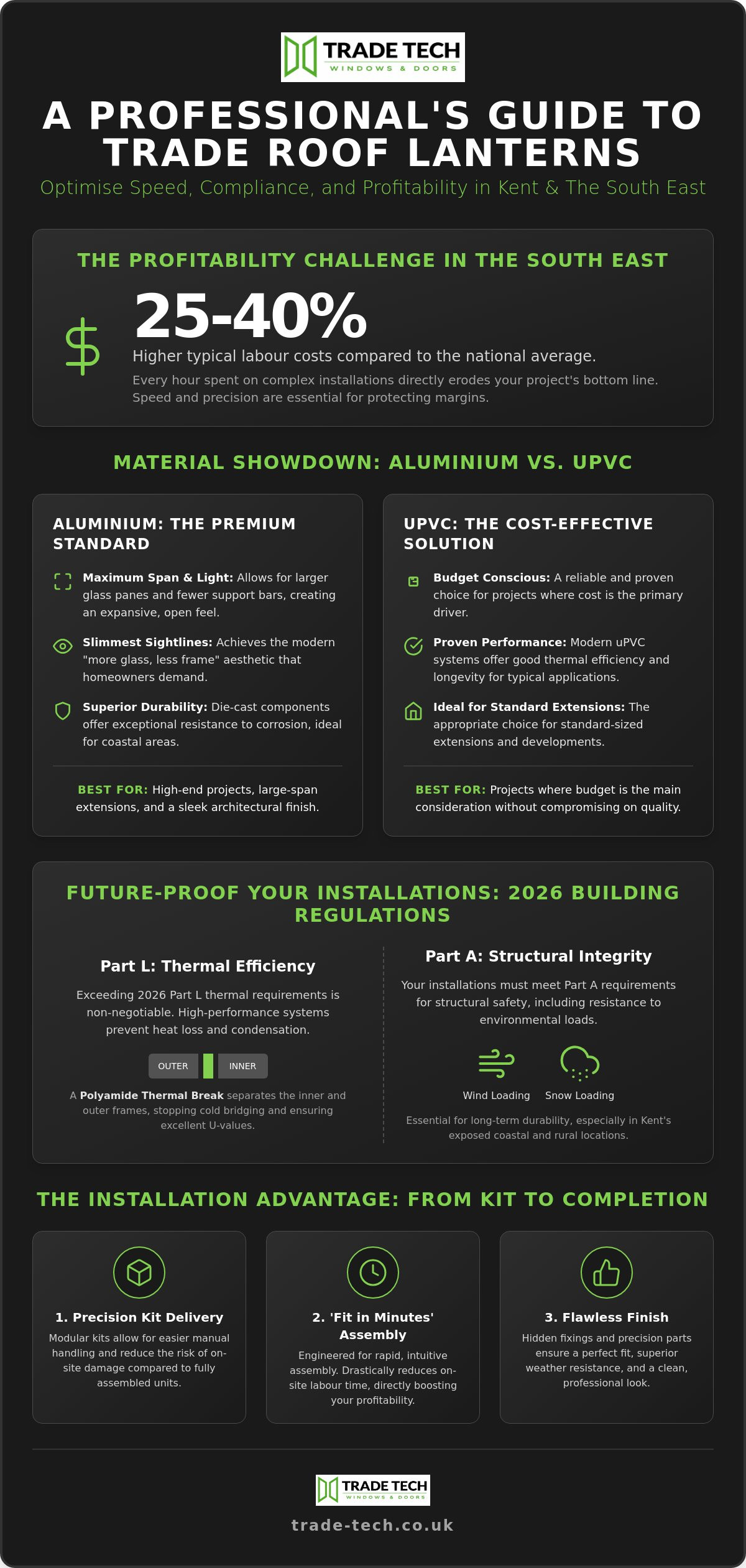
With labour costs in the South East typically 25% to 40% above the national average, every hour your team spends wrestling with a complex kit on-site is a direct hit to your project’s bottom line. For developers and installers, sourcing reliable trade roof lanterns kent isn’t just about aesthetics; it’s about protecting your margins through speed and precision. You need products that arrive on time, fit first time, and exceed the 2026 Part L thermal requirements without hesitation. Fast. Accurate. Reliable.
You already know that site delays and complicated installation processes are the primary enemies of a profitable build. This professional guide provides the technical specification and sourcing strategy you need to secure high-performance glazing that satisfies homeowners whilst meeting strict building standards. We will outline how to optimise your supply chain, ensure compliance with Part A structural requirements, and leverage precision-engineered aluminium systems to achieve faster, more dependable results amongst your ongoing Kent developments.
Key Takeaways
- Compare the structural benefits of aluminium versus uPVC to specify the right system for large-span architectural projects.
- Master the 2026 Part L building regulations to ensure your installations achieve the required thermal performance and U-values.
- Learn how modern “fit in minutes” kits and hidden fixings reduce on-site labour whilst improving weather resistance.
- Identify the essential service markers when sourcing trade roof lanterns kent to secure reliable lead times and local technical expertise.
Understanding Trade Roof Lanterns in the Kent Glazing Market
Roof lanterns represent the pinnacle of architectural glazing for flat roof extensions. These pitched units serve a dual purpose; they flood interiors with natural light and create a focal point that adds significant market value to a property. In 2026, trade roof lanterns kent have become a staple for installers working on high-end residential projects across the county. The market has moved decisively away from traditional timber frames, which were prone to rot and required high maintenance. Today’s “uk trade windows” portfolios are dominated by aluminium and uPVC systems that offer superior thermal performance and structural longevity.
The architectural history of roof lanterns shows a transition from ornate, heavy structures to the sleek, minimalist designs preferred today. In Kent, where property values remain high and the “improve, not move” trend is strong, these units are essential for transforming dark, rear-of-house extensions into bright, functional living spaces. Their popularity is driven by the desire for open-plan living and the need to maximise natural light in deep floor plans.
The Role of Roof Lanterns in Modern Extensions
Homeowners in areas like Tunbridge Wells, Sevenoaks, and Ashford increasingly demand an “orangery-style” aesthetic. Roof lanterns deliver this by providing a sense of volume and height that standard flat rooflights cannot match. A roof lantern is defined as a multi-paned glazing structure typically set at a 20-degree pitch to ensure optimal water runoff and light refraction. This elevation captures sunlight from multiple angles throughout the day, making it a more efficient light source than horizontal glazing. It creates a feeling of grandeur that appeals to the premium Kent market.
Trade Supply vs. Retail: Why Sourcing Matters
Choosing the right supplier is a commercial decision that affects your project’s timeline and profitability. Sourcing through a specialist trade channel offers price protection that retail outlets simply cannot match. Professional installers benefit from direct lead times and technical support tailored to the construction industry. Accessing high-quality trade roof lanterns kent ensures that your project meets the high expectations of local developers and homeowners alike.
Most modern systems are supplied in a “kit” format. This modular approach is far superior to fully assembled deliveries, which are often cumbersome and risk damage during transit. A kit allows for easier manual handling on-site and can be assembled in a fraction of the time. To protect your margins and ensure you are getting the most competitive rates for your next project, view our TradeTech Pricing. Reliability in the supply chain is the difference between a project that finishes on schedule and one that suffers from costly site delays.
Aluminium vs. uPVC: Choosing Materials for Kent Projects
Material selection is the most critical technical decision when specifying trade roof lanterns kent. Whilst both aluminium and uPVC serve the market, the choice usually depends on the project’s span and the homeowner’s aesthetic requirements. Aluminium is the structural powerhouse. It allows for larger glass panes with fewer support bars. uPVC remains a reliable, cost-effective alternative for standard extensions where budget is the primary driver.
Kent’s geographic profile presents unique challenges for installers. Projects in coastal towns like Margate, Folkestone, or Deal must account for salt spray and high wind loads. Die-cast aluminium components are essential in these environments. They provide superior resistance to corrosion compared to standard components found in lower-end systems. Ensuring your specification meets Building Regulations for roof lanterns regarding wind and snow loading is mandatory for long-term coastal durability.
Aluminium Roof Lanterns: The Premium Trade Standard
Aluminium roof lanterns are the industry benchmark for high-end extensions. They provide the slimmest sightlines on the market, creating the “more glass, less frame” look that modern homeowners crave. Systems like Korniche use die-cast aluminium parts for millimetre-perfect accuracy. These lanterns are fully thermally broken. A polyamide bridge separates the inner and outer frames, effectively stopping cold bridging and preventing condensation. This technology ensures the lantern remains a high-performance thermal barrier year-round. It’s the professional choice for high-margin projects that require a sleek, architectural finish.
uPVC Options: Cost-Effective Glazing Solutions
uPVC is the appropriate choice for budget-conscious Kent developments. Modern multi-chambered profiles offer excellent thermal insulation by trapping air within the frame to maintain consistent temperatures. Whilst uPVC frames are naturally thicker than aluminium, they provide a robust and low-maintenance solution for many homeowners. They are available in various woodgrain foils and colours to match existing uPVC installations. If you are balancing performance with a strict budget, our range of uPVC and Aluminium Windows provides the necessary context for matching materials across a complete property renovation. For heritage properties requiring period-appropriate styling, installers working across Kent’s conservation areas should also consider trade uPVC sliding sash windows kent, which deliver authentic Victorian and Georgian aesthetics alongside modern thermal performance.
The cost-to-value ratio for developers often leans towards aluminium for premium new builds. The ability to offer over 200 RAL colours through durable powder coating adds significant kerb appeal. However, for high-volume housing projects, uPVC provides the thermal efficiency required by 2026 standards at a more accessible price point. Specify the material that aligns with your client’s long-term goals and the specific environmental demands of the Kent landscape.
Technical Specifications & Building Regulations in 2026
Meeting the 2026 updates to Approved Document L is a non-negotiable requirement for any professional installer. The regulations currently mandate a limiting U-value of 2.20 W/(m²K) for rooflights in existing dwellings. However, specifying trade roof lanterns kent that achieve 1.2 W/m²K or lower is the only way to ensure your project remains future-proofed and energy-efficient. High-performance units utilise advanced thermal breaks and precision-engineered seals to hit these targets, protecting homeowners from rising energy costs and cold spots. Developers managing mixed-use schemes should also review the mandatory whole-window U-value thresholds now applied to commercial windows under the 2026 Part L standards, as these requirements directly influence glazing specification across the entire building envelope.
Structural integrity is equally vital, especially across the varied geography of Kent and Sussex. Installations must comply with Part A of the Building Regulations and meet the BS EN 1991-1-1:2025 standards for wind and snow loading. This is particularly relevant for coastal developments where high wind pressures are a constant factor. Don’t overlook security; ensure your lanterns meet PAS24 compliance. This standard guarantees that roof-level glazing provides a robust defence against forced entry, a critical selling point for modern residential builds.
Thermal Integrity and Glazing Options
Choosing between double and triple glazing requires a balance of weight and performance. Triple glazing offers superior acoustic insulation and lower U-values but adds significant weight to the roof structure. Most trade professionals opt for high-spec double glazing with solar control coatings to prevent overheating in summer. Integrating self-cleaning glass reduces maintenance requirements for the homeowner. The quality of your Sealed Units is the deciding factor in maintaining the thermal envelope. Poorly manufactured units lead to premature seal failure and condensation, resulting in costly call-backs.
Compliance for New Builds and Extensions
Registering your work through FENSA or Certass is the standard method for proving compliance without involving local authority building control for every job. These bodies verify that your installation meets all current glazing quality standards and thermal requirements. For new dwellings, the assessment of roof windows is now based on the actual installed size and configuration rather than a standard reference size. When specifying for different environments, remember that the U-value target for a roof lantern in a heated living space is significantly more stringent than those required for unheated utility areas. For more technical guidance, refer to our resources on roof lights and roof lanterns.
Streamlining the Install: Speed, Sizing, and Site Logistics
Efficiency on-site is the primary driver of profitability for Kent installers. Modern aluminium kits have revolutionised the process, moving away from traditional, labour-intensive methods. When you source trade roof lanterns kent, you’re investing in a “fit in minutes” philosophy. Precision-engineered components ensure that every part aligns perfectly. This reduces the risk of human error and eliminates the need for complex on-site adjustments. It’s about speed, accuracy, and professional results that protect your schedule.
Aesthetics and performance go hand-in-hand with the implementation of no visible fixings. This design choice provides a clean, minimalist look whilst significantly improving weatherproofing. By removing external screws or bolts, you eliminate potential water ingress points. These lightweight components are specifically designed for high-level installs. This makes manual handling safer and faster on busy sites. It’s a logistical advantage that reduces the need for heavy lifting equipment on many residential extensions, keeping your site costs manageable.
The Installer Workflow: From Delivery to Glazing
The installation process is designed to be methodical and brisk. It follows a logical progression that respects the installer’s time and reduces the chance of call-backs.
- Step 1: Prepare the upstand to exact millimetre tolerances. A level, square base is essential for a rapid install and long-term weather performance.
- Step 2: Assemble the eaves beam and ridge. Modern systems use simple mechanical fixings that require no specialised tools or heavy machinery.
- Step 3: Drop in the glass units and secure them with click-fit technology. This provides an instant, weather-tight seal without the mess of traditional glazing tapes or silicone.
Sizing and Bespoke Requirements
Standard sizes are excellent for stock projects and rapid turnaround. However, many Kent properties require bespoke architectural specifications to fit unique extension footprints. When specifying trade roof lanterns kent for high-end projects, aluminium systems support impressive maximum spans without needing additional support steel. This maintains the slim sightlines discussed in previous sections. For large-scale projects, our support for New Build Contractors and Developers ensures that logistics and deliveries are managed with professional precision. We provide the technical drawings and support needed for complex, large-span glazing.
Protect your project timelines and your reputation. Contact us today for a technical consultation on your next roof lantern installation.
Sourcing Reliable Trade Roof Lanterns in Kent and Sussex
Sourcing trade roof lanterns kent requires more than just finding the lowest unit price. It’s about securing a supply chain that respects your project schedule and provides consistent quality. A top-tier trade partner offers short lead times, robust technical support, and high-performance components. These factors prevent the site delays that erode profit margins. Professional sourcing ensures that every component arrives on-site ready for immediate assembly, fitting first time without the need for manual adjustments. This level of precision should be matched by the quality of the roof itself, where experts like ALG Roofing Limited specialise in the high-quality installations required to support modern glazing systems.
Local specialists offer a distinct advantage for South East installers. They understand the architectural nuances of Kent and Sussex, from coastal exposures in Folkestone to traditional Victorian-inspired designs in Royal Tunbridge Wells. This regional insight helps you specify products that blend seamlessly with local building styles whilst meeting modern performance standards. Sourcing from a partner who knows the local market means you receive advice tailored to the specific environmental and aesthetic demands of your project. Installers working on period properties in conservation areas will find that the same regional expertise applies when sourcing trade uPVC sliding sash windows in Kent, where authentic styling and compliance with heritage requirements are equally critical. For contractors managing larger developments, the same principles of precise specification and reliable supply apply equally to sourcing compliant commercial windows for mixed-use and new-build schemes.
The TradeTech Advantage for South East Installers
We focus on die-cast aluminium accuracy to ensure millimetre-perfect installs every time. This precision is vital for maintaining the slim sightlines and achieving the Victorian-inspired aesthetics that homeowners across Kent demand. We support our trade partners with comprehensive technical data and professional marketing materials designed to help you win more business. Our range of Roof Lights and Roof Lanterns is available for immediate specification. We invite installers to visit our team for technical consultations to discuss bespoke requirements and large-scale project logistics.
Next Steps for Your Project
Setting up a trade account is the most efficient way to access professional pricing and dedicated support. This ensures you receive rapid responses and priority delivery for your Kent developments. All our professional glazing products come with a 10-year guarantee, providing long-term peace of mind for both you and your clients. This guarantee covers the structural integrity and finish of the frames, ensuring your reputation remains protected long after the job is complete.
To request a quote or discuss your next installation, Contact Us for a rapid response from our technical team. Reliable sourcing is the foundation of every successful glazing project. Partner with a specialist who understands your needs and provides the tools necessary for your professional success.
Elevate Your Next Kent Installation
Specifying the right architectural glazing is a strategic decision that impacts your project’s thermal compliance and on-site efficiency. By choosing high-performance thermally broken aluminium, you ensure your builds meet the strict 2026 Part L requirements whilst providing the slim sightlines Kent homeowners demand. Mastering the installation workflow with precision-engineered kits reduces your labour costs and eliminates the risk of costly call-backs. Efficiency is the foundation of your margin.
Success in the regional market depends on a reliable supply chain. Sourcing trade roof lanterns kent from a specialist partner gives you access to the fastest installation kits in the UK. We provide expert technical support for Kent developers to ensure every specification is accurate and every delivery is methodical. Our systems offer the structural integrity needed for coastal environments and the thermal performance required for modern living. Secure your next project’s success with a partner who understands the trade.
For installations that require specialised structural solutions, such as walk-on glass floors or complex glass links, you can learn more about Structural Glass Design Ltd to see how they can support your more ambitious architectural projects.
Get a Trade Quote for Your Kent Project. We look forward to supporting your next build.
Frequently Asked Questions
Do I need planning permission for a roof lantern in Kent?
Most roof lantern installations fall under permitted development rights provided they don’t protrude more than 150mm above the existing roof plane. However, if the property is in a Kent conservation area or is a listed building, full planning permission is typically required. Always check with the local authority in districts like Canterbury or Thanet before starting work to ensure compliance with regional restrictions.
What is the best material for a trade roof lantern: uPVC or aluminium?
Aluminium is the superior material for trade roof lanterns kent because of its structural strength and slim sightlines. It supports larger glass spans without needing extra rafters; this is essential for high-end architectural projects. uPVC remains a valid, cost-effective choice for standard residential extensions where budget is the primary concern. It offers excellent multi-chambered thermal insulation but requires thicker frames to support the same weight.
How long does it take to install a Korniche roof lantern?
Korniche systems are engineered to be the fastest kits on the UK market to install. Professional teams can often secure the frame and glaze the unit in under 30 minutes once the upstand is prepared. The “fit in minutes” philosophy relies on precision-engineered components that click together without the need for complex tools or messy on-site silicone application, protecting your project timeline.
Are roof lanterns energy efficient enough for modern building regulations?
Modern lanterns are designed to exceed the 2026 Part L Building Regulations for thermal transmittance. While the limiting U-value is 2.20 W/(m²K), high-performance aluminium systems frequently achieve values as low as 1.0 to 1.2 W/(m²K). Using thermally broken frames and high-spec sealed units ensures the extension remains energy efficient. This prevents the common issue of rooms becoming too cold in winter or overheating in summer.
What is the maximum size for a roof lantern without extra rafters?
Aluminium systems can typically support spans up to 3 metres by 6 metres without requiring additional support steel or extra rafters. This is due to the inherent rigidity of the metal compared to uPVC. For larger bespoke architectural glazing, technical drawings should be consulted to ensure the structure meets BS EN 1991-1-1:2025 standards for wind and snow loading, which is vital for structural integrity.
Can I get a roof lantern with integral blinds for privacy?
Yes, you can specify roof lanterns with integral blinds to provide homeowners with privacy and light control. These blinds are sealed within the double-glazed units, meaning they stay free from dust and damage. They’re a popular addition for south-facing extensions in Kent where solar glare can be an issue. They offer a sleek, modern finish that doesn’t interfere with the lantern’s clean architectural lines.
Do trade roof lanterns come with a guarantee?
Trade-supplied roof lanterns come with a comprehensive 10-year guarantee as standard. This covers the structural integrity of the frame, the powder-coated finish on aluminium, and the performance of the sealed units. Providing this guarantee to your clients helps build trust and demonstrates the long-term reliability of the professional glazing products you install. It protects your reputation by ensuring any manufacturing defects are fully covered.
How do I ensure the roof lantern is watertight in coastal Kent areas?
Ensuring watertightness in coastal areas like Dover or Whitstable requires using die-cast aluminium components and high-performance gaskets. These precision-engineered parts provide a superior seal against salt spray and high wind pressures. Choosing trade roof lanterns kent with no visible external fixings also eliminates potential water ingress points. This ensures the unit remains weather-tight even in the most exposed Kent locations where driving rain is a constant factor.