
Is your current supply chain ready for the 0.8 W/m²K standard required for new builds under the Future Homes Standard? Specifying replacement windows kent projects now requires more than just a rough measurement and a colour choice. You’re balancing strict Part L Building Regulations against demanding client timelines and specific property requirements. It’s a high-stakes environment. A single measurement error or a non-compliant U-value can stall a project and erode your margins. You know that getting the technical details right the first time is the only way to protect your reputation and your bottom line.
We’ve developed this guide to help you master these technical shifts without the usual logistical headaches. You’ll learn how to navigate the 2026 UK Building Regulations, select the right materials for Kent’s diverse architecture, and find a trade partner that respects your schedule. We’ll break down the ventilation requirements of Approved Document F and the practical differences between uPVC and aluminium for your next development. From managing lead times to ensuring thermal excellence, this is your roadmap to successful project completion. It’s about delivering professional, reliable, and efficient results on every site.
Key Takeaways
- Master the 2026 Part L Building Regulations to ensure every installation meets the mandatory 1.4 W/m²K U-value targets for replacement glazing.
- Evaluate the technical performance and life-cycle costs of uPVC casement windows against slimline aluminium systems for different property types.
- Implement a ‘measure twice, order once’ surveying protocol using laser precision to eliminate costly trade errors and site delays.
- Streamline your project timelines by sourcing replacement windows kent directly from specialist trade suppliers who understand regional supply chain pressures.
- Identify critical glazing failures such as misting and frame degradation early to help clients significantly improve their property’s EPC rating.
Assessing the Project: When to Specify Replacement Windows in Kent
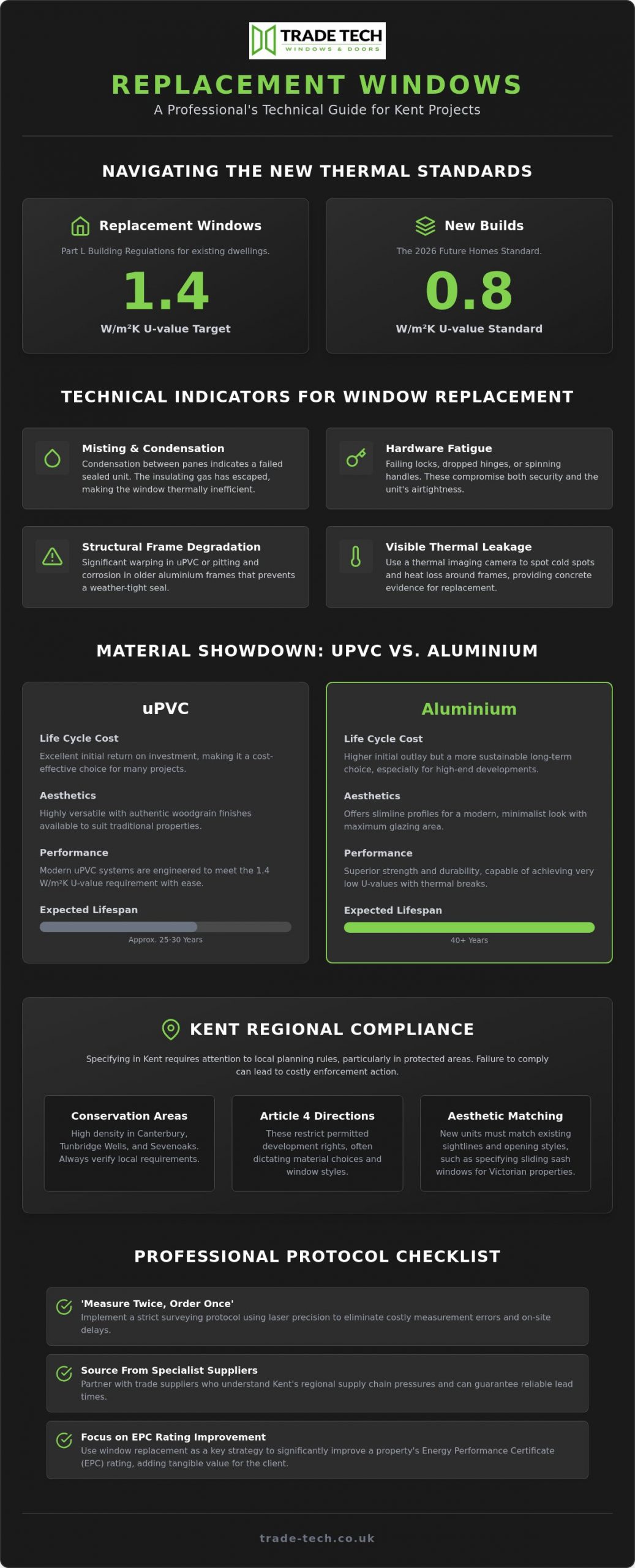
Identifying the right time for replacement windows kent projects requires a methodical audit of existing glazing performance. For trade professionals, the decision to replace isn’t just about aesthetics; it’s about compliance and structural integrity. The 2026 UK Building Regulations define replacement windows as any complete unit installation into an existing aperture. This means the new installation must meet current thermal standards, specifically the 1.4 W/m²K U-value target for existing dwellings. Developers must weigh the cost of ongoing repairs against the long term value of a full upgrade, especially when outdated glazing is the primary factor dragging down a property’s Energy Performance Certificate (EPC) rating.
To better understand the practical side of this process, watch this helpful video:
Technical Indicators for Professional Window Replacement
Successful surveying starts with spotting technical fail points that simple maintenance cannot fix. Misting or condensation inside the glass indicates that the sealed units have failed. Once the perimeter seal perishes, the insulating gas escapes and moisture enters, rendering the unit thermally useless. Replacement is the only permanent solution here. You should also check for:
- Hardware Fatigue: Handles that spin, hinges that drop, or locks that no longer engage properly. These compromise security and airtightness.
- Structural Frame Degradation: Significant warping in uPVC or pitting in older aluminium frames that prevents a flush seal.
- Thermal Leakage: Use a basic thermal imaging camera during your site survey. Visible heat loss around the frame edges provides concrete evidence for your client reports that replacement windows kent are a necessity rather than an option.
Kent Regional Considerations: Planning and Aesthetics
Specifying windows in Kent involves more than just technical data. The county has a high density of conservation areas, particularly in Canterbury, Tunbridge Wells, and Sevenoaks. Many of these areas are subject to Article 4 Directions, which restrict the type of materials you can use. You must ensure the new units match the existing sightlines and opening styles to avoid planning enforcement issues.
For heritage-style projects or Victorian terraces, you might need to specify sliding sash windows to maintain the architectural character. Modern uPVC and aluminium alternatives now offer authentic woodgrain finishes and slim profiles that satisfy many local planning officers whilst delivering 2026-compliant thermal performance. Always verify the specific requirements of the local Kent planning authority before placing a trade order to ensure the project remains on track and within budget.
Selecting the Right Materials: uPVC vs Aluminium for Kent Developments
Choosing between uPVC and aluminium for replacement windows kent projects involves more than just comparing price points. You’re balancing structural requirements against the specific environmental pressures of the Southeast. Life-cycle costs are a critical metric for developers. Whilst uPVC offers an excellent initial return on investment, aluminium’s 40-year lifespan often makes it the more sustainable choice for high-end developments. Thermal performance remains the primary driver. All specifications must align with the Building Regulations Approved Documents. You’ll need to hit the 1.4 W/m²K U-value target for existing dwellings whilst managing solar gain to ensure year-round comfort.
Site location dictates material choice. In coastal Kent towns like Thanet and Dover, salt spray is a constant factor. You must specify finishes that can withstand high-salinity environments. For aluminium, this means high-quality powder coating; for uPVC, it’s about selecting UV-stable foils that won’t degrade. Aesthetic versatility has also improved. You can now offer clients a massive range of RAL colours and textured finishes to match any architectural style, from rural cottages to urban apartments. If you’re also planning glazed extensions for your clients, our guide to conservatories kent modern styles and glazing options covers the same material performance considerations in detail.
The Case for Modern uPVC Casement Windows
Efficiency and reliability make uPVC casement windows the staple of the UK trade market. Modern profiles use multi-chambered technology to create an internal thermal break, significantly reducing heat transfer. This design allows you to meet energy targets comfortably with standard double glazing. Key features include:
- Multi-chambered frames for enhanced thermal insulation.
- Multi-point locking systems as standard for high security.
- UV-stable foils that prevent discolouration over time.
They’re a dependable, high-performance option for the majority of residential replacements in the region.
High-Performance Aluminium Solutions for Modern Projects
For projects requiring a premium, contemporary aesthetic, aluminium windows are the industry standard. Their strength-to-weight ratio allows for incredibly slim sightlines and expansive glass spans that uPVC simply can’t match. This makes them ideal for commercial shopfronts or modern residential builds with large apertures. The powder-coated finish is baked on, providing a tough, weather-resistant surface that won’t peel or flake. It’s a “fit and forget” solution that minimises maintenance call-backs for your team, making it a popular specification for replacement windows kent installs. For clients who also want to manage solar gain and privacy without the clutter of traditional window coverings, integral blinds Medway specialists recommend offer a maintenance-free shading solution built directly into the glazing unit.
If you’re planning a multi-unit development, you can request trade pricing to see how these materials fit your project budget.
How to Conduct a Professional Site Survey for Window Replacement
Precision is the foundation of a profitable install. When surveying for replacement windows kent, accuracy is your most valuable asset. A single millimetre error can lead to on-site delays, wasted labour, and eroded margins. You must adopt a ‘measure twice, order once’ philosophy to eliminate these risks. While traditional steel tapes are essential for checking reveal depths and cill protrusions, high-quality laser measures provide the speed and precision needed for long spans. Don’t just measure the opening; evaluate the context. Check the structural openings for squareness and inspect the lintel integrity. Kent’s older housing stock often suffers from subtle structural settlement. If an opening is significantly out of square, you’ll need to account for this in your frame deductions to ensure a level installation.
Logistics are equally critical. Document site access and any delivery constraints before placing your trade order. Can a large delivery vehicle reach the site safely? Narrow lanes or restricted parking in town centres like Canterbury or Maidstone require forward planning. Identifying these hurdles early ensures your replacement windows kent project stays on schedule and avoids aborted delivery charges.
Step-by-Step Measurement Methodology
Consistency is key to accurate surveying. Always measure the width and height in three separate places: top, middle, and bottom. Use the smallest dimension as your base. You must then apply the correct deduction for expansion gaps and perimeter sealing. A standard 10mm total deduction (5mm per side) is typical, but always verify this against the specific profile’s expansion coefficients. Don’t forget the cill. Identify the required cill size by measuring from the frame’s mounting point to the edge of the brickwork reveal, then add the necessary overhang for effective water shedding.
Identifying Specific Hardware and Glazing Requirements
Your survey must also capture technical specifications beyond simple dimensions. To meet 2026 ventilation standards, you’ll likely need to specify trickle vents in most replacement scenarios to comply with Approved Document F. Glazing choice is another critical factor. Specifying glass for ‘critical locations’ like doors or low-level windows must comply with the safety standards detailed in the Approved Documents for Building Regulations. Finally, choose between internal or external beading. Internal beading is generally preferred for security as the glass cannot be removed from the outside, providing a more robust solution for your clients.
Navigating Building Regulations and Compliance in Kent
Compliance is the final hurdle in any replacement windows kent project. It isn’t just a box-ticking exercise; it’s your legal safeguard. You must ensure every unit installed meets the criteria set by current UK legislation. Approved Document L remains the primary benchmark. For existing dwellings, replacement glazing must achieve a maximum U-value of 1.4 W/m²K. Working with FENSA or CERTASS registered installers simplifies this process. These competent person schemes allow you to self-certify that the work complies with Building Regulations without a separate local authority inspection.
Safety is equally paramount. Approved Document B dictates fire egress requirements. Habitable rooms must have windows that provide a clear opening of at least 0.33m² with a minimum width or height of 450mm. You must also address Approved Document F. Modern windows are significantly more airtight than older units. To prevent condensation and maintain air quality, trickle vents are now mandatory in most replacement scenarios where background ventilation is insufficient.
Thermal Efficiency and Carbon Reduction Goals
Meeting the bare minimum is rarely enough for modern developers. You can easily achieve a U-value of 1.2 W/m²K or better by specifying high-performance trade windows. This involves using multi-chambered profiles paired with advanced glazing technology. Warm-edge spacer bars and argon-filled cavities are standard requirements for high-efficiency units. For 2026 renovations, Document L compliance requires that replacement windows must not exceed a U-value of 1.4 W/m²K.
Documentation and Certification for Handover
Your clients need more than just a physical product. They require a complete documentation pack for their property records. This includes the FENSA or CERTASS certificate and professional guarantees from your trade partner. Ensure all sealed units carry the required UKCA markings. This provides proof of performance and material quality. Delivering a compliant, well-documented project protects your reputation and ensures a smooth handover.
Ready to ensure your next project is fully compliant? Contact our technical team for expert advice on current Building Regulations.
Optimising the Supply Chain: Sourcing Replacement Windows in Kent
Procurement efficiency defines your project’s profitability. In the fast-paced Southeast construction market, supply chain volatility can quickly derail even the best-planned schedules. Sourcing replacement windows kent directly from a specialist trade supplier ensures you bypass retail markups and gain access to professional-grade support. A dedicated trade partner provides realistic lead times and site-specific delivery logistics that respect your crew’s time. You need more than just a product; you need a facilitator who understands the technical nuances of bespoke architectural glazing and commercial-scale orders.
Managing lead times is a critical skill for any contractor. Delays in glazing delivery can stall subsequent trades, from plasterers to decorators, pushing back handover dates and incurring penalties. A professional supplier provides transparent tracking and reliable delivery windows. They also offer the customisation options required for modern developments, including specific powder-coated RAL colours and high-performance glass specifications that retail suppliers often struggle to source efficiently.
Why Trade Tech Windows & Doors is the Preferred Partner for Kent Contractors
We’ve built our reputation on stability and speed. Accessing competitive trade pricing allows you to maintain healthy margins on high-volume projects without compromising on unit quality. Our operations are geared specifically towards new build contractors and developers, ensuring that our turnarounds align with your site’s milestones. You’ll benefit from expert technical support from the team at Trade Tech Windows & Doors, who are intimately familiar with the Kent glazing market and its unique planning requirements.
Streamlining Your Procurement Process
Efficiency starts at the quoting stage. Use digital tools to generate rapid project estimates, allowing you to secure client approval faster. Managing multi-product orders through a single point of contact simplifies your administration. You can easily combine window orders with high-performance bi-folding doors or architectural roof lanterns to ensure consistent aesthetics and lead times across the site. Before finalising any replacement windows kent order, run through this final checklist:
- Verify all U-values meet the 1.4 W/m²K requirement for 2026 compliance.
- Confirm trickle vent specifications for Document F ventilation standards.
- Ensure site access is clear for the scheduled delivery vehicle.
- Double-check all ‘measure twice’ survey data against the final order form.
Getting these logistical details right ensures a seamless installation and a successful project handover. It’s about building a reliable partnership that supports your growth and protects your professional reputation. For contractors looking to further expand their reach, Trade-Hive offers an effective way to connect with homeowners seeking quality window replacement services.
Master Your Next Glazing Installation in Kent
Mastering the technical and regulatory landscape is essential for any modern contractor. You’ve seen how precise surveying and material selection form the bedrock of a successful site. Navigating the 1.4 W/m²K U-value targets and ventilation requirements of the 2026 Building Regulations ensures your projects are future-proofed and legally sound. Successfully delivering replacement windows kent projects hinges on this technical accuracy and a streamlined supply chain. It’s about protecting your margins through professional diligence.
Choosing a partner that understands the regional market makes a measurable difference to your bottom line. We are a specialist trade supplier for Kent and Sussex, providing an extensive range of uPVC and aluminium systems designed for professional installation. Our products are fully compliant with the latest 2026 Building Regulations, giving you total peace of mind during handover. Don’t let supply chain delays or compliance errors stall your progress on site.
Take the next step in optimising your procurement process and securing high-performance glazing for your developments. Get a professional trade quote for your Kent project today. We’re ready to support your next build with precision and reliability.
Frequently Asked Questions
Do I need planning permission for replacement windows in Kent?
Planning permission isn’t usually required for replacement windows kent projects as they fall under permitted development. However, restrictions apply to listed buildings or properties in conservation areas under Article 4 Directions. You must verify the specific status with the local Kent authority before starting work to avoid potential enforcement action and project delays.
What are the current U-value requirements for replacement windows in 2026?
The maximum permitted U-value for replacement windows in existing homes is 1.4 W/m²K as of 2026. If you’re working on a new build property, the standard is stricter at 0.8 W/m²K under the Future Homes Standard. High-performance double glazing usually meets the 1.4 requirement, but triple glazing is often necessary to achieve the new build standard.
How long does it typically take to supply trade windows in the Kent area?
Supply times vary depending on the material and technical specification you choose. Standard uPVC units often have a shorter lead time, whilst bespoke aluminium systems or specific RAL colours take longer due to the powder-coating process. Check with your trade supplier for current Southeast lead times to ensure your project schedule remains accurate and manageable.
Are trickle vents mandatory for all replacement windows in the UK?
Trickle vents are mandatory for most replacement windows kent installations under Approved Document F of the UK Building Regulations. They ensure that the property’s background ventilation is maintained or improved. Since modern windows are significantly more airtight than older units, these vents are essential to prevent moisture build-up and maintain healthy air quality.
Can I replace windows in a conservation area with uPVC?
It depends on the specific conservation area and the local planning authority’s guidelines. Some councils in Kent allow high-quality uPVC sash windows with authentic woodgrain finishes, whilst others strictly require timber or slimline aluminium. You’ll likely need to submit a planning application to prove the new units match the existing architectural character and sightlines.
What is the difference between FENSA and building control for window replacement?
FENSA is a competent person scheme that allows installers to self-certify their work as compliant with building regulations. Using a FENSA-registered installer avoids the need for a separate inspection by Local Authority Building Control. If you don’t use a registered installer, you must pay for a council inspection, which typically costs between £250 and £400 per project.
How do I measure for a replacement window if the frame is still in place?
Measure the width and height of the structural opening from the outside by taking dimensions from brick to brick. Take three measurements for each dimension and use the smallest one as your base. You should then apply a standard deduction, typically 10mm, to account for the expansion gap and ensure the new frame fits into the existing aperture without force.
Why should I choose aluminium windows over uPVC for a commercial project?
Aluminium is the preferred choice for commercial projects due to its superior strength-to-weight ratio and long-term durability. It allows for much larger glass spans and slimmer sightlines than uPVC, which is essential for shopfronts and high-traffic entrances. Aluminium frames also offer a longer lifespan of 40 plus years and require minimal maintenance in demanding urban environments. For commercial developments where solar control and a clean interior aesthetic are priorities, integrated glazing solutions with integral blinds provide a dust-free, maintenance-free shading option that complements aluminium’s premium finish.