
A site manager in Maidstone recently watched a project timeline unravel because the installed glazing failed a Building Control inspection at the final stage. It’s a common, costly mistake that usually stems from a fundamental misunderstanding of how Part Q Security Requirements apply to new-build dwellings and conversions. You shouldn’t have to risk site delays or expensive retrofits because of confusing regulatory jargon or inconsistent supplier advice.
We understand that your priority is a smooth handover. Compliance shouldn’t be a hurdle that slows your momentum; it’s a baseline for quality that protects your reputation and your clients. This guide will help you master the technicalities of Approved Document Q to ensure your Kent or Sussex building projects remain compliant, secure, and on schedule.
We’ll provide a clear breakdown of the current PAS 24:2022 standards and explain exactly which doors and windows require enhanced security. You’ll gain the confidence to specify compliant uPVC and aluminium products while learning how to source reliable, trade-priced units from a partner who understands the local construction landscape and the pressures of the modern site.
Key Takeaways
- Identify which apertures in your new-build or conversion projects must comply with Approved Document Q to prevent costly Building Control failures.
- Master the technicalities of PAS 24:2022 to ensure every specified unit meets the necessary Part Q Security Requirements for unauthorised access resistance.
- Evaluate the performance differences between uPVC and aluminium frames to maintain structural security without compromising on modern, slim sightlines.
- Utilise a professional specifier checklist to verify hardware standards, including TS008 compliant letter plates and unique PAS 24 test reports.
- Discover how sourcing certified glazing from a specialist Kent supplier can protect your project margins and keep your construction schedule on track.
What are Part Q Security Requirements for New Dwellings?
Part Q Security Requirements are the mandatory security standards for residential glazing in England. Approved Document Q ensures that new dwellings are built to resist unauthorised access by focusing on the physical strength of doors and windows. Requirement Q1 specifically mandates that all easily accessible glazing must be robust and fitted with secure, tested hardware. For new-build contractors and developers in Kent and Sussex, this isn’t just a recommendation; it’s a critical compliance milestone that must be met before a property can be legally occupied.
Whilst these regulations are standard for new builds, there’s a clear distinction for refurbishments. In existing homes, following these standards is frequently recommended as best practice, but it’s not always legally required unless the work constitutes a material “change of use” that creates a new dwelling. However, most professional installers in the South East opt for compliant uPVC and aluminium windows to future-proof properties and provide peace of mind to the end user.
The Scope of Approved Document Q
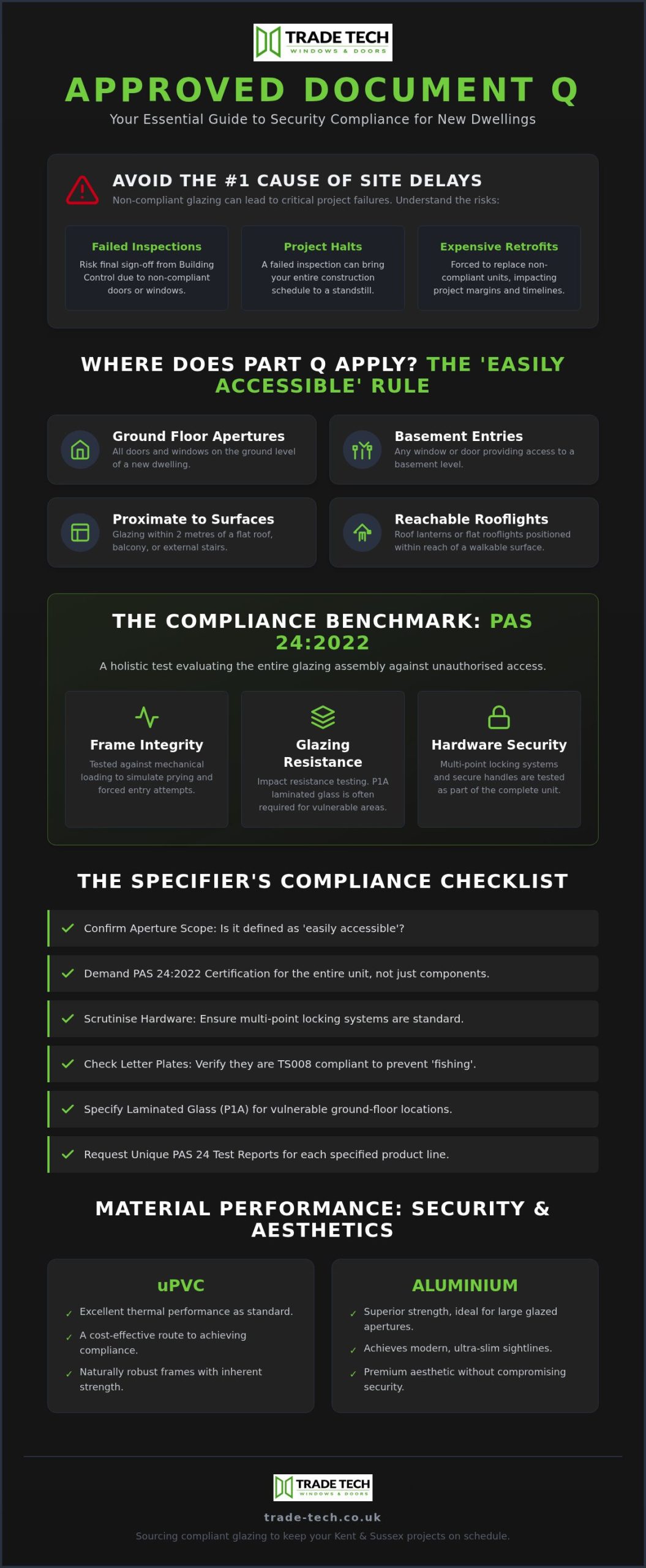
The regulation applies to any “easily accessible” window or door. This includes all ground floor apertures, basement entries, and any glazing within 2 metres of a flat roof, balcony, or external stairs. If an intruder can reach the unit without a ladder, it must meet the standard. This scope includes roof lanterns and flat rooflights if they are positioned within reach of a walkable surface.
Developers in Kent must prioritise these standards during the design phase. Sourcing non-compliant units often leads to expensive retrofits or site delays. Choosing the right profile early ensures that the aesthetic of the building isn’t compromised by the need for heavy-duty security hardware later in the build schedule.
The Legal Obligation for Developers
Compliance is verified by Building Control officers during site inspections. Failing an inspection due to non-compliant glazing can halt a project’s completion, as meeting Part Q Security Requirements is a non-negotiable step for final sign-off. These standards form part of the broader Building Regulations in the United Kingdom, which ensure all modern homes meet specific safety and performance criteria.
Security requirements don’t exist in a vacuum; they must work alongside other mandates, such as Part L for thermal efficiency. A compliant window must be secure enough to resist attack whilst remaining energy efficient. Balancing these technical demands requires a supplier that understands how to integrate high-performance sealed units with PAS 24 certified frames. This integrated approach keeps your project on schedule and ensures the final build is both safe and sustainable.
Technical Standards: Understanding PAS 24:2022 and Beyond
PAS 24:2022 is the primary testing method used to demonstrate compliance with Part Q Security Requirements. It isn’t a test of a single component like a lock or a hinge. Instead, it evaluates the performance of the entire doorset or window assembly. This holistic approach ensures that the frame, glazing, and hardware work together to resist a sustained attack. If any single part of the system fails, the whole unit fails the certification.
The testing protocol is rigorous and mirrors real-world burglary attempts. It involves mechanical loading to simulate prying, manual intervention using a specific tool kit, and impact resistance tests. Whilst PAS 24 is the standard for most residential builds, commercial projects or high-risk Sussex developments may require STS 202 or LPS 1175. Many developers now aim for “Secured by Design” status, a police-preferred specification that builds upon the baseline of Approved Document Q.
Hardware Requirements for Compliance
Multi-point locking systems are the backbone of any secure uPVC casement window or aluminium door. These systems engage at several points along the frame, making it nearly impossible to jemmy the sash open. For vulnerable areas, such as ground floor windows or those near flat roofs, P1A laminated glass is often required. This glass contains a plastic interlayer that holds the pane together even if shattered, preventing quick entry.
Security hinges and reinforced frames are equally vital. During testing, the frame must provide enough rigidity to prevent the hardware from being ripped out under pressure. If you’re specifying for a complex site, you can TradeTech Contact Us for a technical review of your requirements. Sourcing high-quality trade-priced secure units ensures these technicalities are handled before the products arrive on site.
Certification and Documentation
Building Control officers won’t just take your word for it. They require a clear paper trail for every project to confirm that the installed glazing meets the necessary standards. When you order from a supplier, ensure they provide a valid PAS 24 test report for the specific product range. This document proves that the combination of frame, glass, and hardware has been independently verified.
Look for products with clear certification markings. A reputable supplier will provide the necessary documentation to satisfy inspectors immediately. Keeping these records organised prevents last-minute panics during final sign-offs. If you need help identifying compliant products, our team can provide the specific certification data required for your Sussex or Kent site.
Material Performance: uPVC vs Aluminium Security Standards
Choosing between uPVC and aluminium often comes down to a balance of budget and aesthetics. Both materials are fully capable of meeting Part Q Security Requirements when correctly specified and manufactured. The regulation is material-neutral; it focuses on the performance of the complete unit rather than the substance of the frame. To achieve PAS 24 certification, both systems must demonstrate high levels of rigidity and resistance to manual attack.
A critical feature for any compliant unit is internal beading. This design ensures that the glazing beads are positioned on the inside of the property. It makes it impossible for an intruder to remove the sealed units from the exterior. Whilst older systems sometimes featured external beads, modern professional standards, as outlined in the UK Government Approved Document Q, have made internal beading the industry norm for secure dwellings.
There’s a common myth amongst some developers that uPVC is inherently less secure than aluminium. This isn’t the case. Whilst aluminium is naturally stronger, a high-quality uPVC profile is reinforced with galvanised steel to provide the necessary structural integrity. The hardware and the quality of the installation are usually more decisive factors in security performance than the frame material itself.
UPVC Casement Windows and Part Q
Steel reinforcement is the secret to making uPVC meet heavy-duty mechanical load tests. Manufacturers insert steel sections into the multi-chambered profile to prevent the frame from flexing under pressure. This makes uPVC casement windows a highly secure, cost-effective choice for large-scale residential estates in Kent. They offer excellent thermal performance whilst providing the robust foundation required for multi-point locking systems to function effectively.
High-Performance Aluminium Systems
The inherent strength of aluminium makes it the preferred choice for larger apertures. For bi-folding doors or wide sliding doors, the material’s rigidity allows for slimmer sightlines without compromising on structural security. When you source trade aluminium windows for high-spec Sussex projects, you’re investing in architectural glazing that integrates locking mechanisms directly into the reinforced profile. This strength is vital for maintaining security in expansive glass walls where uPVC might require thicker, more intrusive frames to achieve the same PAS 24 rating.
The Specifier Checklist: Avoiding Common Compliance Pitfalls
Achieving sign-off requires more than just ordering the right products. It demands meticulous verification on site. Every accessible window and door must be backed by a unique PAS 24 test report. A generic certificate for a different profile or size won’t satisfy a rigorous Building Control inspection. You must ensure the paper trail matches the physical installation exactly to avoid last-minute complications.
For composite doors, the letter plate is a frequent point of failure. Check that these components meet TS008 standards to prevent “fishing” or unauthorised lock manipulation. It’s these specific hardware details that often separate a compliant project from a costly site delay. Small oversights in hardware specification can compromise the integrity of the entire security strategy.
Verify that all glazing in critical security locations is toughened or laminated as required. Whilst we’ve discussed P1A glass for vulnerability in previous sections, the specifier must also confirm the installer follows the manufacturer’s specific security instructions. Deviating from the tested hardware configuration or using unapproved fixings voids the certification and leaves the dwelling vulnerable. Precision in the installation phase is as vital as the initial product specification.
Common Mistakes in New-Build Glazing
A recurring error in professional glazing is the “mismatch” approach. Developers sometimes pair compliant frames with non-compliant, budget hardware to trim costs. This creates a weak link that fails mechanical load tests. Don’t forget upper-floor windows. If a window is accessible via a porch or a flat garage roof, it falls under Part Q Security Requirements just as a ground-floor unit does. Inadequate documentation remains a primary reason for delayed final sign-offs in Kent developments.
Local Considerations for Kent and Sussex
Projects in coastal areas like Folkestone or Hastings face unique challenges. Hardware must be corrosion-resistant whilst remaining secure. Salt air can seize standard mechanisms, compromising the security of the dwelling over time. High-end residential projects in Tunbridge Wells or Chichester often demand bespoke aesthetics that don’t sacrifice safety. We provide specialist advice for New Build Contractors and Developers to navigate these regional pressures and ensure every unit is fit for purpose.
Request a technical compliance review for your Kent or Sussex project
Sourcing Part Q Compliant Glazing from TradeTech
Sourcing compliant units shouldn’t be a logistical burden for your team. TradeTech provides a direct, streamlined route for PAS 24 certified windows and doors, acting as a technical bridge between complex regulations and your site requirements. We act as your expert guide through the technicalities of Part Q Security Requirements, ensuring your project remains compliant without the usual administrative friction. Our direct trade pricing model is designed specifically to keep your project profitable whilst meeting every stringent regulatory hurdle.
Technical support is at the core of our partnership. We help you navigate the specific demands of Approved Document Q, from specifying the correct laminated glass to ensuring hardware configurations match the relevant test reports. This proactive advice prevents the common compliance pitfalls mentioned earlier, such as accidentally mixing non-compliant hardware with secure frames. We understand that on-site delays are expensive; our reliable delivery schedules across Kent and East Sussex are built to respect your construction timeline and keep your trades moving.
Our Range of Secure Glazing Solutions
Our inventory covers every aperture of a modern development. From high-security composite doors to robust aluminium bi-folds and sliding systems, every unit is engineered for maximum resistance. We offer customisable options that allow you to match specific project aesthetics without compromising on the essential safety features required for sign-off. Sourcing high-quality trade windows with pre-fitted security hardware ensures that your team spends less time adjusting components on site and more time completing the build. This integrated approach reduces the risk of human error during the installation of complex locking mechanisms.
Why Partner with a Local Specialist?
Partnering with a Kent-based supplier gives you a distinct advantage in the local market. We have a deep understanding of Southeast building trends and the specific expectations of Building Control officers across the region. We maintain proactive communication regarding lead times and certification, ensuring you always have the necessary documentation ready for final inspections. This local expertise is backed by a commitment to transparency and efficiency. You can view our Trade Pricing to plan your next secure development with confidence, knowing that your supply chain is as robust as the glazing we provide. By centralising your procurement with a specialist who understands Part Q Security Requirements, you eliminate the risk of fragmented certification and ensure a consistent standard of security across the entire site.
Securing Your Next Kent or Sussex Development
Compliance with Part Q Security Requirements doesn’t have to be a bottleneck in your construction schedule. By prioritising PAS 24:2022 certified units early in the design phase, you ensure a seamless handover and protect your professional reputation for quality. Whether you choose reinforced uPVC for a large-scale residential estate or high-performance aluminium for architectural apertures, the key is a robust, tested system that satisfies Building Control from the first inspection.
We’ve established the technical standards, material performance differences, and the specifier checklist necessary for success on site. Partnering with a specialist supplier in Kent and Sussex provides the dedicated technical support required to navigate complex Building Regulations with confidence. Our PAS 24:2022 compliant product range ensures your projects remain secure, profitable, and on track.
Request a Trade Quote for Part Q Compliant Glazing
Streamline your procurement process and focus on what you do best: building exceptional homes across the South East. We’re here to provide the reliable, trade-priced glazing solutions your next project demands.
Frequently Asked Questions
Is Part Q mandatory for replacement windows in an existing house?
No, Part Q is not mandatory for standard replacement windows in existing homes. It specifically targets new dwellings, including those created through a material “change of use”. However, many installers in Kent and East Sussex recommend PAS 24 units as best practice to enhance property value and security. If your project involves creating a new dwelling from an existing structure, you must verify the specific requirements with your local Building Control officer.
What is the difference between PAS 24 and Secured by Design?
PAS 24 is the minimum testing standard required to meet Part Q Security Requirements. Secured by Design (SBD) is a police-backed initiative that sets a higher benchmark for safety. Whilst PAS 24 focuses on the physical resistance of the glazing unit itself, SBD often includes broader site requirements like lighting and surveillance. Most TradeTech products are tested to PAS 24:2022, providing the robust foundation needed for both standards.
Do all windows in a new build need to be Part Q compliant?
No, the regulation only applies to “easily accessible” windows. This includes all ground-floor and basement units, as well as any windows within two metres of a flat roof, balcony, or external staircase. High-level windows that cannot be reached without professional climbing equipment are generally exempt. Developers should identify these vulnerable apertures during the design phase to ensure the correct hardware is specified for every accessible entry point.
What glass is required for Part Q compliance on ground floor doors?
Ground floor doors and easily accessible windows usually require at least one pane of P1A laminated glass. This glass is designed to stay in place even when shattered, preventing an intruder from reaching through to operate internal handles. It is a critical component of the PAS 24 testing protocol. Our sealed units can be specified with the necessary lamination to ensure your composite or aluminium entrance doors remain fully compliant.
Can I use uPVC windows for a Part Q compliant project?
Yes, uPVC windows are perfectly suitable for Part Q compliant projects. The frame material is less important than the internal reinforcement and the quality of the multi-point locking system. Our uPVC casement windows are engineered with galvanised steel sections to provide the rigidity required for PAS 24 certification. This allows developers to achieve high security and excellent thermal performance whilst managing project costs effectively compared to aluminium alternatives.
How do I prove Part Q compliance to my Building Control officer?
You can prove compliance by providing a valid PAS 24 test report for the specific glazing system installed. This document should be requested from your supplier and kept as part of the project’s permanent record. Building Control officers will check that the hardware and glass specifications on site match the details in the certification. TradeTech provides full technical documentation for our secure product range to ensure a smooth sign-off process for every project.
Does Part Q apply to commercial shopfronts or just residential?
Part Q Security Requirements apply specifically to residential dwellings and some residential-to-commercial conversions. Purely commercial shopfronts are usually governed by different security standards, though they often share similar hardware requirements for durability and resistance. If your project in Kent involves a mixed-use development with apartments above a shop, the residential portion must meet Part Q. We supply both commercial glazing and residential systems to cover all aspects of urban developments.
Are bi-folding doors harder to make Part Q compliant than standard doors?
Bi-folding doors are not necessarily harder to make compliant, but they do require more sophisticated hardware. Because they consist of multiple moving panels, the locking mechanisms must engage at several points across the entire track to resist prying. High-performance aluminium bi-folds are naturally rigid, making them an excellent choice for meeting PAS 24 standards. Sourcing these units from a specialist ensures that the complex multi-point locks are pre-fitted and correctly aligned for site delivery.