
Are your current glazing specifications ready for the mandatory thermal shifts of 2026? You already know that balancing a developer’s budget against the increasingly strict Part L requirements feels like a moving target. Whether you’re managing a residential retrofit in Kent or a high-end development in Sussex, the choice between uPVC vs Aluminium Windows is no longer just about aesthetics. It’s about future-proofing your site against the next wave of statutory compliance.
This guide provides the authoritative technical breakdown you need to justify material choices to clients while ensuring every unit meets the 1.2 W/m²K notional U-value targets. We’ll compare structural integrity, lead-time reliability, and thermal efficiency to help you select the optimal glazing solution for your 2026 pipeline. From PAS 24:2022 security standards to the logistical realities of site delivery, we provide the data required to keep your projects on track. Reliable, efficient, compliant.
Key Takeaways
- Align your specifications with the 2026 Future Homes Standard by understanding the thermal performance limits of uPVC vs Aluminium Windows.
- Evaluate the aesthetic trade-offs between ultra-slim aluminium sightlines and the versatile, cost-effective foil finishes available in modern uPVC casements.
- Analyse the logistical impact of material choice on your project timeline, comparing typical lead times and site delivery requirements for the Southeast market.
- Compare the long-term durability of both materials in the British climate, specifically regarding salt spray resistance for Kent and Sussex coastal developments.
- Utilise our professional checklist to balance initial capital outlay against structural requirements and client aesthetic demands for a successful project handover.
Understanding the Material Science: uPVC vs Aluminium Frames
Selecting the right substrate for a development requires more than a surface-level cost comparison. It demands a technical understanding of how different Window frame materials behave under the varied thermal conditions of the Southeast. By 2026, material science has narrowed the gap between these two options. uPVC has transitioned from a basic plastic into a sophisticated, high-performance polymer. Conversely, aluminium provides the lightweight, high-strength metal foundation essential for modern structural glazing.
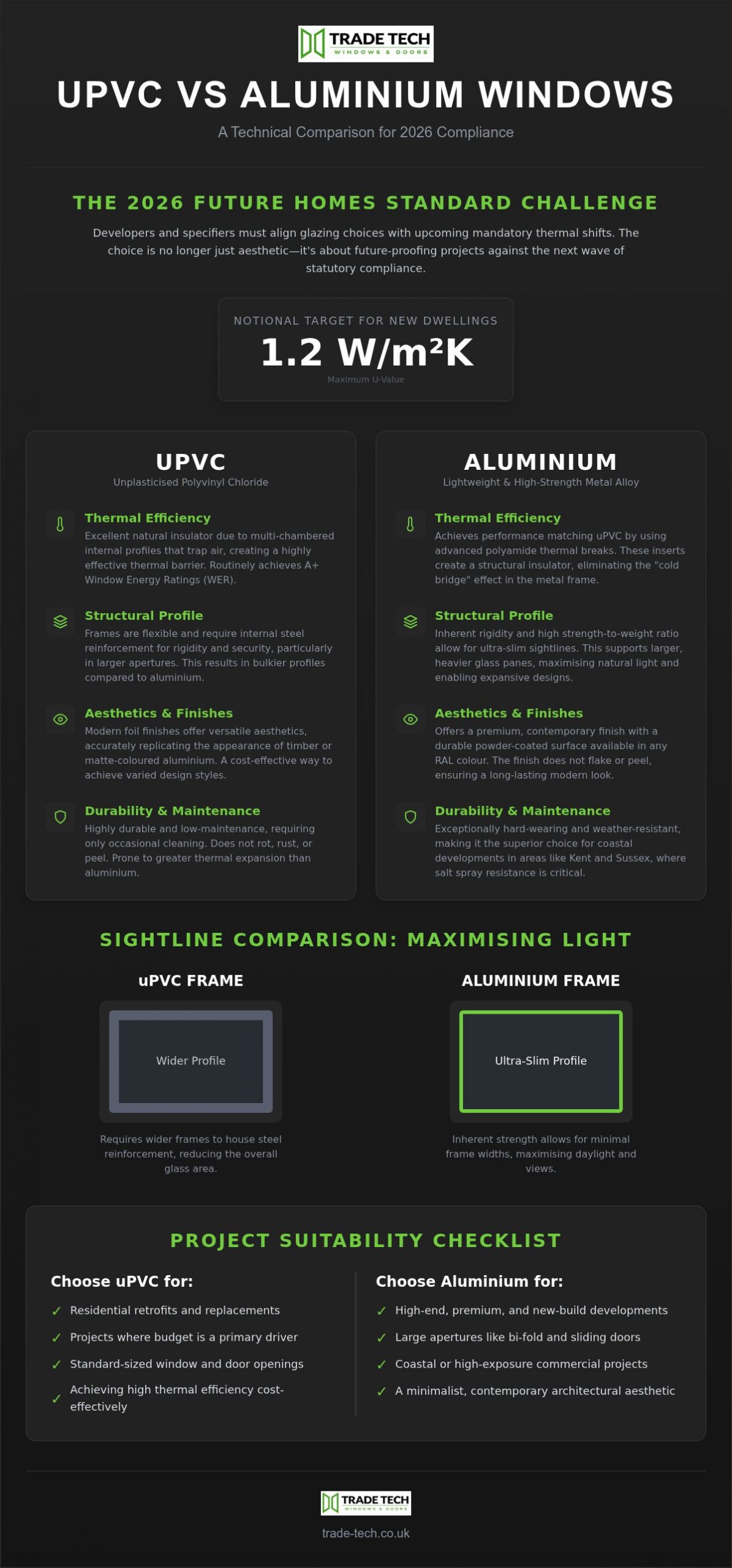
The core difference lies in structural rigidity. uPVC frames are flexible. They require internal steel reinforcement to maintain profile integrity, especially in larger openings. Aluminium is inherently rigid. It resists bowing and twisting even under high wind loads. Expansion and contraction rates also differ significantly. uPVC expands more in direct sunlight. Installers must account for this with precise expansion gaps. Aluminium is more stable. It maintains its dimensions across wider temperature ranges, making it ideal for the large-scale bifold doors often specified in modern Sussex extensions.
The Engineering of Modern uPVC
Modern uPVC vs Aluminium Windows discussions often overlook the internal complexity of polymer frames. Today’s uPVC profiles utilise multi-chambered designs. These internal air pockets trap heat, making them a natural leader in thermal efficiency for residential retrofits. You can explore these high-performance options in our uPVC and aluminium window range.
- Multi-chambered profiles: Specifically engineered for maximum heat retention and energy ratings.
- Steel reinforcement: Integrated into the frame for enhanced security and structural stability.
- Advanced foil finishes: Modern textures that accurately replicate timber or matte aluminium, removing the “plastic” aesthetic.
The Structural Strength of Aluminium
Aluminium is the essential choice for projects requiring expansive glass apertures. Its strength supports larger, heavier panes without the need for bulky frames. This is why it’s the industry standard for architectural aluminium windows and commercial shopfronts. It provides a level of structural confidence that polymer frames cannot match in high-load scenarios.
- Slimmer sightlines: Inherent rigidity allows for minimal frame widths, maximising natural light.
- Powder-coated finishes: Superior weather resistance for coastal projects in Kent and Sussex.
- Commercial durability: The preferred choice for high-traffic entrance doors and shopfronts due to its hard-wearing nature.
Powder coating provides a durable, hard-wearing surface that doesn’t peel or flake. It’s a low-maintenance solution for exposed sites where weather resistance is non-negotiable. This material remains the gold standard for developers aiming for a premium, contemporary finish.
Thermal Efficiency and Durability: Performance Metrics Compared
Performance metrics drive procurement decisions for modern developments. In the uPVC vs Aluminium Windows debate, thermal efficiency is no longer a differentiator but a baseline requirement for compliance. Modern uPVC typically achieves A+ Window Energy Ratings (WER) through multi-chambered profiles that trap air to create a thermal barrier. High-specification aluminium matches this performance using advanced polyamide thermal breaks. These breaks act as a structural insulator between the internal and external frame, effectively eliminating the conductive heat loss traditionally associated with metal windows.
Thermal Breaks vs Multi-Chambered Insulation
Polyamide is a high-strength, low-conductivity material. It bridges the gap in aluminium frames to stop the “cold bridge” effect, ensuring the internal frame remains warm. uPVC relies on its inherent insulating properties and internal webbing. Both systems typically utilise argon-filled sealed units to reach peak performance. According to the Window & Glass Association NZ guide, frame material selection is critical for long-term R-value stability. For 2026 projects, replacement windows must achieve a maximum U-value of 1.4 W/m²K to comply with current building regulations.
Weather Resistance in Kent and Sussex Coastal Regions
Coastal developments in Brighton, Hastings, or Eastbourne face aggressive salt spray and high wind loads. Aluminium excels in these high-exposure sites. Its powder-coated finish provides a resilient shield against corrosion and salt-induced pitting. uPVC remains a stable performer in varied temperature cycles across Kent and Sussex. It doesn’t rot or rust, though it can expand in high-heat environments. Both materials meet the PAS 24:2022 security standard, ensuring robust resistance to unauthorised access for all new dwellings.
Maintenance cycles significantly impact the total cost of ownership for developers. uPVC is a “wipe-clean” solution. It requires minimal intervention beyond occasional hinge lubrication. Aluminium’s powder-coating is equally durable but offers a significantly longer operational life. You can expect a lifespan of 20 to 30 years for uPVC, whereas aluminium often exceeds 45 years. This longevity makes aluminium a compelling choice for developers prioritising whole-life carbon and long-term asset value. Balancing these metrics ensures your project meets both budgetary constraints and the high expectations of modern homeowners.
Aesthetics and Design Suitability for Southeast Projects
Aesthetic requirements in the Southeast vary significantly between coastal modernism and rural heritage. Choosing between uPVC vs Aluminium Windows often depends on the architectural era of the property. Developers in Sussex frequently specify aluminium for its ultra-slim profiles, whilst Kentish barn conversions often demand the traditional proportions of high-performance uPVC. Frame choice dictates the visual weight of the building. Slimmer frames reduce the “heavy” look of traditional glazing, making them ideal for high-end residential projects in urban centres like Maidstone or Tunbridge Wells. Understanding the visual impact of uPVC vs Aluminium Windows is the first step in delivering a project that meets client expectations for both style and substance.
Slim Sightlines and Architectural Glazing
Aluminium is the essential choice for architectural glazing. Its structural strength allows for minimal frame widths, maximising natural light and creating seamless transitions between indoor and outdoor spaces. Modern specifications often pair TradeTech aluminium windows with large-scale bi-folding doors to achieve a consistent, contemporary aesthetic. This material is particularly effective for floor-to-ceiling glass walls where frame interference must be kept to an absolute minimum.
Architectural integration is key. For high-end developments, consider using roof lanterns to complement your window choices. This creates a cohesive design language across the entire building envelope. Aluminium also offers superior colour flexibility. With the full RAL colour spectrum available through powder coating, you can match frames to specific cladding or masonry requirements with absolute precision. This is a significant advantage for commercial shopfronts or bespoke residential designs where standard white or grey simply won’t suffice.
Traditional Styles and Heritage Requirements
Period renovations amongst the High Weald or historic Kent villages require a different approach. Modern uPVC sliding sash windows now provide an authentic appearance that satisfies most aesthetic requirements for heritage projects. These units replicate traditional timber proportions whilst delivering 21st-century thermal performance. They feature authentic hardware and deep bottom rails, ensuring they don’t look out of place on a Victorian or Georgian facade.
For cottages where a traditional look is non-negotiable, French casement options offer a wide-opening, clear view without a central mullion. The rise of “Flush Sash” uPVC has also bridged the gap between materials. These frames sit level with the exterior face of the building, mimicking the sleek, flat appearance of aluminium at a more accessible price point. Use woodgrain foil finishes to add texture and depth to uPVC installations. These foils ensure the frames blend naturally with older brickwork or timber-framed structures found across Kent and East Sussex, providing a premium finish without the premium capital outlay.
Trade Specification: Cost-Benefit and Logistical Analysis
Procurement efficiency directly dictates project profitability. When evaluating uPVC vs Aluminium Windows for trade applications, the initial capital outlay remains a primary variable. Industry data indicates that aluminium systems typically command a 30% to 40% price premium over their uPVC counterparts. For large-scale housing developments, this margin often makes uPVC the default choice for maintaining competitive unit pricing. However, for high-end bespoke builds, the higher investment in aluminium is frequently offset by increased property resale value and the demand for premium architectural finishes that modern buyers expect.
Logistical reliability is equally critical. Lead times vary significantly between materials. uPVC profiles generally offer a faster turnaround from order to site delivery, which is vital for keeping tight construction schedules on track. Aluminium fabrication involves more complex powder-coating and thermal-break assembly processes, often extending the wait time. Managing these timelines requires a partner who understands the urgency of the build phase. Trade Tech Windows & Doors streamlines the supply of both materials by coordinating manufacturing schedules with site-ready delivery windows across the Southeast, ensuring your glazing arrives exactly when the aperture is ready.
Budget Management for Developers
Strategic budget allocation ensures project margins remain protected. Cost-effective uPVC solutions provide the thermal performance required by 2026 standards without exhausting the glazing budget. These are ideal for multi-unit residential sites where volume is high and cost-per-unit is sensitive. Premium aluminium positioning works best for developments targeting the luxury market where slim sightlines are a non-negotiable requirement. Securing accurate trade pricing early in the tender process allows for precise financial forecasting and reduces the risk of mid-project cost creep.
Sourcing and Supply Chain Efficiency
A reliable local trade supplier in Kent acts as a buffer against national supply chain volatility. Local sourcing reduces transport risks and ensures technical support is available when site conditions change. Minimising site delays through coordinated glazing deliveries prevents expensive labour downtime. Whether you specify uPVC for its rapid availability or aluminium for its structural performance, your supply chain must be robust enough to handle the pressures of a live site. Installation complexity also differs; aluminium is lighter but more rigid, making it easier to handle in large formats. Reinforced uPVC is heavier and more susceptible to flex, requiring precise packing and support during the fitting process.
Request a technical trade quote
Conclusion: Selecting the Right Glazing for Your Project
The uPVC vs Aluminium Windows debate doesn’t have a universal winner. It has project-specific solutions. High-volume residential sites in Kent often rely on the thermal efficiency and cost-effectiveness of uPVC to protect margins. Conversely, architectural developments in Sussex demand the structural strength and slim profiles of aluminium to meet client aesthetic demands. Your choice should align with the project’s long-term goals, whether that’s immediate capital efficiency or maximum resale value. Both materials now meet the stringent thermal requirements of 2026, provided they are specified with high-performance sealed units.
Selecting the correct substrate requires a methodical approach. Before finalising your glazing schedule, evaluate these four critical pillars:
- Budget: uPVC provides the highest ROI for volume builds. Aluminium remains a premium investment for high-end bespoke projects.
- Location: Coastal developments in Hastings or Folkestone require the salt-spray resistance of powder-coated aluminium.
- Aesthetics: Match the frame to the property era. Use flush sash uPVC for heritage renovations and slim aluminium for contemporary extensions.
- Lead Times: Factor in the faster turnaround of uPVC if your site schedules are compressed and require immediate delivery.
Why Choose TradeTech as Your Glazing Partner?
TradeTech provides the technical precision required for complex glazing schedules. We understand the daily pressures of the construction industry. Our expertise spans both systems, allowing us to provide unbiased technical advice for new build contractors and developers. We deliver high-specification, compliant products directly to sites across Kent and East Sussex. We act as a stable foundation for your project, ensuring every unit meets the required security and thermal standards. Dependable. Professional. Efficient.
Get a Professional Quote Today
Don’t leave your glazing compliance to chance. Our team provides the data you need to justify material choices to your clients and building control officers. Visit our Kent trade centre for product demonstrations and to see the latest frame technology in person. We offer comprehensive support from initial price lists to final site delivery. We prioritise your time and project accuracy above all else. Contact us to discuss your 2026 pipeline and secure reliable trade supply for your next development.
Contact TradeTech for your next project
Future-Proof Your Site Specifications
Selecting between uPVC vs Aluminium Windows is a strategic decision that impacts both your project’s thermal compliance and your final profit margins. By 2026, the technical gap has narrowed significantly. Both materials now offer the high-performance insulation required by the Future Homes Standard. Your choice ultimately rests on the specific structural demands of the build and the aesthetic expectations of the local market in Kent and East Sussex.
As a specialist supplier, we provide the high-performance architectural glazing solutions needed to meet these challenges head-on. We’ve supported the Southeast trade for years with reliable deliveries and technical expertise. Whether you require the rapid turnaround of uPVC or the slimline strength of aluminium, having a dependable partner ensures your site remains efficient and your handover is seamless. Every specification choice you make today defines the long-term value of your development. We’re here to provide the technical support and reliable supply chain necessary for your professional success.
Request your trade price list from TradeTech today
Let’s get your next project moving.
Frequently Asked Questions
Is aluminium or uPVC better for noise reduction in busy areas?
uPVC typically provides superior acoustic insulation due to the density of the polymer and the multi-chambered profile design. These internal air pockets dampen sound waves effectively. Whilst aluminium is a high-strength metal, it requires high-specification acoustic glazing to match the natural noise reduction of a standard uPVC frame. For projects near busy Kent transport links, uPVC remains the most cost-effective solution for reducing external decibel levels.
How do U-values compare between modern aluminium and uPVC windows?
Modern uPVC vs Aluminium Windows can achieve nearly identical U-values, often ranging between 1.2 and 1.4 W/m²K. uPVC is a natural insulator, whilst aluminium relies on polyamide thermal breaks to bridge the gap. For 2026 compliance, ensure your specifications meet the 1.4 W/m²K limit for replacements or the tighter 1.2 W/m²K notional target for new builds. Both materials require high-performance sealed units to reach these metrics.
Can I use aluminium windows in a conservation area in Kent?
Planning permission for conservation areas in Kent varies by local council, but high-quality uPVC sash windows or slimline aluminium are often permitted. The focus is usually on maintaining the historic character of the High Weald or coastal towns. We recommend presenting technical drawings of our flush sash or heritage ranges to your local planning officer. These designs replicate traditional timber proportions whilst meeting modern thermal and security standards.
What are the typical lead times for trade uPVC windows vs aluminium?
Trade uPVC windows generally offer shorter lead times, typically between two and three weeks from order to site delivery. Aluminium windows often require four to six weeks due to the specialised powder-coating and thermal-break assembly processes. These timelines can fluctuate based on current Southeast market demand. We coordinate closely with our trade partners to provide accurate delivery windows, helping you manage site labour and project schedules effectively.
Do aluminium windows suffer from condensation more than uPVC?
Modern aluminium windows don’t suffer from condensation more than uPVC, provided they incorporate a high-quality thermal break. This polyamide barrier prevents the internal frame from becoming cold, which stops moisture from air-to-surface contact. If condensation occurs on either material, it is typically a ventilation issue rather than a material failure. Ensure your project complies with Part F regulations by specifying adequate trickle vents or mechanical ventilation systems.
Which material is more environmentally friendly and recyclable?
Aluminium is considered the more sustainable choice because it is infinitely recyclable without losing its structural integrity. Approximately 75% of all aluminium ever produced is still in use today. uPVC is also recyclable, but the process is more complex and limited in cycles. For developers prioritising whole-life carbon and BREEAM ratings, aluminium’s long-term durability and end-of-life circularity provide a significant environmental advantage over polymer alternatives.
Are uPVC windows as secure as aluminium windows for commercial use?
High-specification uPVC windows are highly secure, but aluminium is generally preferred for high-traffic commercial glazing. Aluminium’s inherent rigidity allows it to withstand the physical pressures of shopfronts and entrance doors more effectively than polymer frames. Both materials must meet PAS 24:2022 standards to comply with Document Q for new builds. For standard office or residential commercial projects, uPVC provides a robust, cost-effective security solution.
Can you colour-match uPVC frames to aluminium bi-fold doors?
We can match uPVC frames to aluminium bi-folding doors using the full RAL colour spectrum or specific foil finishes. Anthracite Grey (RAL 7016) is the most common specification for creating a seamless transition between different material types on a single site. This allows developers to utilise cost-effective uPVC for standard windows whilst investing in premium aluminium for large-scale sliding or bi-folding doors without compromising the project’s visual cohesion.