
In 2026, the margin for error in window specification has effectively vanished. You understand the daily pressure of managing tight site schedules and the irritation of lead times that suddenly slip. Meeting the updated Part L thermal requirements, such as the 1.4 W/m²K standard for replacement glazing, is no longer a choice; it is a structural necessity for every project in the Southeast. Sourcing high-performance aluminium framed windows requires more than just a price list. It demands a reliable trade partnership that prioritises technical precision and logistical speed.
This guide provides the expert knowledge you need to master technical specifications and architectural benefits for your professional projects. You will learn how to secure the slimline, modern aesthetic your clients expect whilst ensuring every unit meets rigorous energy efficiency standards. We examine the essential sourcing requirements for contractors in Kent and Sussex, focusing on how to eliminate site delays through better technical support. From U-value compliance to trade-only procurement strategies, this is your definitive roadmap to successful glazing installation this year.
Key Takeaways
- Master the latest 2026 Building Regulations to ensure every installation meets the mandatory thermal performance and Part L U-value requirements.
- Discover how specifying high-performance aluminium framed windows with slimline profiles can maximise natural light whilst maintaining the structural integrity required for modern developments.
- Learn to mitigate site delays by identifying reliable local trade sourcing strategies that prioritises accurate lead times and logistical efficiency in Kent and Sussex.
- Explore architectural versatility, from industrial “steel-look” heritage designs to ultra-modern systems, to meet diverse client aesthetic demands without compromising on technical quality.
- Identify the benefits of a dedicated trade partnership that offers professional technical support and direct pricing to streamline your procurement process.
What Are Aluminium Framed Windows and Why Are They the Professional Choice?
Modern aluminium fenestration systems are no longer a niche luxury. They’re now the standard for high-performance builds. In the Southeast, we’ve seen a decisive transition. Contractors are opting for aluminium framed windows to meet the aesthetic and structural demands of 2026. Aluminium provides a stable foundation for ambitious architectural designs. It allows for expansive glass spans that uPVC simply can’t support without significant reinforcement.
The structural integrity of the material is its primary professional advantage. Metal frames maintain their shape under extreme wind loads and temperature fluctuations. This stability is crucial for large-scale residential developments in coastal areas like Kent. You don’t get the bowing or sticking common with plastic frames after a few seasons of exposure. Professional installers prefer materials that stay true to their original specification for decades.
The Anatomy of a Modern Aluminium Frame
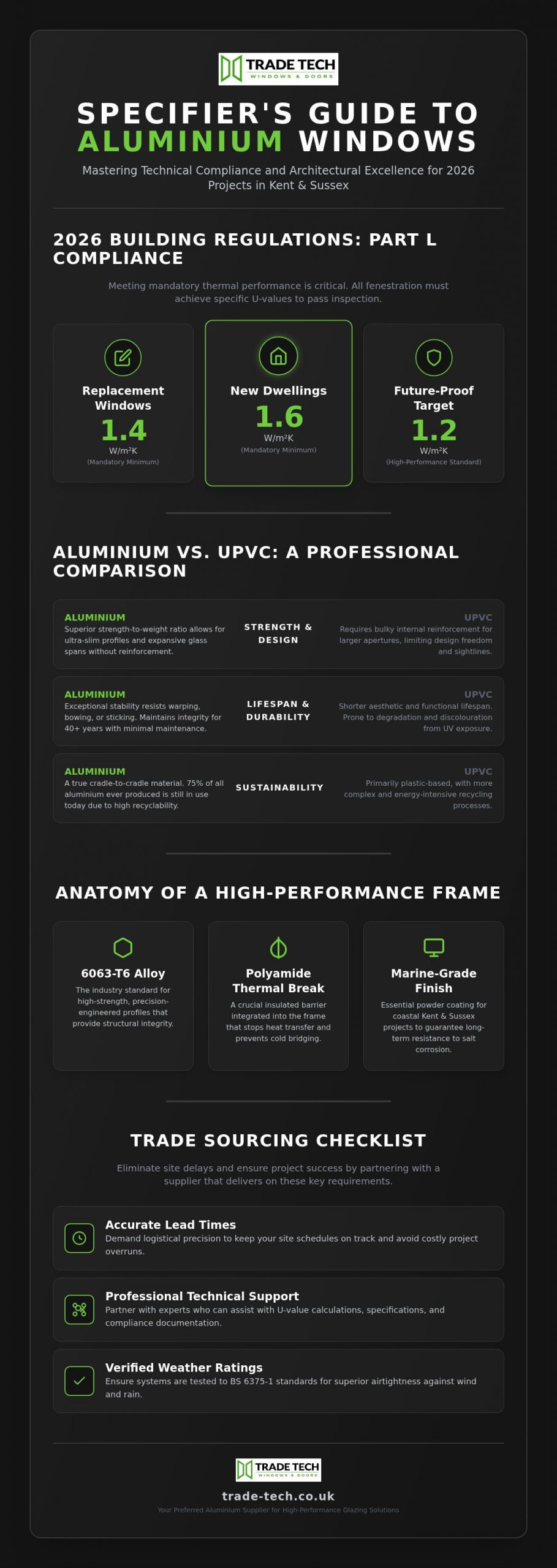
Technical precision defines the modern frame. Most systems use 6063-T6 aluminium alloy. This material is chosen for its high strength and ability to take a high-quality finish. The most important internal feature is the thermal break. These polyamide strips are integrated into the profile to prevent cold bridging. This technology is the primary driver for Window insulation performance. It ensures the metal frame doesn’t act as a heat sink. For Kent coastal projects, specify marine-grade powder coating. It resists salt corrosion far better than standard finishes or anodising.
Aluminium vs. uPVC: A Professional Comparison
The weight-to-strength ratio of aluminium is unmatched in the trade. It supports triple glazing and heavy acoustic glass easily. This is vital for multi-storey projects where structural load is a concern. From a sustainability perspective, aluminium wins decisively. Research shows that about 75% of all aluminium ever produced is still in active use globally. It’s a true “cradle-to-cradle” material that fits modern green building requirements.
Consider the maintenance cycles for your developers. uPVC often requires more frequent adjustments and has a shorter aesthetic lifespan. Aluminium frames remain functional and visually sharp for 40 years or more. Choosing metal reduces long-term snagging lists and preserves the building’s kerb appeal. It’s an investment in project longevity that pays off through reduced life-cycle costs and higher client satisfaction.
Thermal Performance and Building Regulations Compliance
Meeting thermal standards is the most critical hurdle for any professional installation in 2026. Approved Document L has moved from a guideline to a strict enforcement mechanism. You cannot afford to specify products that fail building control inspections. Compliance relies on precise U-value calculations that account for both the frame and the glazing unit. For sites across the Southeast, achieving these figures requires a combination of advanced thermal break technology and high-performance gas fills like Argon or Krypton.
Coastal developments in Sussex and Kent present additional challenges. High wind loads and driving rain demand superior airtightness and weather ratings. Standard frames often fail these environmental stresses. You need systems tested to BS 6375-1 standards to ensure long-term performance. This ensures the building envelope remains secure against the elements whilst maintaining the internal temperature required by modern energy standards.
Achieving Low U-Values with Aluminium
Polyamide thermal breaks have transformed aluminium framed windows from a thermal liability into a high-performance asset. These glass-reinforced nylon strips sit between the inner and outer profiles to stop heat transfer. Under the 2026 Building Regulations, all replacement windows must achieve a U-value of 1.4 W/m²K or better to ensure compliance. For new dwellings, the requirement is 1.6 W/m²K, although many developers now target 1.2 W/m²K to future-proof against upcoming changes.
Triple glazing is no longer an optional upgrade for premium projects. It’s becoming the trade standard. By using 44mm triple-glazed units, you can comfortably exceed Part L requirements. This setup reduces cold spots near large glass areas, improving client comfort in open-plan living spaces. If you’re managing a project with strict energy targets, check our direct trade pricing for compliant high-spec units.
Weather Performance and Durability
Durability in saline environments is a non-negotiable specification for the Kent coast. Salt spray can degrade standard finishes in months. Professional installers must specify marine-grade powder coatings that meet Qualicoat standards. These finishes provide a stable foundation for the window’s lifespan. Security is equally vital. Ensure your specifications meet PAS24 and Secured by Design (SBD) requirements to satisfy both insurers and homeowners. These standards align with International Building Code requirements for exterior wall components, ensuring your project meets global benchmarks for safety and performance.
Testing for wind resistance and water tightness is mandatory for exposed sites. Look for systems with a Class 9A water tightness rating and Class C4 wind resistance. These technical benchmarks prove the window won’t leak or rattle during a Sussex winter storm. Using these verified performance stats in your client pitches builds trust and demonstrates your technical proficiency as a lead contractor.
Architectural Styles and System Integration
Architectural cohesion is the hallmark of a high-end development. When specifying aluminium framed windows, you must consider how the fenestration interacts with other structural elements. A fragmented approach leads to mismatched sightlines and inconsistent finishes. Modern projects often require a unified glazing strategy. This links your window choices with large-span aluminium bi-folding doors to create seamless transitions between indoor and outdoor spaces. Coordination is key to professional results.
In Kent and Sussex, heritage renovations demand a specific aesthetic. Steel-look aluminium framed windows provide the industrial, Art-Deco style without the thermal drawbacks of traditional steel. These systems use ultra-slim glazing bars to replicate the classic aesthetic whilst maintaining 2026 thermal standards. For modern extensions, integrating architectural roof lanterns ensures that overhead glazing matches the vertical profiles. This provides a cohesive architectural finish across the entire site.
Popular Frame Profiles for 2026
Flush sash aluminium is gaining traction as a sleek alternative to traditional timber. The sash sits level with the frame. This creates clean, flat exterior lines. For commercial units or high-rise residential blocks, tilt and turn functionality is often the preferred choice. It offers secure ventilation and easy cleaning from the inside. If your client demands the ultimate minimalist aesthetic, hidden sash designs allow the frame to be almost entirely concealed behind the outer brickwork. This maximises the visible glass area and light penetration.
Colour and Finish Specification
Colour choice is dominated by a few key RAL codes in the Southeast. Anthracite Grey (RAL 7016) and Black remain the primary selections for trade projects. These shades provide a sharp contrast against brick or render. Dual-colour options are also essential for high-end residential work. You can specify a bold dark exterior whilst keeping a neutral white interior to match the client’s decor. It offers the best of both worlds for developers and homeowners alike.
Don’t overlook the finish texture. Matt finishes are popular for their contemporary look, but textured powder coatings offer superior durability. They hide minor scratches and fingerprints. This makes them ideal for commercial shopfronts or high-traffic residential entrances. Specifying the right finish ensures the installation remains a stable foundation for the building’s aesthetic value for decades. Precision in these details separates professional installations from standard retail work.
Trade Sourcing: Specifying for Projects in Kent and Sussex
Reliability is the currency of the construction industry. When specifying aluminium framed windows, your choice of supplier dictates your project’s pace. A local trade partner in the Southeast provides a stable foundation for your timeline. They understand the specific regional pressures, from coastal weather requirements to narrow access routes in historic Kent towns. Managing lead times is about proactive communication rather than reactive firefighting.
Technical survey requirements for new build contractors are rigorous. You need accurate structural opening measurements before the first frame is extruded. Miscalculations lead to expensive site delays and wasted labour. A professional supplier provides the technical support needed to verify these dimensions early. Site delivery logistics also require precision. Plan for mechanical offloading or ensure a dedicated team is ready for manual handling. Store frames vertically on protective blocks to prevent profile damage before installation.
Contact our technical team for project support
Streamlining Your Supply Chain
Sourcing aluminium framed windows direct from the trade reduces unnecessary intermediary costs and protects your margins. It puts you in closer contact with the manufacturing process, allowing for greater flexibility when project specifications change. A dedicated account manager is essential for large developments in the Southeast. They act as your single point of contact for technical queries, lead-time updates, and delivery schedules. Bundling your window orders with sealed units and entrance doors simplifies your entire procurement process. It ensures all components arrive on-site simultaneously, which drastically reduces the administrative burden of tracking multiple deliveries from different vendors.
Local Expertise in Kent and East Sussex
Local knowledge is vital for navigating the specific planning constraints found in Sussex conservation areas. Heritage projects often require specific profile widths and finishes to gain building control approval. Accessing trade pricing allows regular installers to maintain competitive margins whilst delivering high-quality, compliant results. Using a Kent-based supplier for local sites ensures rapid response times for remedial parts and significantly reduces the carbon footprint of your delivery logistics. This proximity allows for a more responsive partnership where technical advice is just a phone call or a short drive away.
Why Trade Tech Windows & Doors is the Preferred Aluminium Supplier
Trade Tech Windows & Doors operates as a stable foundation for your glazing requirements. We provide professional-grade aluminium framed windows designed specifically for the rigours of the UK trade. Our team understands that precision isn’t optional. Site delays erode your margins and damage your reputation. We’ve built our operation to eliminate the friction between specification and installation. You get the right product, on the right day, to the exact millimetre.
Our expertise spans both high-end residential projects and complex commercial glazing. We don’t just supply frames. We provide a comprehensive service that includes technical advice from industry veterans who’ve seen every site challenge imaginable. Reliable delivery across Kent and East Sussex ensures your project stays on track. We’ve replaced vague promises with a no-nonsense approach to technical support. If there’s a structural hurdle on your site, we’ll help you clear it with practical, trade-focused solutions.
The Trade Tech Windows & Doors Advantage
Speed and accuracy define our service. We recognise that modern contractors need a responsive supply chain to stay competitive. Our comprehensive range covers everything from standard casement windows to heavy-duty shopfronts and large-scale architectural spans. This versatility allows you to source your entire glazing package from a single, reliable point of contact. We’re committed to the Southeast building community. We prioritise local trade professionals who need a supplier that values their time as much as they do. You won’t find retail distractions here. Our focus remains entirely on facilitating your professional success through stable pricing and consistent quality.
Partner with Us for Your Next Project
Getting your project moving is straightforward. Send us your window schedule for a rapid, accurate quote that reflects the current 2026 market conditions. We don’t believe in hidden extras or ambiguous lead times. For complex specifications, we invite you to visit our Kent-based facilities for technical briefings. Seeing the profiles and thermal break technology first-hand helps you explain the value to your own clients. Whether you’re managing a single heritage renovation or a multi-unit new build, our team is ready to assist. Contact us today for bespoke architectural solutions that meet the highest technical standards. We’re here to ensure your next installation is your most efficient one yet.
Securing Your Project Success in 2026
Specification for aluminium framed windows now demands a precise balance of technical compliance and aesthetic excellence. You’ve seen how navigating the latest Part L requirements and integrating slimline profiles creates a superior, future-proofed build. Success on-site depends entirely on a reliable trade supply chain that respects your deadlines and provides accurate technical data from the start. A stable partnership reduces the risk of site delays and ensures your installations meet the highest professional standards.
As a specialist supplier for Kent and Sussex, we provide the expert support your developments require. We ensure all units are fully compliant with 2026 Building Regulations whilst offering dedicated technical advice to keep your projects moving. Our no-nonsense approach to trade supply means you can focus on the installation whilst we handle the logistical precision. Let’s build a more efficient future for your business together.
Request a trade quote for your aluminium window project today
Frequently Asked Questions
Are aluminium framed windows more energy efficient than uPVC?
Modern aluminium systems match or exceed uPVC performance when specified with high-spec thermal breaks. Whilst uPVC is naturally insulating, aluminium’s structural strength allows for larger triple-glazed units that significantly lower overall U-values. This ensures your development meets the necessary energy benchmarks whilst providing the slimline aesthetic clients demand. You should check the specific BFRC ratings for each unit to ensure compliance with the 2026 Part L requirements.
How much do aluminium windows cost for a trade project in Kent?
Costs vary significantly based on profile choice, glazing specification, and order volume. Trade professionals typically find that aluminium carries a premium over uPVC due to material costs and manufacturing complexity. We recommend submitting a full window schedule to receive accurate trade pricing that reflects your specific site requirements and current 2026 market rates. This allows for a more precise budget calculation for your developers.
What is the typical lead time for bespoke aluminium windows?
Lead times usually range from three to six weeks depending on the complexity of the finish and current factory capacity. Standard RAL colours like Anthracite Grey often sit at the shorter end of this scale. You should confirm current lead times at the point of order to ensure your site schedule remains accurate. Proactive planning helps you avoid installation delays and keeps your labour teams productive.
Can aluminium windows be used in conservation areas in Sussex?
Yes, provided the profile matches the local planning authority’s aesthetic requirements. Heritage or “steel-look” systems are frequently approved for conservation projects because they replicate traditional sightlines whilst providing modern thermal performance. Always consult with the local Sussex planning office before procurement to ensure the specific frame width and glazing bar detail meet their conservation standards. This prevents costly revisions after the windows are manufactured.
Do aluminium windows require special maintenance in coastal areas?
Marine-grade powder coating is essential for installations within five miles of the Kent or Sussex coast. This finish protects the metal from salt-induced corrosion and oxidation. Maintenance involves regular cleaning with fresh water and mild detergent to remove salt deposits. This simple routine preserves the frame’s structural integrity and aesthetic finish for decades in harsh environments. It’s a vital step for protecting the building’s long-term value.
What are the standard RAL colours available for trade aluminium windows?
Anthracite Grey (RAL 7016), Black (RAL 9005), and White (RAL 9016) are the most common trade standards held in stock. These colours usually offer the fastest turnaround for aluminium framed windows. Most systems can be powder-coated in any RAL colour upon request, though bespoke shades typically extend lead times. They may also attract a small price premium for smaller batches compared to the standard stock colours.
Are aluminium windows suitable for commercial shopfronts?
Aluminium is the industry standard for commercial shopfronts due to its exceptional strength and durability. It supports large spans of heavy safety glass required for retail entrances and high-traffic public buildings. These systems integrate easily with automated door closers and advanced security hardware. This makes them a stable foundation for commercial projects that require long-term resilience and low maintenance. They remain functional and secure even under constant daily use.
What is the difference between a thermal break and a standard frame?
A thermal break is a reinforced polyamide strip that separates the inner and outer sections of the frame. Standard metal frames without this break conduct heat rapidly, leading to significant energy loss and condensation. Modern aluminium framed windows use these breaks to create a thermal barrier. This technology is essential for meeting the strict U-value requirements mandated by current UK Building Regulations and ensuring high levels of internal comfort.