
Could a single missed U-value calculation or an outdated fire safety certificate derail your entire 2026 development? In the high-stakes trade sector, you know that site delays and technical errors aren’t just minor inconveniences; they’re profit killers. Sourcing reliable composite door suppliers who fully grasp the transition from the March 2026 Building Regulations to the 2027 enforcement is the difference between a seamless handover and a costly, reputation-damaging call-back. You need partners who prioritise precision over promises.
This guide provides the technical and logistical framework required to vet your supply chain effectively. You will master the criteria for selecting partners that ensure absolute compliance with Part L thermal targets and the rigorous new BS 8214:2026 standards for doorsets. We will examine the industry shift toward complete, tested systems, the reality of 2026 lead times, and the specific survey accuracy needed to eliminate fitment issues. By the end, you’ll have the certainty to secure a supply chain that protects your schedule and your professional standing.
Key Takeaways
- Identify why specialised composite door suppliers prioritising trade reliability over low retail pricing can significantly reduce total project costs and site delays.
- Benchmark your specifications against the 2026 Building Regulations for thermal efficiency and ensure all installations meet the PAS 24:2022 security standard.
- Evaluate the structural differences between GRP and solid core doors to select the most durable solution for minimising long-term maintenance and call-backs.
- Learn how to integrate proactive technical surveys and lead-time management into your procurement process to ensure logistical certainty.
- Explore the benefits of consolidating your supply chain with a specialist partner in Kent and Sussex by sourcing from Trade Tech Windows & Doors.
Selecting Composite Door Suppliers: Why Trade Reliability Trumps Retail Pricing
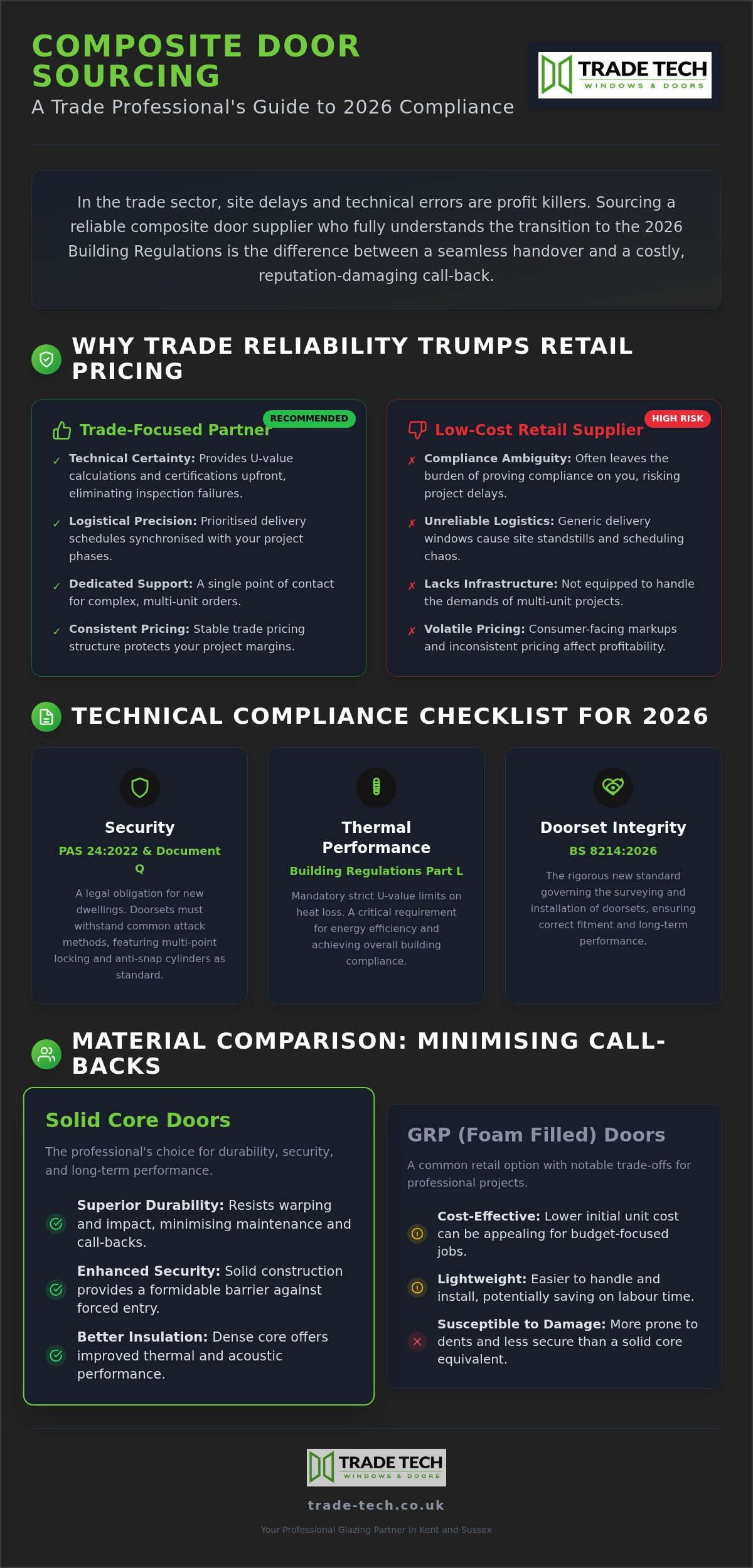
Selecting the right composite door suppliers is a commercial decision that extends far beyond the initial unit cost. In the competitive Kent and Sussex construction markets, the “cheapest per unit” approach often backfires. Low-cost retail suppliers prioritise high-volume, one-off sales to homeowners. They lack the infrastructure to support multi-unit trade projects where a single delivery failure can stop a site’s progress. A professional Composite door partner understands that technical accuracy and logistical precision are the real drivers of project profitability.
Evaluating a supplier’s technical support capacity is essential before signing a contract. With the 2026 updates to Approved Document L and the introduction of BS 8214:2026, compliance is more complex than ever. A trade-focused supplier provides the necessary U-value calculations and security certifications upfront. They don’t leave you guessing. This proactive support eliminates the risk of products being rejected during Building Control inspections. It protects your reputation and your bottom line.
The Professional Advantage of Trade-Only Supply
Working with dedicated trade partners provides a level of service that retail showrooms cannot match. You aren’t just buying a product; you’re securing a streamlined supply chain. This partnership offers several distinct advantages:
- Consistent trade pricing: Avoid the volatility and markups associated with consumer-facing retail outlets.
- Dedicated account management: One point of contact to oversee complex multi-unit orders and technical specifications.
- Prioritised delivery schedules: Deliveries are synchronised with your project phases, not based on generic retail windows.
Logistical Stability for Southeast Developments
Geography plays a critical role in site efficiency. Sourcing from regional composite door suppliers in Kent and East Sussex reduces transport risks and carbon footprints. Proximity allows for rapid response times when site technical queries arise or when a specific survey requires immediate verification. It ensures that your glazing partner is an extension of your team, not a distant call centre. For professional transparency on costs and service levels, reviewing Trade pricing structures helps you forecast project margins with confidence. This local stability is the foundation of a successful, delay-free development.
Technical Specifications: Sourcing for Security and Thermal Performance
Technical compliance is the bedrock of any successful trade project. When vetting composite door suppliers, you must look beyond aesthetics to ensure every unit meets the stringent 2026 standards. Failure to specify correctly leads to failed inspections and costly remediation. You need technical certainty from the outset. A supplier that cannot provide detailed performance data is a liability to your project timeline and your professional reputation.
Meeting PAS 24 and Document Q Requirements
Security is a legal obligation for new residential dwellings. PAS 24:2022 is the primary security benchmark for doorsets, ensuring they can withstand common attack methods used by intruders. This certification is essential for developer insurance and meeting the requirements of Approved Document Q. High-spec doorsets must include multi-point locking systems and anti-snap cylinders as standard. These components work together to provide a robust, resilient, and reliable barrier against forced entry. Multi-point locking systems are no longer an optional upgrade; they are a fundamental requirement for modern site security. These systems engage the door frame at multiple points, preventing the leaf from being easily pried away. When paired with anti-snap cylinders, they mitigate the risk of the most common burglary techniques. Reliable partners will provide these features as standard, ensuring your installations meet the high expectations of today’s homeowners and insurers.
Achieving Competitive U-Values for Building Compliance
Thermal performance is equally critical. The current Building Regulations Part L mandate strict limits on heat loss to meet the UK’s carbon reduction targets. For replacement doors in existing homes, you must achieve a maximum U-value of 1.4 W/m²K. New-build projects are even more demanding. They use a notional target of 1.0 W/m²K to calculate overall energy performance. If a door fails to meet its specified U-value, it can drag down the entire SAP rating of a development. This leads to significant issues during the final certification phase.
The choice of glazing significantly impacts these thermal figures. High-performance Sealed units with low-emissivity glass and argon-filled cavities are often required to bring the overall doorset within compliance. Selecting a supplier that provides these components as part of a tested system is the most efficient way to protect your building’s energy profile. Many new-build contractors and developers now prioritise suppliers who offer fully documented technical packs for every order to ensure total project compliance and long-term peace of mind.
Material Comparison: GRP vs. Solid Core Composite Doors
Selecting the correct core material is a strategic decision that directly impacts your project’s long-term call-back rates. Professional composite door suppliers typically offer two primary internal constructions: Glass Reinforced Plastic (GRP) foam-filled cores and solid timber cores. Each serves a specific market segment. Understanding the structural differences allows you to align product performance with both the client’s budget and the technical requirements of the site. Your choice affects everything from thermal mass to the longevity of the door’s hardware.
GRP Doors: Durability and Budget Alignment
Glass Reinforced Plastic doors are the industry standard for high-volume housing projects where cost-efficiency is paramount. These doors feature a high-density foam core encased in a durable GRP skin. This construction offers excellent resistance to impacts and scratches, making it ideal for high-traffic residential areas. GRP skins are through-coloured, meaning minor surface damage remains inconspicuous. They require minimal maintenance and provide high levels of thermal insulation. For projects where budget constraints are tighter, particularly for secondary entrances, uPVC doors remain a viable and cost-effective alternative. However, for a primary entrance, the GRP composite remains the preferred trade choice for its superior aesthetic and rigidity.
Solid Timber Cores: Premium Weight and Performance
For high-end renovations in Sussex and Kent, solid timber cores are the gold standard. These doorsets usually feature a 48mm thick core constructed from cross-laminated timber. This design provides a “solid feel” that foam-filled alternatives cannot replicate. The increased density offers superior thermal mass and enhanced acoustic performance. From a security perspective, the sheer mass of a solid core makes it incredibly resilient against forced entry. This is a critical factor when ensuring a doorset meets the rigorous standards set out in Approved Document Q for new dwellings.
Weight is a vital consideration during installation. A solid core door is significantly heavier than a GRP counterpart. This requires high-performance, adjustable hinges to prevent dropping over time. Reliable composite door suppliers will ensure that the hardware specified is rated for this additional load to prevent future maintenance issues. For a deeper dive into regional sourcing, see our guide on Sourcing Quality Composite Doors in Kent & Sussex. Whether you prioritise the lightweight resilience of GRP or the premium security of a timber core, the goal is to provide a product that withstands the British weather whilst maintaining its structural integrity and colour stability for decades.
Streamlining Project Logistics: Lead Times and Technical Accuracy
Site delays are profit killers. When managing multi-unit developments, logistical precision is as vital as product quality. Professional composite door suppliers act as partners in your schedule, not just vendors of hardware. They understand that a missed delivery window ripples through your entire site, delaying subsequent trades and pushing back completion dates. Efficiency starts with proactive communication and ends with a product that fits perfectly the first time. You shouldn’t settle for vague delivery windows; you need a supplier that provides concrete timelines and sticks to them.
The Critical Role of Precision Technical Surveys
Complex renovations often present non-standard apertures and settling issues. Relying on generic measurements is a risk you can’t afford. Standardising your survey formats ensures that every detail, from threshold heights to specific cill requirements and hardware positions, is captured before production begins. This level of detail prevents the “measure twice, cut once” pitfalls that frequently plague less organised projects. If an order is placed with incorrect survey data, the cost isn’t just the replacement unit; it’s the weeks of delay whilst a new door is manufactured. For a comprehensive guide on capturing these details, consult our UPVC back doors and frames checklist designed specifically for Kent-based trade professionals.
Managing Site Timelines and Delivery Expectations
Specialised finishes, bespoke RAL colours, and intricate glazing patterns naturally extend production windows. In the 2026 supply chain, consistency is earned through early specification and transparent communication. You must factor in these variables during the planning phase to avoid site bottlenecks. Navigating current supply chain challenges requires a supplier with robust stock management and reliable component sourcing. They must be able to flag potential delays before they impact your critical path.
Delivery organisation is equally paramount. Coordinating drops to coincide exactly with installation windows prevents double-handling and significantly reduces the risk of on-site damage. Storing doors on-site for weeks increases the likelihood of scratches or hardware misalignment. Accurate lead-time forecasting allows for precise scheduling of following trades, effectively reducing the total build duration. This methodical approach—also championed by professional installers such as Dortech Garage Doors—ensures that your project remains on track, your installers remain productive, and your clients remain satisfied with the handover date.
Consult our technical team on lead times
Trade Tech Windows & Doors: Your Professional Glazing Partner in Kent and Sussex
Trade Tech Windows & Doors is the primary choice for contractors and developers who refuse to compromise on site efficiency or technical accuracy. As specialist composite door suppliers serving Kent and East Sussex, we understand the unique logistical and regulatory pressures of the Southeast construction market. We don’t just supply hardware; we provide a stable foundation for your project’s success. By sourcing high-performance Composite doors alongside our precision-engineered aluminium systems, you consolidate your supply chain. This reduces delivery risks and ensures a consistent aesthetic across the entire building envelope. One professional partner manages your requirements from initial specification to final site delivery.
Our commitment to technical excellence is absolute. We ensure every unit meets the stringent Document Q security requirements and the 2026 thermal performance benchmarks discussed throughout this guide. We provide the technical documentation you need for Building Control approval before the products even arrive on-site. This proactive approach eliminates the friction often found with generic nationwide suppliers. We operate with the quiet confidence of a brand that knows the industry inside out, prioritising your time and project margins above all else.
Bespoke Solutions for New Builds and Renovations
Kent’s architectural landscape demands versatility. Whether you are working on a traditional rural renovation or a high-density modern development, we tailor our designs to match. Our New build contractors and developers service provides you with a dedicated point of contact. This specialist manages your entire glazing package, including uPVC and aluminium windows, to ensure total project synchronisation. Consolidating your orders with a single regional specialist prevents the communication gaps that lead to survey errors and site delays. We provide the technical certainty required for complex multi-unit orders, ensuring every aperture is filled with a compliant, high-quality product.
Expert Support from a Dedicated Trade Specialist
Technical challenges require professional solutions. We offer expert advice for non-standard openings, commercial glazing requirements, and high-specification hardware selections. Our role is to act as your dependable guide through the complexities of the 2026 building standards. We build long-term partnerships based on reliability and professional trust, not just one-off transactions. You gain access to a partner that understands the daily pressures of the construction industry and provides the tools necessary for you to succeed. We protect your reputation by delivering products that minimise call-backs and maximise durability. Don’t leave your project compliance to chance.
Contact Trade Tech Windows & Doors to discuss your next project
Future-Proofing Your Trade Procurement Strategy
Technical compliance is no longer an elective. It’s a project requirement. You’ve seen how selecting the right composite door suppliers impacts your site efficiency and long-term reputation. By prioritising partners who provide Document Q and PAS 24 compliant products, you eliminate the risk of failed inspections. Logistical precision and technical survey accuracy ensure your schedule remains intact. These are the benchmarks of a successful development.
Trade Tech Windows & Doors offers the specialist support necessary for contractors and developers across Kent and East Sussex. Our focus on technical excellence and reliable lead times provides the foundation your projects demand. We help you navigate the 2026 standards with confidence and precision. Your next project deserves the certainty of a professional glazing partner.
Request a professional trade quote for your next project
We look forward to helping you deliver excellence on your next site. Let’s build something exceptional together.
Frequently Asked Questions
What is the difference between trade and retail composite door suppliers?
Trade suppliers focus on technical accuracy, bulk orders, and site logistics, whereas retail outlets prioritise consumer aesthetics and showroom margins. Professional composite door suppliers provide dedicated account management and technical documentation specifically for site-based projects. This ensures that every unit meets building regulations, avoiding the communication gaps and high markups often found in retail environments.
How do I ensure a composite door meets PAS 24 security standards?
Verify that the doorset has a valid certificate proving it has passed the PAS 24:2016 or 2022 test as a complete system. You must check that the specific combination of leaf, frame, and hardware matches the tested specification. Relying on individual component ratings is insufficient. Only a fully tested doorset ensures compliance with modern insurance and building control requirements.
What are the typical lead times for trade composite doors in 2026?
Typical lead times for standard specifications currently range from two to four weeks. Bespoke RAL colours or high-specification glazing patterns can extend this window significantly. Proactive scheduling and early specification are essential to avoid site bottlenecks. You should always confirm current schedules with your supplier before finalising your project critical path to ensure consistent product availability.
Should I specify GRP or solid core doors for a new build project?
Solid core doors are generally preferred for new builds due to their superior thermal mass, security, and premium feel. Whilst GRP is a cost-effective solution for high-volume housing, the 48mm timber core provides the structural integrity needed to meet stricter 2026 building standards reliably. Choosing the correct core material reduces long-term maintenance and call-back rates for developers.
Are door frames and hardware included with trade composite door supply?
Yes, trade supply usually includes the complete doorset, encompassing the frame, hinges, multi-point locks, and handles. Specifying a complete system ensures that all components are tested together for PAS 24 and Part L compliance. This approach simplifies installation and guarantees that the hardware is rated for the specific weight and thickness of the door leaf.
How do U-values affect building regulation compliance for external doors?
U-values measure heat loss, and meeting the 1.4 W/m²K limit for replacements or the 1.0 W/m²K notional target for new builds is mandatory under Part L. Failing to hit these benchmarks will result in a failed building inspection and delayed project handover. Reliable composite door suppliers provide these thermal calculations upfront to ensure your project meets its energy performance targets.
Can I source matching uPVC windows and composite doors from one supplier?
What are the technical requirements for Document Q compliance on site?
Document Q requires all new dwellings to have easily accessible doorsets that resist unauthorised access. Compliance is demonstrated by providing evidence that the installed doorset meets the security requirements of PAS 24. This includes the mandatory use of anti-snap cylinders and multi-point locks. You must ensure your supplier provides the necessary certification to satisfy building control officers during final inspections.