
A trade frame is no longer just a building component. It’s a regulatory liability if you get the specification wrong. With Part L and Part Q requirements becoming increasingly stringent, the margin for error on site has effectively vanished. You’ve likely felt the frustration of inconsistent lead times or frames that require hours of on-site adjustment just to fit. These issues don’t just delay handovers; they erode your profit margins and damage your reputation with developers.
This guide provides the technical clarity you need to source and install high-performance trade frames that meet every current UK building regulation. We’ll examine the specific requirements for Kent and Sussex projects, covering the 1.4 W/m²K U-value threshold for replacements and the mandatory ventilation standards under Part F. You’ll discover how to establish a reliable supply chain that delivers precision-engineered aluminium and uPVC systems on schedule. This overview ensures your next project is compliant, efficient, and built to the highest professional standards.
Key Takeaways
- Master the current Part L thermal requirements and Part Q security standards to ensure your projects pass building control without costly delays.
- Evaluate the structural and thermal benefits of aluminium versus uPVC trade frames to select the most efficient material for your specific glazing spans.
- Minimise on-site adjustments and schedule disruptions by prioritising precision survey techniques and proactive lead time management.
- Establish a resilient South East supply chain by partnering with technical specialists who provide direct support for Kent and Sussex developments.
What are Trade Frames? Defining Professional Fenestration
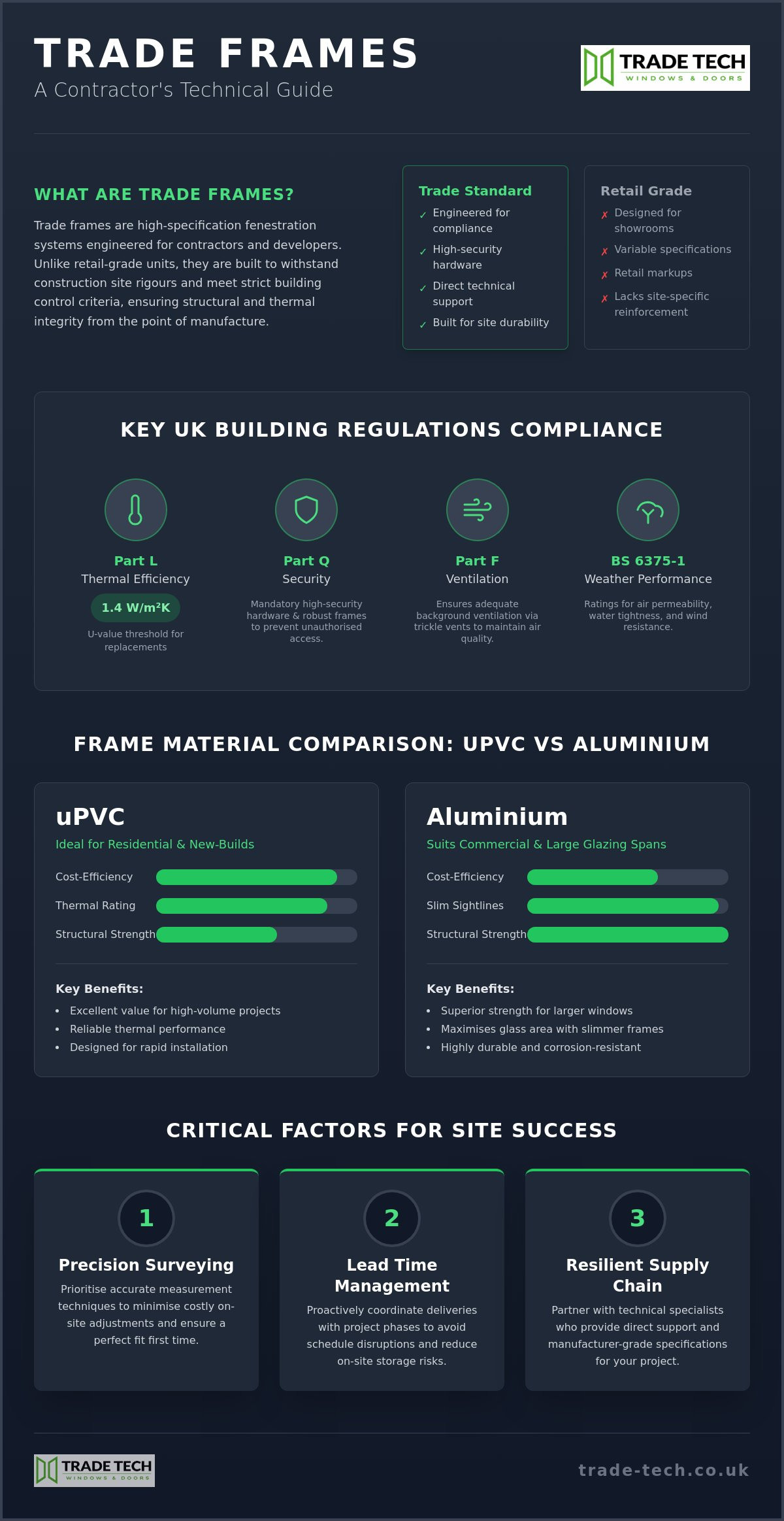
Trade frames represent the technical standard required by contractors, developers, and professional installers. Unlike retail-grade windows designed for the consumer showroom, these systems are engineered to withstand the rigours of a construction site and meet specific building control criteria. They arrive on site as a complete, high-specification solution. These units feature multi-chambered profiles and integrated steel reinforcement that standard off-the-shelf units often lack. Choosing the right frame is the most critical decision in maintaining the structural and thermal integrity of a building envelope.
In the context of professional fenestration, the term “trade” signifies a direct partnership between the manufacturer and the installer. This relationship bypasses the retail markup and focuses on technical performance. High-security hardware and precision-engineered gaskets are standard. This ensures that every unit complies with Document Q and Document L requirements from the point of manufacture. Trade-grade durability means frames resist warping and maintain their operational smoothness even under heavy usage in commercial environments.
To better understand this concept, watch this helpful video:
The Trade Supply Chain Advantage
Sourcing trade frames directly from a specialist supplier provides a distinct logistical edge. You gain access to manufacturer-grade specifications that aren’t available through general builders’ merchants. This direct line of communication is vital for bespoke projects where unconventional apertures or specific thermal breaks are required. The logistics are tailored for active sites. Deliveries are coordinated with your project phases, reducing the need for on-site storage and the risk of damage. By establishing a professional partnership, you benefit from direct trade pricing and dedicated technical support. This ensures that any specification queries are resolved before the frames reach the site, protecting your schedule from avoidable delays.
Common Applications in UK Construction
The versatility of professional-grade frames makes them suitable for a wide range of South East developments. In the residential new-build sector, high-volume uPVC casement windows are the industry standard due to their cost-efficiency and reliable thermal ratings. These systems are designed for rapid installation, helping you stay on schedule during large-scale rollouts. Commercial projects in Kent and Sussex often require more robust solutions. This is where aluminium windows and shopfronts excel. The inherent strength of aluminium allows for slimmer sightlines and larger glazing spans without compromising structural safety. For heritage renovations, modern sliding sash windows provide the traditional aesthetic required by local planning authorities whilst delivering the energy performance of a contemporary building.
Key Technical Standards and UK Building Regulations
Compliance is the baseline for professional procurement. You cannot risk site delays or building control rejections due to non-conforming products. Sourcing trade frames requires a deep understanding of the current UK Building Regulations to ensure every aperture meets legal requirements. Every frame you specify must carry the UKCA or CE marking. This provides a clear audit trail of performance and safety standards. Verification of these marks is a core responsibility for developers. Beyond thermal efficiency, you must account for weather performance ratings. This includes air permeability, water tightness, and wind resistance as defined by BS 6375-1. These ratings ensure the building envelope remains resilient against the coastal conditions often found across Kent and Sussex.
Thermal Efficiency and U-Values
Energy performance is a core requirement of Document L. Meeting these targets depends on the synergy between the profile and the sealed units used. Modern aluminium systems now incorporate advanced thermal breaks to prevent heat transfer. This technology allows metal frames to compete with the inherent insulation of uPVC. For replacement windows in existing dwellings, the maximum permitted U-value in 2026 is 1.4 W/m²K. Achieving this standard is essential for passing SAP or SBEM calculations on your project. You must also consider Document F, which governs ventilation. This often requires the inclusion of trickle vents to ensure adequate airflow. Failure to specify these correctly can lead to moisture issues and building control failures.
Security and Accessibility Standards
Security is no longer an optional upgrade. Document Q mandates that all new dwellings feature windows and doors tested to PAS 24 standards. This involves rigorous physical testing of the frame and hardware to resist opportunistic intruders. We integrate multi-point locking systems as standard to ensure compliance. Accessibility is equally critical under Document M. This regulation often requires low-threshold entrance doors to provide unimpeded access for all users. Selecting the right frame design early in the specification phase protects your site security and simplifies insurance compliance for the end developer. If you’re managing a complex project, our team provides technical support for new build contractors to navigate these changing standards. Understanding how frame design impacts long-term site security helps you deliver a superior product to your clients.
Comparing Frame Materials: uPVC vs Aluminium
Selecting the correct material for trade frames involves balancing structural requirements against thermal targets. While cost is a factor, the choice often depends on the architectural intent and the specific demands of the site. Aluminium offers a superior strength-to-weight ratio, allowing for significantly larger glazing spans and slimmer profiles. This makes it the preferred choice for modern developments where maximising natural light is a priority. Conversely, uPVC remains the industry standard for thermal insulation. Its multi-chambered profiles naturally trap heat, making it an exceptionally efficient material for standard residential openings without the need for complex thermal breaks.
Lifespan and maintenance cycles are critical considerations for professional developers. Aluminium profiles are typically rated for a service life of 45 years or more, requiring only minimal cleaning to maintain their finish. uPVC systems generally offer a 25 to 35 year lifespan. Aligning your material choice with industry best practices ensures the selected system matches the building’s exposure and load requirements. Aesthetic flexibility also differs between the two. Aluminium allows for precise RAL colour matching through powder coating. uPVC has evolved to offer sophisticated woodgrain finishes and foil wraps that replicate the texture of traditional timber.
When to Specify uPVC Frames
uPVC is the most cost-effective solution for large-scale residential housing projects. It provides high-performance insulation that easily meets current Document L standards. For developers focused on volume, uPVC casement windows offer a reliable, low-maintenance option that appeals to the mass market. The material’s versatility has expanded with the introduction of flush sash designs. These provide a clean, minimalist aesthetic that works well in both contemporary and heritage-style developments across Kent and Sussex. These systems ensure high thermal retention whilst keeping project costs manageable.
The Case for Aluminium in Modern Architecture
Aluminium is essential for high-end residential and commercial projects requiring expansive glass surfaces. The material’s inherent rigidity supports the weight of large double or triple glazed units in aluminium bi-folding doors and sliding systems. It is also the standard for commercial glazing and high-traffic entrance areas where durability is paramount. Beyond its structural benefits, aluminium is a sustainable choice. It is 100% recyclable without any loss of quality. This helps developers meet the increasing demand for environmentally responsible construction materials and improves the overall sustainability rating of the building.
Specifying Trade Frames: Critical Factors for Site Success
Precision at the specification stage prevents expensive remedial work later. A successful installation begins with an accurate survey. Even a minor discrepancy in measurements can lead to frames that don’t fit, compromising the building’s thermal seal and security. When ordering trade frames, you must account for tolerances and the specific structural openings of the site. This is particularly vital for new builds where brickwork may vary slightly from the original architectural drawings. Technical specifications should be finalised before the manufacturing process begins to ensure every unit arrives ready for immediate installation.
To manage these complexities with greater efficiency, many professionals now integrate digital solutions into their workflow. For instance, Vitronix provides specialised tools and subscription-based resources tailored for the glass and frames sector, helping to ensure that every technical detail is precisely calculated before production.
Glass specification is another critical variable that dictates site success. While standard double glazing meets basic requirements, high-end developments often require specialised units. Options like integral blinds offer a significant selling point for developers, providing a clean finish that retail buyers value. Once the frames arrive on site, proper handling is essential. Storing units on uneven ground or in high-traffic areas risks frame distortion or glass breakage. Use dedicated racking and keep protective tapes in place until the final handover to maintain the factory-finish quality.
Logistics and Delivery Coordination
Effective site management relies on a predictable supply chain. You need a double glazing supplier that understands the geographical constraints of Kent and Sussex. Navigating narrow access routes or coordinating with specific site phases requires local logistical expertise. We focus on “on-time, in-full” delivery to ensure your contractors aren’t left waiting on expensive scaffolding. For projects involving oversized architectural glazing, such as large sliding doors, we coordinate specialist delivery vehicles to ensure safe offloading. This level of planning protects your project margins and keeps the site moving without interruption.
Ancillary Components and Fixings
The performance of the frame is only as good as the components used to install it. You must specify the correct cills, bay poles, and add-ons during the initial order to avoid on-site delays. Using low-grade sealants or incorrect fixings will inevitably lead to call-backs and water ingress issues. Compatibility is also a major factor in extension projects. If you’re installing trade roof lanterns in Kent alongside new windows, ensure the profile colours and specifications match perfectly for a cohesive finish. For a detailed quote on your next project, contact our technical team today to discuss your specific requirements.
TradeTech: Your Strategic Partner for Trade Frames in the South East
TradeTech functions as a stable foundation for projects across Kent and East Sussex. We understand that developers in the South East require more than just a supplier; they need a technical partner who understands the local landscape. National competitors often overlook the specific logistical challenges or regional planning preferences of our area. Our expertise in both uPVC and aluminium systems ensures your trade frames arrive specified correctly for the local climate and regulatory environment. We provide a responsive, direct service that protects your project timeline and your reputation. Our commitment to technical excellence means every unit we supply is built to perform, delivering long-term reliability for your clients.
This commitment to technical excellence is equally vital for the roof structure. For developers requiring professional flat roof installations or full replacements that match the quality of their fenestration, roofinginhackney.com provides the high-performance solutions needed for a complete building envelope.
Bespoke Solutions for Every Sector
We offer dedicated support for new build contractors and residential developers. This involvement starts at the specification phase, helping you navigate the complexities of SAP calculations and building control requirements. For commercial developments, our range includes high-performance aluminium shopfronts and commercial glazing solutions. These systems are engineered for durability, security, and aesthetic impact in high-traffic environments. Heritage projects require a different approach. We supply specialist sliding sash windows that replicate traditional timber aesthetics whilst delivering contemporary thermal efficiency. This breadth of product ensures we can support your entire portfolio, from modern apartments to sensitive renovations.
Streamline Your Procurement Today
Securing a resilient supply chain is the most effective way to protect your site margins. Accessing our competitive trade pricing gives you a clear financial advantage on every tender. Our quoting process is brisk and methodical, designed to provide the data you need without delay. You gain direct access to our technical consultancy for any complex specification queries. This ensures every one of your trade frames is compliant with current standards before manufacture begins. By removing the guesswork from procurement, we help you maintain momentum on site and avoid the hidden costs of specification errors. Contact TradeTech for a professional trade frame quotation to establish a partnership built on precision, reliability, and technical excellence.
Optimise Your Site Specification for 2026
Success in the modern construction landscape requires a proactive approach to both technical standards and supply chain management. By mastering the current Document L and Document Q requirements, you eliminate the risk of building control rejections and costly site delays. Balancing the structural benefits of aluminium with the thermal efficiency of uPVC allows you to deliver high-performance results that meet developer expectations. Precision during the survey phase and strategic logistics coordination ensure your project stays on schedule and within budget.
Sourcing reliable trade frames is the most effective way to protect your profit margins and maintain your reputation for excellence. TradeTech provides the local expertise and technical support necessary to navigate the unique demands of Kent and East Sussex developments. Our specialist knowledge of both aluminium and uPVC systems ensures your site receives the exact specification required for long-term durability. Take the first step towards a more efficient procurement process today.
Request a Professional Trade Quote from TradeTech to secure the technical partnership your next project deserves. We’re ready to support your success with precision-engineered solutions and dedicated trade support.
Frequently Asked Questions
What is the difference between trade frames and retail window frames?
Trade frames are engineered for professional installation and site durability rather than retail showroom display. They feature higher technical specifications, including integrated reinforcement and multi-point locking as standard. By sourcing directly, you bypass retail markups and gain a technical partner who understands construction site logistics. This ensures the units withstand heavy usage and meet strict commercial performance criteria required by professional developers.
How do I ensure my trade frames are Document Q compliant?
Ensure your frames are tested to PAS 24 standards to meet Document Q requirements for new dwellings. This involves specific hardware configurations and reinforced profiles that resist forced entry attempts. We supply fully compliant units that arrive on site with all necessary certification for building control approval. This protects your project from compliance failures and ensures long-term security for the end user.
What are the current U-value requirements for trade frames in the UK?
The current maximum U-value for replacement windows in existing dwellings is 1.4 W/m²K under the latest Part L amendments. For new builds, targets are often stricter to pass complex SAP calculations. Our trade frames are designed to exceed these baseline requirements using multi-chambered profiles or advanced thermal breaks. This ensures your project meets energy efficiency targets and reduces long-term heating costs for the building.
Can I get bespoke RAL colours for uPVC trade frames?
Yes, uPVC frames are available in a wide range of foil finishes including specific RAL-equivalent colours. While aluminium offers powder coating in any RAL shade, modern uPVC foils replicate woodgrains and solid colours with high durability. This allows you to match existing aesthetics on heritage or contemporary projects without the cost of aluminium. These finishes are designed to resist UV fading and maintain their appearance over time.
What is the typical lead time for aluminium trade frames in Kent?
Lead times vary based on the complexity of the system and current manufacturing demand in the South East. Local sourcing in Kent and Sussex typically streamlines the delivery process compared to national suppliers. We coordinate deliveries with your site phases to ensure frames arrive exactly when needed for installation. This helps you manage your labour schedules and reduces the need for on-site storage and potential damage.
Are trade frames supplied with glass or as unglazed units?
We offer both glazed and unglazed options to suit your specific site requirements. Most contractors prefer units supplied with high-performance sealed units already fitted to save time on site. However, we can provide unglazed frames if you prefer to source or fit glass separately for specific architectural reasons. This flexibility allows you to manage the installation process according to your project’s unique requirements and site conditions.
Do you provide technical support for complex architectural glazing projects?
Our technical team provides comprehensive support for complex architectural glazing projects across the South East. This includes advice on structural spans for aluminium bi-folding doors and coordinating specifications for architectural trade roof lanterns in Kent and beyond. We help resolve technical challenges during the design phase, ensuring that every component integrates perfectly. This proactive approach prevents installation issues and ensures the final result meets every structural and aesthetic requirement.
How does TradeTech support developers in Sussex with building regulation compliance?
We assist Sussex developers by providing technical specifications that align with current UK Building Regulations. Our team offers consultancy on thermal performance and security standards early in the design phase. This proactive support ensures your project remains compliant and avoids costly rejections from local building control authorities. We act as a technical extension of your team, providing the data needed for successful project handovers and professional certification.